Retirees are moving beyond traditional fixed deposit reliance to incorporate Senior Citizens' Savings Scheme (SCSS) and mutual funds into their retirement portfolios. According to Certified Financial Planner Shweta Shastri, the approach focuses on income sustainability and capital preservation in real terms rather than just nominal stability. As reported by Personal Finance News, retirement planning now encompasses managing inflation, taxation, healthcare costs, and other risks over potentially 25 to 30 years of retirement. The latest analysis from Equirize confirms that for many senior citizens, fixed-income investing has three jobs: providing scheduled cash flow, reducing exposure to equity-market volatility, and maintaining enough money accessible for healthcare and family requirements.
The Senior Citizens' Savings Scheme (SCSS) continues to serve as an attractive option for retirees seeking predictable income streams. As reported by Personal Finance News, SCSS provides stability and predictability that gives retirees confidence in meeting expenses through reliable income streams. According to the latest National Savings Institute rate table accessed on July 16, 2026, the 5-year Senior Citizens Savings Scheme rate is listed at 8.2% and the 5-year Monthly Income Account rate at 7.4%. However, experts note that fixed-income products alone may not address the challenge of maintaining purchasing power over several decades, requiring a more diversified approach that considers both income sustainability and liquidity needs.
Growing retiree interest in mutual funds focuses on debt-oriented solutions, conservative hybrid funds, and systematic withdrawal plans (SWPs) rather than chasing higher returns. According to Shweta Shastri, the objective is not replacing FDs or SCSS but giving every rupee a specific purpose - some for guaranteed income, some for emergencies, and some for long-term growth. This approach addresses the challenge of maintaining purchasing power over decades while providing flexibility and development potential. Equirize analysis emphasizes that bonds can play a role in retirement cash-flow planning, but they are not one uniform product - government securities, RBI Floating Rate Savings Bonds, tax-free bonds, and listed corporate bonds carry different risk profiles, liquidity characteristics, and exit options. Recent expert recommendations suggest 40%-50% investment in hybrid mutual funds and/or index funds for long-term growth, 35%-45% in debt mutual funds, fixed deposits (FDs), and/or high-quality bonds, with the remainder in emergency funds.
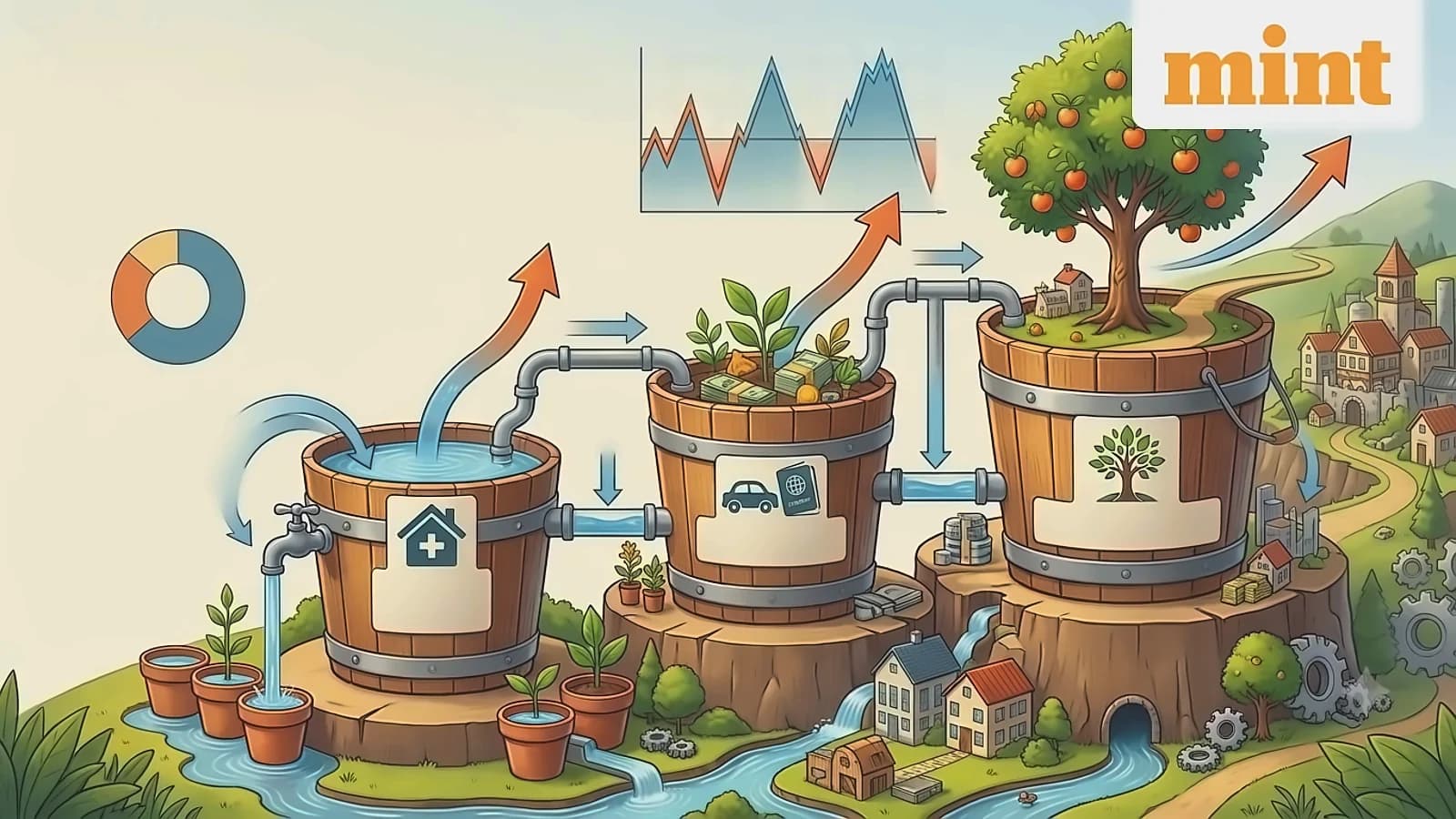
The three-bucket approach is gaining traction among retirement planners, dividing savings based on when they'll be needed and their specific roles. The first bucket focuses on regular, predictable income through products like SCSS for day-to-day expenses. The second bucket serves as a financial safety net through fixed deposits or highly liquid investments for quick access in emergencies. The third bucket is designed for long-term growth through suitable mutual funds to help the retirement corpus keep pace with inflation and support later expenses. Equirize recommends that retirement cash-flow planning should start with expenses, not products, separating essentials into monthly expenses (groceries, utilities, medicines), scheduled obligations (insurance premiums, maintenance), and unplanned needs (healthcare, travel, home repairs). This distinction ensures that emergency and healthcare money should usually sit outside long-tenure or hard-to-exit instruments.
A retiree with a ₹1 crore FD generating 7.2% per year would make approximately ₹7.2 lakh in interest before taxes annually, but the useful income is drastically reduced after tax deductions. As reported by Personal Finance News, inflation continues to affect the original corpus's future worth, making the actual increase in purchasing power less than many retirees anticipate. The definition of safety in retirement must extend beyond avoiding market fluctuations to include protection against inflation risk, longevity risk, healthcare expenses, and taxation. Equirize analysis confirms that fixed income does not mean fixed outcome - even bonds with fixed coupons face risks including credit rating changes, issuer financial difficulties, and market liquidity constraints. The practical approach involves mapping expenses, preserving accessible reserves, comparing post-tax income, checking credit and liquidity risk, and diversifying carefully to avoid concentration risk that can affect retirement plans more than expected.