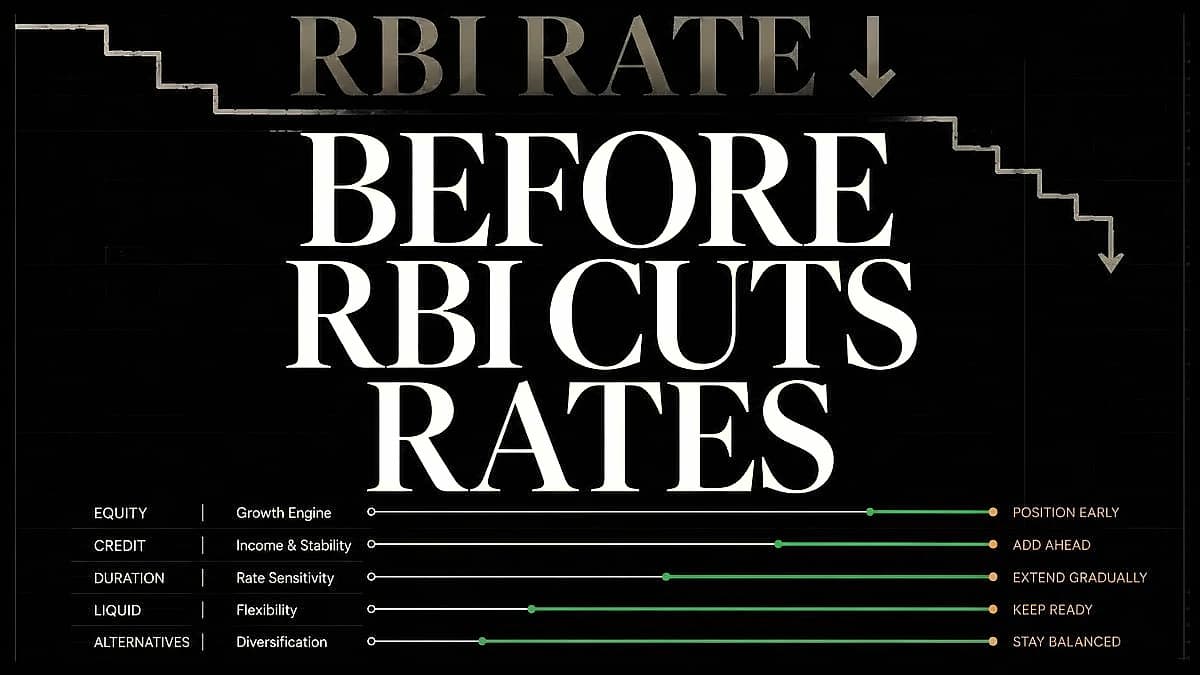
The Reserve Bank of India raised the repo rate by 25 basis points to 5.50% and shifted its stance to 'calibrated tightening', marking the first rate hike in nearly four years. According to reports from Mint, the 10-year government bond yield is near 7.2%, creating a higher opportunity cost for non-yielding assets like gold. The rate hike was widely expected, with 60% of economists polled by Reuters forecasting a 25 bps hike. The bigger takeaway was the change in policy stance, with four of six MPC members voting in favour of the stance, and the RBI indicating that rate cuts are off the table in the near term. The Standing Deposit Facility rate has moved to 5.25%, while the Marginal Standing Facility rate and Bank Rate now stand at 5.75%. As reported by Mint, RBI Governor Sanjay Malhotra indicated that a near-term rate cut is no longer under consideration, meaning the next policy decision is more likely to be either another hike or a pause. Economists peg the hike at anywhere from 25 bps to 100 bps cumulatively in the current fiscal year.
Spot gold was around $4,144 an ounce, down about 0.5% on Wednesday as investors digested the RBI's policy decision. As reported by Mint, MCX gold hovered near ₹1,49,500 per 10 gram for 24-carat gold. Gold is already about 1% lower over the week, from around $4,168 at the end of September, and remains just above its seven-week low of $4,110.55 recorded on September 28. Notably, the precious metal is around 26% below its January 28 record high of $5,589, suggesting that a sizable part of the recent interest-rate adjustment may already be reflected in prices. According to INVAsset PMS business head Harshal Dasani, gold does not trade simply on the policy rate - instead, real yields, the dollar and the reason behind the rate hike are more important determinants of the precious metal's direction.
For borrowers, this would mean higher interest rates on home, vehicle and personal loans, while savers could benefit from better returns on fixed deposits. Floating-rate home loans linked to the repo rate will be directly affected, impacting both existing and new borrowers. As of Thursday, Punjab National Bank, Bank of Baroda, Bank of India and Indian Bank, among others, had increased their repo-linked benchmark lending rate (RBLR) by 25 bps. According to Mint, SBI's loan agreement says rates linked to the EBLR reset on the 15th of every month, while ICICI Bank resets rates once a quarter. A 25-bps hike's impact will not be significant. At 7.5% over 25 years, the monthly EMI could rise by about ₹490 on a ₹30 lakh loan, ₹654 on ₹40 lakh and ₹817 on ₹50 lakh. However, with another hike or a pause likely, borrowers should keep an eye on the loan tenure, as lenders typically extend tenures to keep EMIs unchanged, which costs more over time. The rate adjustment is typically passed on within one to two billing cycles, depending on your loan's external benchmark.

While borrowing costs are rising, this rate hike brings positive developments for savers. Banks will gradually adjust their fixed deposit (FD) interest rates upward to align with the new repo rate. Your existing FDs will continue to earn their booked rates until they mature, ensuring your current returns remain stable. However, any new deposits you open in the coming months will yield higher returns, offering a more rewarding option to grow your capital. This policy change highlights a new phase in the interest rate cycle, where your home loan EMIs will see a moderate rise, but your savings now have a clear path to grow faster. Understanding these shifts and knowing exactly how they impact your outstanding loans and deposits ensures you can keep your household budget balanced and resilient.
The RBI's previous rate cycle between February 2025 and September 2026 shows that changes in the repo rate did not translate equally into loan and deposit rates. During this easing cycle, the repo rate was slashed by 125 basis points, but the average rate on fresh rupee loans fell by only 72 bps, while the rate on outstanding rupee loans declined by 91 bps. The one-year median Marginal Cost of Funds-based Lending Rate (MCLR) fell by only 39 bps, showing that loans linked to internal benchmarks saw considerably slower transmission. New borrowers saw a smaller reduction than existing borrowers, with the average rate on outstanding rupee loans falling by 91 bps compared to 72 bps for fresh loans. The weighted average domestic term-deposit rate (WADTDR) on fresh deposits fell by 95 bps, while the rate on outstanding deposits declined by 53 bps between February 2025 and August 2026. According to the RBI data, 68.2% of outstanding floating-rate loans were linked to external benchmarks at end-June 2026, while 29.6% were linked to MCLR, with private banks showing stronger transmission than public-sector banks.