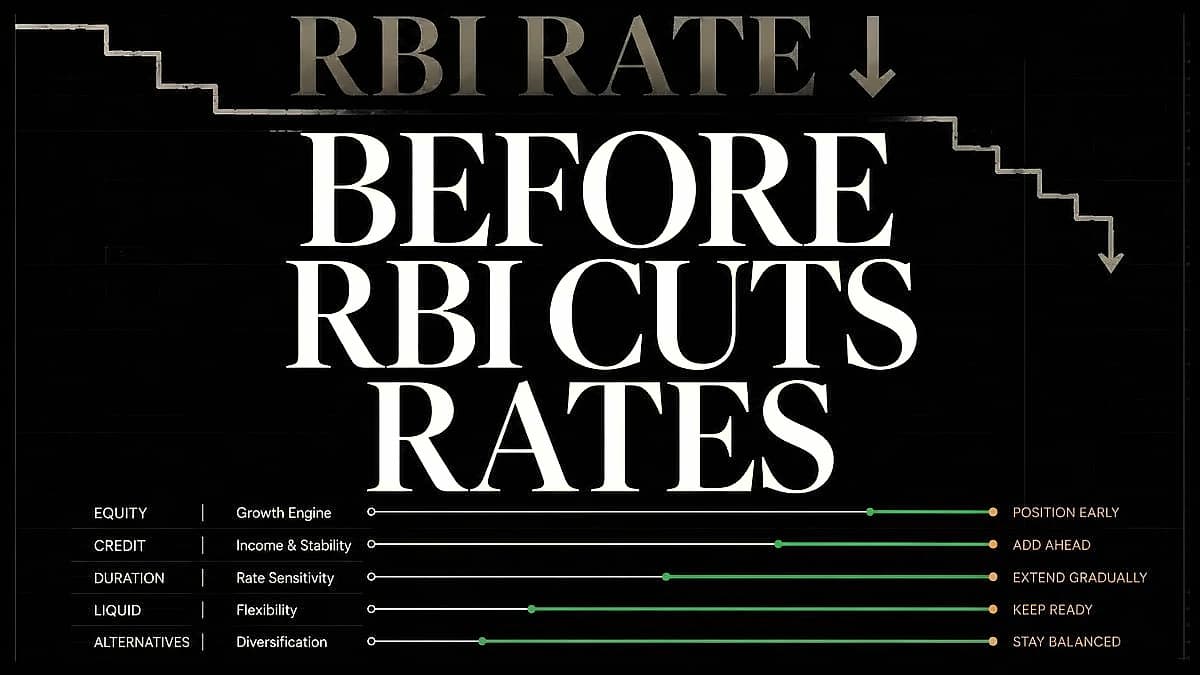
The Reserve Bank of India maintained the policy repo rate at 5.25% for the fourth consecutive monetary policy review, signalling that interest rates are likely to remain stable for now. According to reports from Central Banking, RBI Governor Sanjay Malhotra noted that consumer price inflation had climbed above the RBI's 4% target, reaching 4.4% in June from 3.9% in May. The central bank raised its FY27 GDP growth forecast to 6.7% from 6.6% and lowered its retail inflation projection to 5% from 5.1%. The RBI chose not to react to what it sees as a temporary surge in inflation, citing uncertain growth outlook due to factors including Southwest monsoon conditions, El Nino effects, geopolitical tensions in the Middle East, and global trade policy developments. As per TradingView News, the decision was announced on Wednesday, August 5, with the central bank maintaining its stance despite improved growth and inflation outlook.
Borrowers should not expect immediate relief from higher monthly loan repayments despite the unchanged repo rate. As reported by Mint, Adhil Shetty, CEO of BankBazaar, stated that "borrowers expecting an immediate reduction in EMIs may have to wait a little longer. Since most floating-rate home and personal loans are linked to external benchmarks such as the repo rate, EMIs are likely to remain unchanged at the moment." Chirag Muni, Executive Director of Anand Rathi Wealth, emphasized that "any rate cut will depend on inflation easing on a sustained basis and global risks becoming more predictable." Home loan borrowers should not expect any immediate change in their EMIs as most floating-rate home loans are linked to external benchmark lending rates (EBLR), providing lenders little reason to revise interest rates immediately.
The RBI's decision does not mean banks will immediately reduce fixed deposit rates, as banks factor in multiple variables before revising offerings. According to Mint, Adhil Shetty from BankBazaar noted that "banks have little immediate pressure to make broad changes to deposit rates, however, individual lenders may still make selective revisions." Mahesh Shukla, Founder and CEO of PayMe, added that "stable repo rates and comfortable liquidity mean there is little scope for significant changes in FD rates, although individual banks may tweak rates based on their funding requirements." With inflation projected at 5% for FY27, inflation-adjusted returns on deposits remain limited, making it crucial for investors to consider alternative investment options.
Despite the RBI's marginally lower inflation forecast, households should continue building financial buffers against potential price pressures. As reported by Mint, Adhil Shetty advised that "building a slightly larger buffer into monthly budgets, reviewing discretionary spending and maintaining an adequate emergency fund can help households absorb higher living costs." Chirag Muni noted that while headline inflation is projected at 5%, many households could experience much higher inflation depending on their spending patterns, making regular budgeting and long-term investing even more important. The RBI cautioned that global uncertainties and food- and fuel-related price pressures continue to warrant a cautious approach.
Financial experts continue to advise against altering long-term investment strategies based on single policy announcements. According to Zatakia's recommendations reported by Mint, asset allocation should be driven by financial goals, investment horizon, and risk profile rather than individual policy announcements. For a 35-year-old salaried investor with moderate risk profile investing ₹30,000 monthly, the suggested allocation includes ₹18,000 (60%) in diversified equity mutual funds, ₹9,000 (30%) in debt investments, and ₹3,000 (10%) in Gold ETF or Sovereign Gold Bonds. The expert emphasized that investors should continue systematic investing and periodic rebalancing to maintain desired asset allocation rather than modifying portfolios after every policy announcement.