According to Himanshu Sinha, Partner – Tax Practice at Trilegal, NRIs must first determine their residential status under Section 6 of the Income-tax Act, 2025. The 182-day rule applies where someone is physically present in India for 182 days or more in a year, while the 60-day plus 365-day test requires presence for 60 days or more plus 365 days across the preceding four years. For high earners with Indian-sourced income exceeding ₹15 lakh, the 60-day threshold drops to 120 days. Indian citizens and PIOs visiting India from abroad have their 60-day threshold pushed to 182 days, making short family visits insufficient for residency status. Under FEMA regulations, NRIs are considered Indian citizens residing outside India, while PIOs and OCI cardholders have property purchase rights similar to NRIs with some restrictions. As per The Economic Times, tax residential status is categorized into three categories: Non-resident, Resident but not ordinarily resident, and ordinarily resident, with the distinction being crucial as scope of income taxable in India differs for each category.

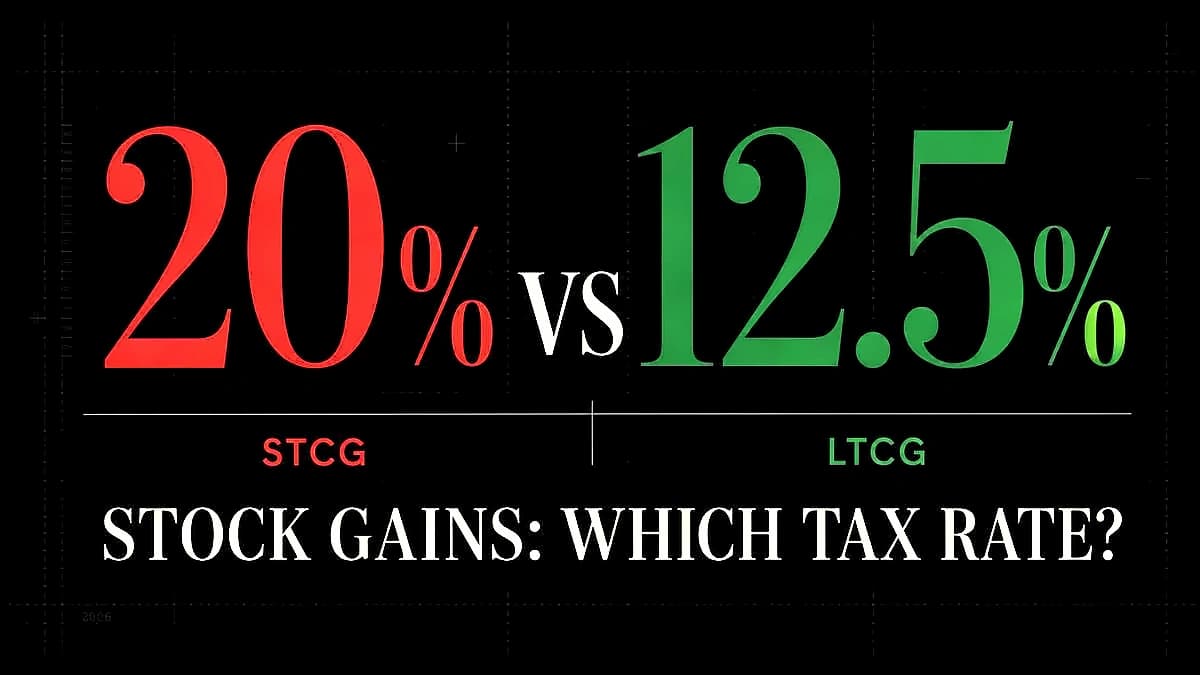
As reported by Trilegal, significant changes occurred with Budget 2024 effective 23 July 2024, which overhauled capital gains taxation across the board. Long-term capital gains (LTCG) on listed equities and equity funds increased from 10% to 12.5%, while short-term capital gains (STCG) rose from 15% to 20%. Real estate and other assets had LTCG flattened to a uniform 12.5% with indexation disappearing entirely for transfers after that date. Unlike resident taxpayers, NRIs received no grandfathering relief, particularly affecting those holding property for extended periods. Recent changes from Finance Act 2023 pulled LTCG concessions on debt mutual funds bought after 1 April 2023, with funds under 35% equity exposure now taxed at slab rates regardless of holding period. For rental income, NRIs face taxation at slab rates with a standard 30% deduction on gross rental income, while tenants must deduct TDS at 30% on rent payments to NRIs. According to The Economic Times, capital gains arising on the transfer of Indian securities are taxable in India at applicable tax rates depending on nature of asset and holding period, with the taxation of listed securities, mutual funds and immovable property undergoing significant changes requiring NRIs to reassess post-tax returns.
According to the analysis, property sales face significant TDS challenges with buyers deducting TDS under Section 393(2) on the entire sale price, not just the gain. For LTCG on property held over 24 months, this works out to approximately 14.95% on the full consideration where income crosses ₹50 lakh. A ₹3 crore sale with actual LTCG tax of ₹30-35 lakh could result in TDS of ₹44-45 lakh, requiring ITR filing and waiting 12-18 months for refunds. The better approach involves applying for a Lower/Nil TDS Certificate on Form 128 under Section 395, ideally 45-60 days before sale, to limit TDS to actual gains. Finance Act 2026 simplified TDS compliance from 1 October 2026, allowing PAN in place of TAN in eligible cases for property buyers. NRIs can also apply for a Lower TDS Certificate from the Assessing Officer by filing Form 13, which involves detailed documentation of actual tax liability. As per The Economic Times, when an NRI purchases property from a resident seller, they must deduct TDS at 1% of sale consideration if the amount exceeds ₹50 lakh, while for non-resident sellers, buyers must deduct tax payable by the seller at source.
As reported by Trilegal, three key exemptions can reduce or eliminate LTCG liability. Section 82 (formerly Section 54) allows reinvestment in one residential property within two years (three years if under construction), capped at ₹10 crore. Section 86 (formerly Section 54F) provides full exemption by reinvesting entire sale proceeds in one residential property, with the same ₹10 crore cap and restriction to owning only one other residential property. Section 85 (formerly Section 54EC) allows up to ₹50 lakh investment in specified government bonds within six months of sale. For unlisted equities, the long-term threshold is 24 months with LTCG at 12.5% without indexation, while STCG is taxed at slab rates with 30% TDS under Section 393(2). Additionally, Section 54EC allows reinvestment in specified bonds (NHAI, REC) within 6 months of sale, with the same ₹50 lakh cap. According to The Economic Times, for equity-oriented mutual funds (over 65% equity exposure), gains are taxed as per applicable slab rates, while specified mutual funds (over 65% debt exposure) acquired after 1 April 2023 are deemed short-term capital gains taxable at applicable slab rates.
According to the report, Double Taxation Avoidance Agreements (DTAAs) under Section 159 of ITA 2025 can provide substantial savings for NRIs. NRO interest taxed at 30% domestically often drops to 10-15% under treaty rates, while dividends taxed at 20% domestically can fall to the same range. Many treaties give taxing rights entirely to the country of residence, potentially eliminating Indian tax if that country doesn't tax capital gains at all. To utilize DTAA benefits, NRIs need a Tax Residency Certificate from their home tax authority and properly filed Form 41, with both documents reaching every Indian payer before the year's first income event. Recent developments include a March 2025 Income Tax Tribunal ruling that held Singapore-based NRI gains from Indian mutual funds weren't taxable in India, citing Article 13(5) of the India-Singapore treaty. India has DTAA treaties with over 90 countries, which prevent NRIs from being taxed twice on the same income. As per The Economic Times, NRIs can rely on DTAA benefits for India-sourced income during non-resident years, with the tax treatment of dividends, capital gains on equity shares, and other income differing significantly across different DTAA agreements which may materially affect post-tax returns.
The NRI property buying process involves navigating unique regulations under FEMA and RBI guidelines. NRI home loans are available from major banks with LTV ratios typically 75-80% and interest rates 0.25-0.50% higher than resident rates. Stamp duty varies significantly across states - Goa offers 3.5-6% for males and females, while Maharashtra ranges 6-8% and Kerala 8-10%. Repatriation limits differ based on purchase funding - NRE/FCNR funded properties allow free repatriation up to original purchase amount, while NRO-funded purchases can repatriate up to ₹1 million per financial year. No limit exists on residential or commercial properties NRIs can purchase, though agricultural land requires RBI approval. Power of Attorney allows full transaction completion from abroad, with specific PoA requirements including limited powers and expiry dates. RERA verification is essential with title deed verification covering minimum 30-year ownership chain, encumbrance certificates, and survey records matching ground reality. According to The Economic Times, investors should ensure investments are made through appropriate banking channels and in compliance with applicable FEMA and RBI regulations to facilitate smooth repatriation of income and sale proceeds, while maintaining adequate documentation including acquisition date, cost records, valuation reports, TDS records, and DTAA-related documentation including a valid Tax Residency Certificate.