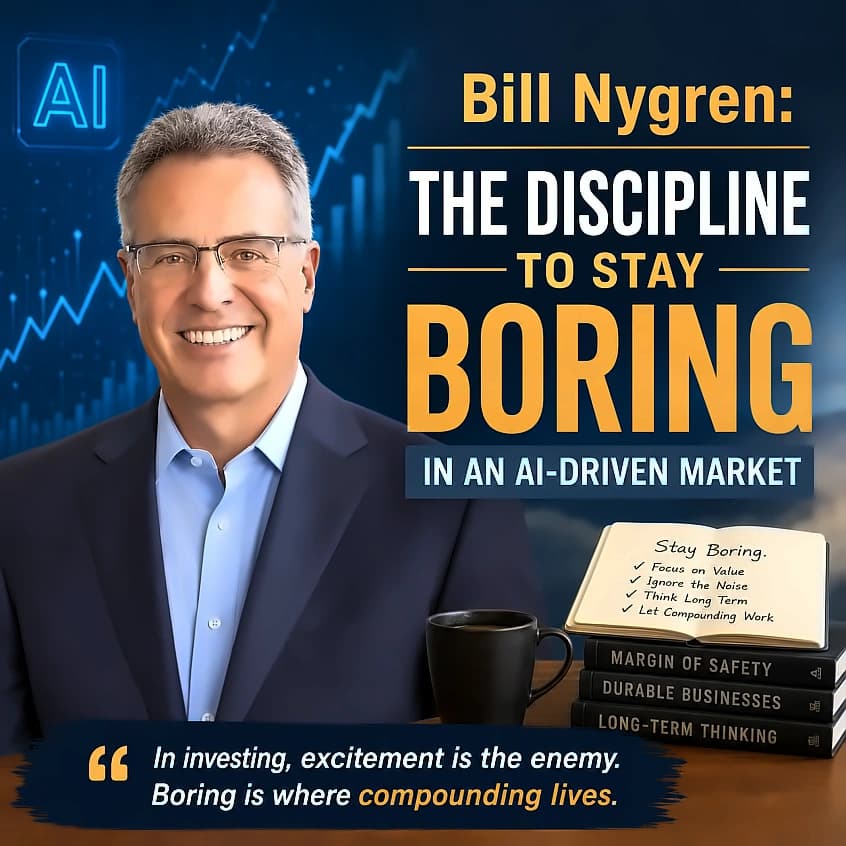
Investors seeking guidance on stock market safety should focus on practical risk assessment methods rather than market predictions. According to recent reports, the key to determining market safety lies in understanding asset allocation strategies, valuation metrics, and individual investment timelines. These fundamental factors provide a more reliable foundation for investment decisions than attempting to predict market movements. Risk tolerance plays a central role in the investment planning process, reflecting an investor's willingness and ability to accept fluctuations in their portfolio's value while pursuing long-term financial goals. Many investors discover their true risk tolerance is different from what they initially expected, with market volatility often bringing about emotional reactions that can influence decision-making, particularly during periods of uncertainty.
The fundamental question isn't whether AI is a bubble, but whether investors are behaving rationally. As François Chollet, creator of the widely-used Keras AI framework, explains, a bubble is not a property of the technology at all - it is a property of the people who are buying. This principle was demonstrated in the late 1990s when internet companies were priced as though the entire future had already arrived, while the actual technology continued to grow and evolve. Even if AI technology works perfectly, has eager customers, and is already making money, a bubble can still form if too many people bet with too much enthusiasm and then panic together. The 2000 technology crash serves as a reminder that better Indian software firms lost most of their value despite being sound businesses that continued growing for two more decades. Bubbles sustain themselves through narrative, not arithmetic, with investors taking real trends and extrapolating them past reasonable mean reversion. The current setup shows yellow signals flashing, including the S&P 500's cyclically adjusted P/E sitting within striking distance of December 1999 levels, but four out of 13 indicators flash similar or worse than 2000, six look genuinely better, and three sit on the watch list.

Asset allocation emerges as the primary safety mechanism for stock market investments. As reported, this approach involves diversifying investments across different asset classes and sectors to reduce overall portfolio risk. The strategy helps investors avoid concentration risk by spreading investments across multiple markets and investment vehicles, providing a more stable foundation for long-term wealth building. Portfolio construction involves more than selecting individual investments - it requires balancing growth objectives, risk considerations, liquidity needs, and time horizon expectations within a broader strategy. A thoughtfully constructed portfolio often reflects an investor's financial goals rather than current market headlines or short-term performance trends. Rather than making all-or-nothing decisions, investors may want to use market strength as an opportunity to review their asset allocation, rebalance portfolios, and ensure they remain appropriately diversified. Opportunities for rebalancing and managing risk could include increasing exposure to bonds, adding international stocks, or reducing concentration in the largest technology names.
Valuation metrics play a crucial role in assessing market safety alongside scenario analysis. According to market analysis, investors should examine price-to-earnings ratios, dividend yields, and other fundamental indicators to determine whether current market levels reflect fair value. Recent stress testing reveals that no asset class holds up across all three macro scenarios, with different sectors performing better under specific disruptions. The AI productivity boom lifts portfolios about 3% on equity strength, while the disorderly AI transition hits software and IT services hardest (U.S. software −26%, IT services −23%), and the supply-side squeeze causes about 9% portfolio losses across equities and high-quality bonds. The S&P 500 Index trades at roughly 20 times projected 2026 earnings, while the equal-weighted S&P 500 trades around 18 times earnings. By comparison, at the peak of the late dot-com era, the largest technology firms in the S&P 500 traded at more than 125 times their estimated earnings. Even valuations on the shares of the mega-cap "Magnificent 7" technology leaders appear reasonable given the group's substantial earnings growth. As Jurrien Timmer, director of global macro at Fidelity, notes: "For now, earnings have been growing so strongly that it's hard to call this a bubble."
Investment philosophy acts as a framework that helps guide portfolio decisions over time and influences how investments are selected and risk is managed. Understanding a firm's investment philosophy can help investors evaluate whether an advisor's approach aligns with their own goals and expectations. Some advisors emphasize long-term discipline and diversification, while others focus on more active strategies designed to capitalize on short-term opportunities. When evaluating an advisor, consider asking questions such as how investment decisions are made, what role diversification plays in portfolio construction, and how risk is measured and managed. These discussions can help investors better understand the principles that guide investment recommendations and develop a more complete understanding of how an investment strategy may support long-term objectives. Effective risk management involves identifying, assessing, and reducing potential investment losses through strategies such as diversification, asset allocation, and disciplined investing. According to market experts, this approach helps investors manage market volatility, protect capital, and make better long-term financial decisions without trying to eliminate risk completely.
Recent testing of AI disruption potential and supply chain risks during early 2026 episodes shows that more-exposed stocks underperformed on average by 8 percentage points during the late-January software sell-off and 5 percentage points during the Iran war's first week. The Indian stock market has witnessed significant growth in retail participation, with easy access to online trading platforms encouraging millions of first-time investors to participate in equity markets. Despite years of strong market performance, Chisholm argues that the broader corporate earnings cycle may still be at a relatively early stage, with median corporate earnings remaining below the previous peak reached in 2018. "It's been 7 years, and we really haven't gone anywhere in terms of earnings growth on a median basis," Chisholm says. Historically, earnings cycles that take longer to recover have often lasted longer once new highs are reached, suggesting this bull market could potentially endure. The key to market safety lies not in predicting bubbles or technology trends, but in understanding that bubbles are created by investor behavior rather than technology itself. As market experts emphasize, the only part of the entire affair you control is your own behavior - the temptation to bet more than you should because everyone around you is doing well, and the panic that will follow when the mood turns. This is why diversified investors who avoid staking their family's future on single stories should focus on building resilient portfolios rather than trying to predict market timing.