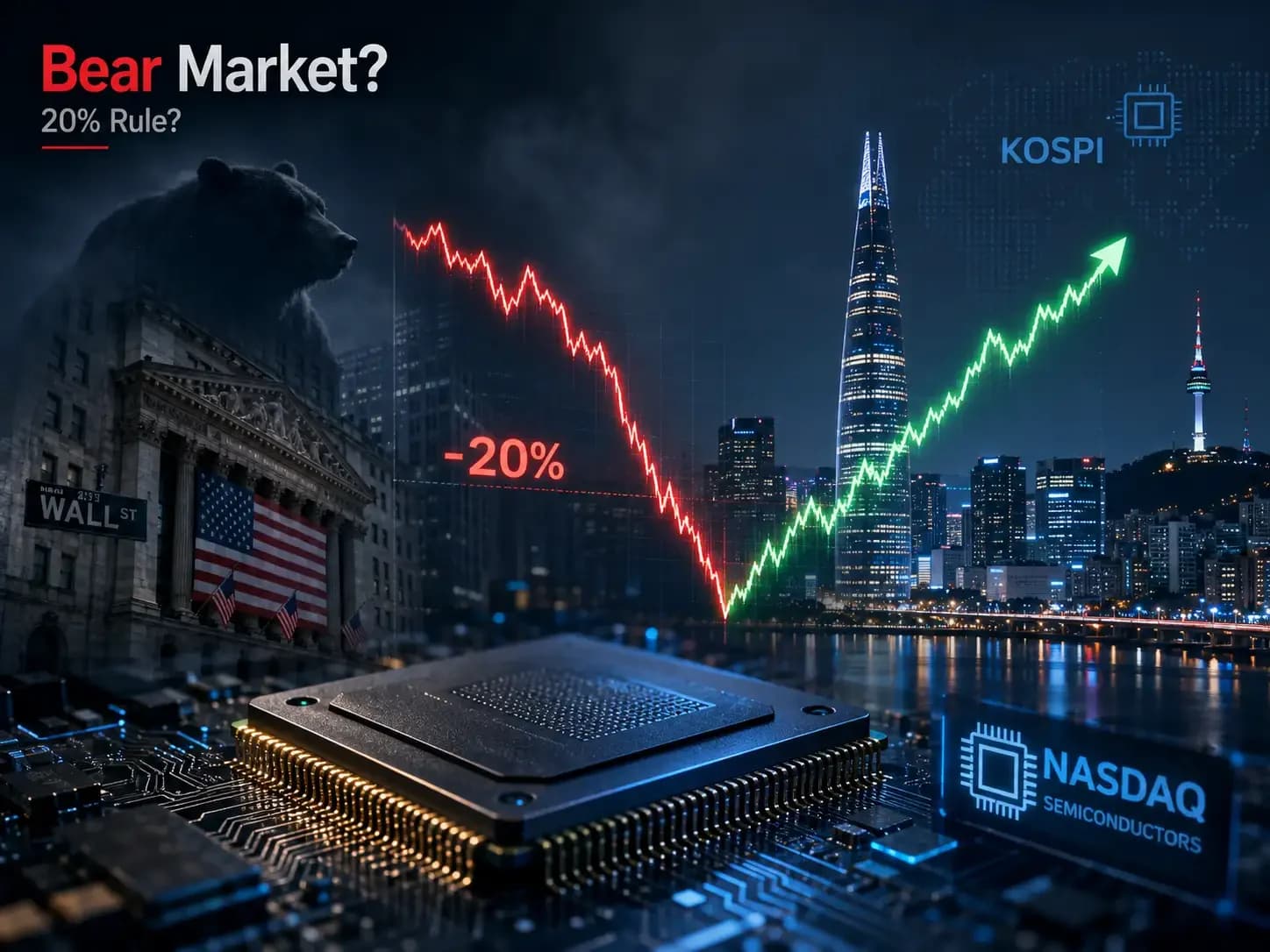
The AI stock rally is facing its most significant technical challenge yet, with USTEC (Nasdaq 100) testing short-term trend support at all-time highs while the one-hour trend weakens. According to Investing.com India, USTEC has pushed back into the 30,449-30,759 all-time-high resistance area but is now testing the lower edge of its 20-EMA trend, creating the first immediate test for the rally. Around 30,255 represents the lowest point USTEC should hold to preserve the local bullish structure, with a rejection from all-time highs potentially being constructive if this support level survives. The technical analysis suggests that a controlled pullback that holds the 50-EMA trend can reset momentum without changing the broader direction, though the current setup remains fragile.
The US stock market has reached unprecedented concentration levels, with the ten largest S&P 500 stocks now comprising 38% of the index, according to reports from Investing.com India. This represents a record high and significantly exceeds the dot-com peak levels. Nvidia alone reaches 8% of the index, marking the largest single weight since data collection began in 1981, while Apple and Microsoft together account for approximately 18%. Unlike the 2000 tech bubble, all ten companies are now tied to the artificial intelligence theme, creating correlated fortunes that make the index a concentrated momentum-driven portfolio. The earnings power driving these market movements is once-in-a-generation, with the EPS estimate for the MSCI Korea index expected to rise 300% in 2026, with a further 35%+ expected in 2027, as reported by SPDR ETFs.
Market breadth indicators have deteriorated to crisis levels, with nearly two-thirds of S&P 500 component stocks declining on Friday despite the index closing up 0.2%, according to FactSet data. Stocks hitting new lows have outnumbered those reaching new highs for 14 consecutive sessions, with Friday's ratio showing 189 new lows versus 34 new highs on the NYSE. This represents a severe breadth problem that has worsened from the strong S&P 500 rally over the past 16 months, which has been led by a relatively narrow group of artificial-intelligence-related stocks. Volume breadth has been more in tune with the market rally due to heavy volume in AI-related stocks, but simple breadth technical indicators have been flashing sell signals for some time and have now entered deeply oversold territory. The Cboe Volatility Index VIX, while remaining below its 200-day moving average at 14.87, has produced a 'spike peak' buy signal for stocks after spiking up at least 3.00 points over a three-day period, marking the first such signal since early last June.
Emerging markets have experienced even more dramatic concentration shifts, with TSMC alone representing 14% of the MSCI EM Index, surpassing every Indian stock combined, as reported by Investing.com India. Three semiconductor companies - TSMC, Samsung Electronics, and SK Hynix - now account for 26% of the benchmark, while the top ten companies represent 38%. This represents a stark transformation from ten years ago when the largest constituent was only 3% and the top ten represented 23%. Taiwan has overtaken China as the largest country weight, and information technology approaches 37% of the emerging market benchmark, making it effectively a leveraged play on AI hardware with a China overlay. Only about 10% of MSCI EM index names were outperforming as of July end, with the median emerging market firm having a negative return year-to-date for 2026, as noted by SPDR ETFs.
The AI investment cycle shows no signs of slowing, with the total AI addressable market projected to reach USD 3.1 trillion by 2030, growing at a 30% CAGR from 2026, according to latest market analysis. However, the sharp rise and rebound in semiconductor companies and other AI-linked parts of the market this year has heightened the risk of single-stock concentration. Investment experts now favor diversified exposure across AI infrastructure, networking, software, applications, and companies using AI to raise productivity, rather than excessive reliance on a few market leaders. The analysis identifies three enduring market drivers - AI, Power and resources, and Longevity - as Transformational Innovation Opportunities (TRIOs) that should be investors' first task when building long-term stock allocations. For investors already exposed to AI and Power and resources themes, Longevity exposure may provide diversification as historical correlations between these themes have generally been low or negative relative to global equities, though past correlations may not persist as reliable indicators of future performance.

Despite record concentration levels, the performance data continues to favor passive management strategies. According to Investing.com India, over fifteen years, roughly 90% of active US large-cap funds trail the S&P 500, while Morningstar finds that only 21% of active funds across all categories both survived and beat their average passive peer over ten years. The corporate bond results reflect passive funds sitting in the curve's five-to-seven-year sweet spot in 2025, creating advantages that almost no manager could overcome on top of the fee gap. Morningstar's European barometer covering nearly 32,000 funds shows bond categories above 55%, emerging market equity near 50%, and UK and European large caps well below 30%. The related payoffs on style bets have been growing amid the narrowing market concentration, creating dispersion that is nearly unavoidable for managers attempting to play in one corner or another of the market. Historical analysis shows that between 1990 and 2020, just 2.4% of US companies and 1.4% of non-US firms account for 100% of stock market returns, making picking the right themes and companies at the forefront crucial for long-term equity returns.