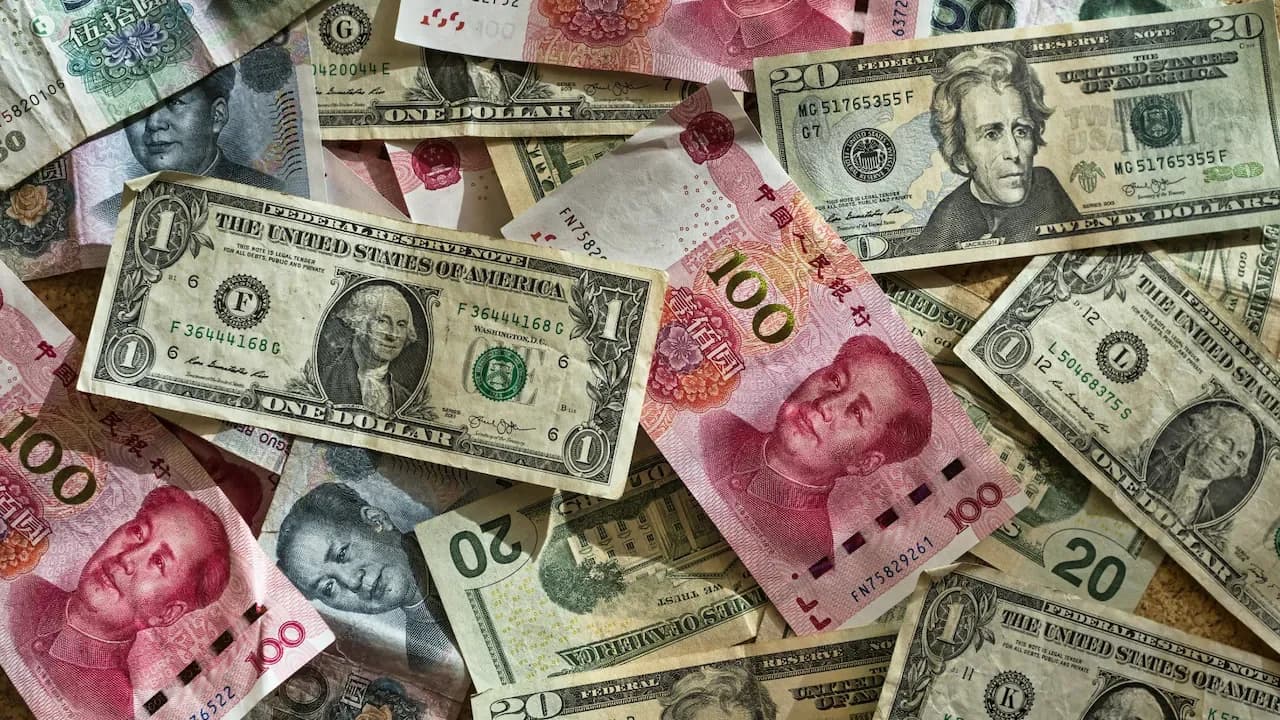
According to recent analysis, global trade imbalances have evolved significantly since the 2008 financial crisis, now reflecting US-China rivalry and shifting geopolitics rather than debt-fuelled consumer excess. The concept of 'global imbalances' refers to persistent gaps between countries' current account positions, covering trade in goods and services as well as investment income. While the US remains the world's principal deficit economy, its current account deficit has narrowed from 1.6% of global GDP in 2006 to 0.9% last year, partly due to the transformation of the US into a major energy producer. However, China's current account surplus has increased, reaching 0.8% of global GDP last year, above its 2008 crisis peak relative to world output. This shift raises concerns about China's growing dominance in sectors such as electric vehicles, batteries and advanced manufacturing, extending beyond economics into national security and industrial resilience.
According to reports from The Economic Times, Devina Mehra advised investors to prioritize long-term portfolio construction over geopolitical events, citing over a century of market history where wars have had minimal lasting impact. Speaking at the ET Alpha Wealth Summit, Mehra analyzed over 125 years of market data covering major geopolitical events including the two World Wars, Gulf Wars, September 11 attacks, and military conflicts in Libya and Afghanistan. Her analysis revealed a remarkably consistent pattern where markets have historically moved past geopolitical shocks within months unless the country involved in the conflict is directly affected and defeated. The current environment presents both opportunities and challenges for fixed income investors, with firms maintaining a neutral to underweight stance on areas like autos, retail and consumer goods due to high interest rates.
As reported by The Economic Times, Mehra recalled making a similar argument when tensions between Russia and Ukraine escalated in early 2022, stating that on the day the war broke out, she predicted markets would forget about it in six months. She emphasized that while geopolitical events can temporarily influence commodity prices and corporate earnings, most major financial crises have historically emerged from economic and financial imbalances rather than military conflicts. Her conclusion was clear: do not react too much to geopolitics because it all evens out over time. The current pattern of imbalances differs from the mid-2000s, with external deficits generally smaller than they were then and fewer signs of private sector financial excess.
According to The Economic Times, Mehra highlighted that market leadership changes regularly across countries, sectors and investment styles. Between 2003 and 2008, the US market delivered relatively modest returns while India, Brazil and broader emerging markets significantly outperformed. She noted that people often think the US is the world, but there have been long periods when the US underperformed. The current backdrop differs from the era of globalization that defined the 1990s and 2000s, with multilateralism and integration giving way to increasing geopolitical rivalry between the US and China. While the US's external deficit has decreased in global terms, China's surplus has increased, creating new challenges for other surplus economies from intensifying competition with Chinese firms, particularly affecting Europe's export share across vehicles, machinery and metals industries.
As noted in the IMF's Finance & Development magazine, the concept of geoeconomics has resurfaced in forums as if it is a new phenomenon, when in reality powerful nations have always used it in disguise. The Bretton Woods institutions, such as the IMF and the World Bank, the dollar's role as the world's reserve currency, and the financial architecture built around it were not merely economic arrangements but geoeconomics. In the 1980s and 1990s, these institutions pushed liberalisation, privatisation, and globalisation across much of the developing world, with many countries including India gaining faster growth, lower poverty, and a more dynamic private sector. However, the process was not politically neutral, with advanced economies often keeping their own subsidies and protections while preaching openness abroad. Former Foreign Secretary Vijay Gokhale argued that Western thinking around war and peace is often binary, while for most Asian countries, the absence of war does not necessarily imply peace, as demonstrated by India and China's continued border tensions alongside substantial trade relations.