Sovereign Gold Bonds (SGBs) offer annual 2.5% interest that is fully taxable under existing tax rules, even though the bonds themselves enjoy certain tax benefits. According to tax experts, the tax treatment depends on whether income is interest or capital gains, and how the bonds were disposed of. The interest is taxed in accordance with the investor's applicable income tax bracket and should be recorded under Schedule OS (Income from Other Sources). Under the new Income-tax Act, 2025, the taxation framework remains largely unchanged from the previous 1961 Act, with the material rate changes made by the Finance (No. 2) Act, 2024 taking effect from 23 July 2024. The Income-tax Act, 2025 came into force on 1 April 2026, replacing the Income-tax Act, 1961 for income earned in Tax Year 2026-27 onwards, while returns for FY 2025-26 continue to be governed by the 1961 Act.
The annual 2.5% interest earned on SGBs is fully taxable under the existing tax framework. Since government securities are excluded from TDS under Section 193 of the Income-tax Act, there is no tax deducted at source (TDS) on this interest. Taxpayers can report this income while filing ITR-1, ITR-2, ITR-3 or ITR-4, depending on their other sources of income and eligibility. The ITR filing deadline for individuals who don't need an audit, for Tax Year 2026-27, is 31 August 2027 - extended from the earlier 31 July norm. Under the new tax regime (Section 202 of the 2025 Act), this interest remains fully taxable at slab rates, unlike the old regime where it could benefit from deductions under Section 80C. The rebate (Section 87A / Section 156) does not extend to income taxed at special rates, so equity capital gains attract tax even where total income is otherwise within the rebate threshold.
According to regulations for Assessment Year 2026-2027, capital gains are not subject to taxation if an investor subscribed to the bond in the initial RBI offer and retains it until its scheduled maturity. The exempt gain can be reported in Schedule EI (Exempt Income) if appropriate. This exemption applies specifically to original subscribers who purchased SGBs at issuance and held them until maturity. However, Budget 2026 introduced significant changes that narrow the scope of this exemption, as explained below.
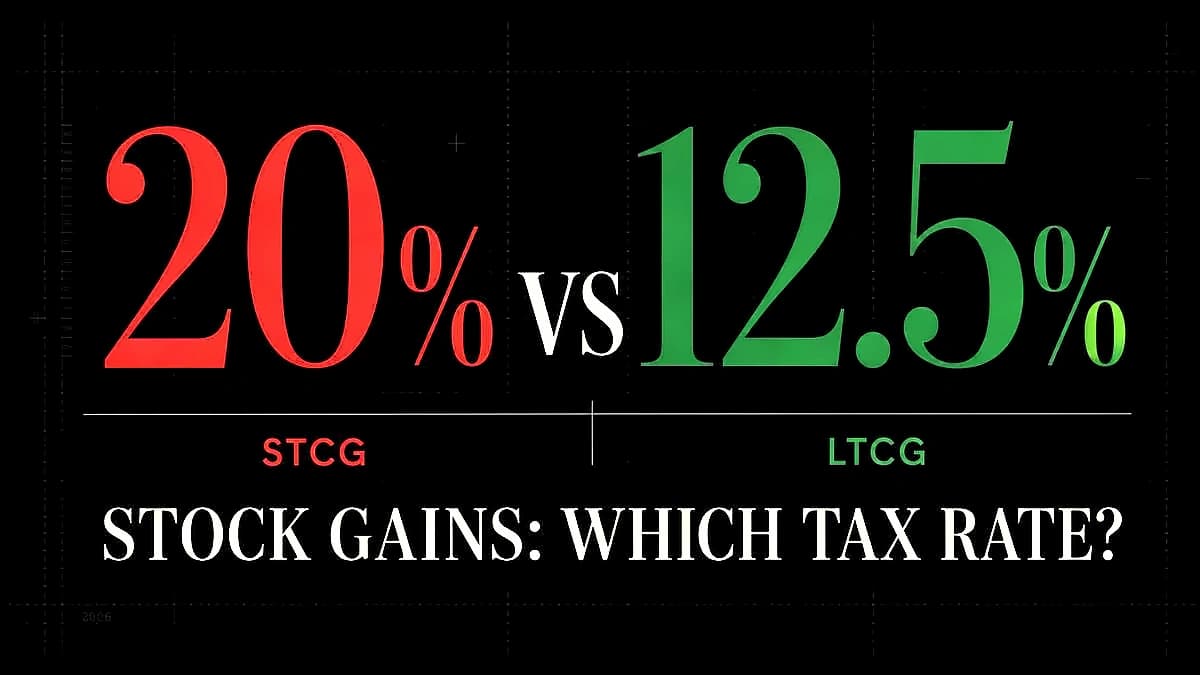
When SGBs are sold on a recognized stock exchange prior to maturity, the profits are taxable and must be reported under Schedule CG (Capital Gains). The applicable tax depends on the holding period of the bonds. Budget 2026 introduced significant changes that will affect secondary market transactions, with the capital gains exemption on redemption now only available to original subscribers who buy SGBs at issuance and keep them until maturity. Any profits from secondary market purchases are now subject to 12.5% Long-Term Capital Gains (LTCG) tax if held over 12 months, with no indexation benefits. Under the new tax regime, these gains are taxed at slab rates, with no LTCG exemption available. Holding periods for long-term classification stand simplified since 23 July 2024: 12 months for listed securities and equity-oriented funds, and 24 months for all other assets, including immovable property, unlisted shares, and gold.
A significant modification in Budget 2026 is that the capital gains exemption on redemption will only be available to original subscribers who buy SGBs at the time of issuance and keep them until maturity. This exemption will not apply to investors who purchase SGBs from the secondary market. The new Section 70(1)(x) of the Income-tax Act, 2025 replaces the old Section 47(1)(viic) from April 1, 2026, but maintains the same basic principle that gains are tax-free only for original RBI subscribers holding bonds continuously for the full 8-year term. Under-reporting SGB capital gains attracts a penalty under Section 439 of the Income-tax Act, 2025, which works out to 50% of the tax on the under-reported income, or 200% if it's treated as misreporting. Under the new tax regime, there is no rebate available for SGB capital gains, making the old regime more beneficial for tax planning. The Finance Act, 2026 made no change to capital gains rates or holding periods, with the framework legislated in July 2024 continuing undisturbed into Tax Year 2026-27. Importantly, these Budget 2026 changes will apply only from AY 2027-28, when the new Income Tax Act, 2025, comes into full force.