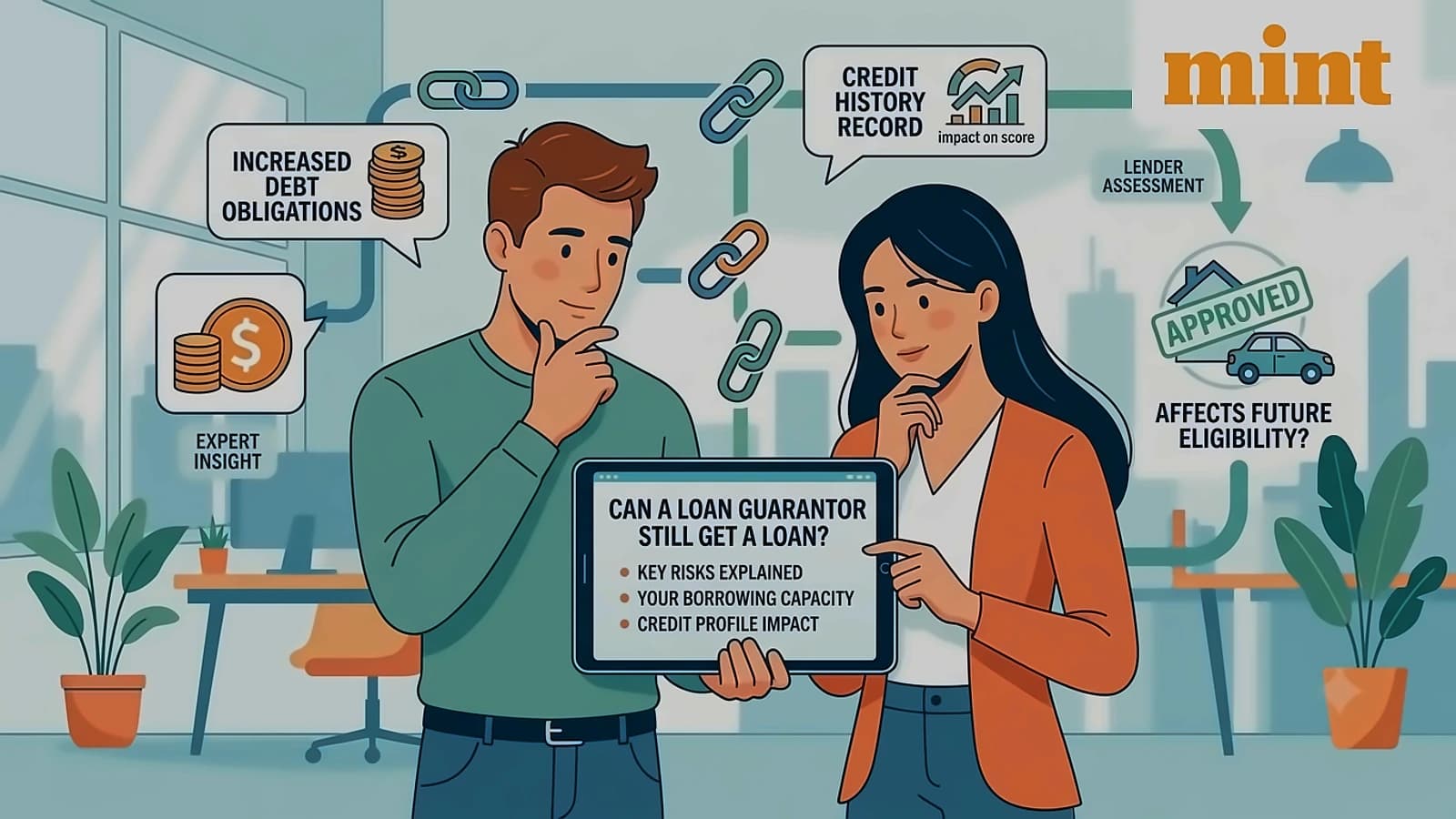
Becoming a loan guarantor involves full responsibility for the loan if the primary borrower fails to meet repayment obligations. According to reports from Mint, this means the decision carries major financial implications for the guarantor's own financial health, credit profile, and future borrowing potential. The guarantor assumes complete liability for the borrower's debt, making this decision far more than a mere formality. As explained by Shakti Sekhawat, Business Head at BharatLoan, "Becoming a loan guarantor can impact your credit profile, as the guarantor takes on responsibility for the borrower's loan repayment. While timely repayments may not negatively affect the guarantor's credit score, delayed payments or a loan default can adversely impact their credit history and may also affect their future loan eligibility."

Missed payments or delays by the primary borrower can adversely impact the guarantor's credit history and future loan eligibility. As explained by Shakti Sekhawat, Business Head at BharatLoan, "The loan appears on the guarantor's credit report the moment they sign, impacting their debt-to-income ratio and potentially limiting their own borrowing capacity." The actual impact on the guarantor's credit profile depends on how the loan is reported, managed, and repaid. Every missed payment by the primary borrower hits the guarantor's credit score as hard as if the loan were their own. According to Raj P Narayanam, Executive Chairman at Zaggle, "If the primary borrower defaults, the lender comes to you first and every missed payment hits your credit score as hard as if the loan were your own."
The implications extend beyond credit scores to future loan applications and borrowing terms. According to Raj P Narayanam, Executive Chairman at Zaggle, "Even future loan applications might be rejected due to the guarantor relationship. The amount a guarantor can borrow or the terms offered on loans can be influenced by their guarantor status." As noted by Mint, becoming a loan guarantor is a financial commitment most people underestimate. The decision should be treated with the same seriousness as applying for and taking out a fresh loan, with proper planning and consideration of all potential consequences. Kuldeep Yadhuvanshi from Rupee112 emphasizes that "If not properly planned, such an agreement can also damage relationships beyond the guarantor's credit score and overall credit profile."
Financial experts emphasize that guarantors should thoroughly understand the terms, evaluate the borrower's repayment ability, and consider whether they are financially prepared to take on the repayment obligation. Rohit Mahajan, Founder & CEO at plutos ONE, advises that "A guarantor should never look at the role as simply signing a document. You are effectively taking responsibility for someone else's debt. Before becoming a guarantor, assess whether you would personally be comfortable repaying the entire loan if the borrower stops paying." Kuldeep Yadhuvanshi from Rupee112 notes that acting as a loan guarantor is a significant financial responsibility that can affect one's credit profile. The agreement should be treated with the same seriousness as applying for and taking out a fresh loan, with proper planning and consideration of all potential consequences.
The decision to become a loan guarantor should be based on clear understanding of applicable terms and thorough evaluation of the borrower's repayment capacity. As reported by Mint, helping someone financially is valuable, but it should never come at the cost of the guarantor's own financial stability. The agreement should be treated with the same seriousness as applying for and taking out a fresh loan, with proper planning and consideration of all potential consequences. Emotions and trust are two primary reasons why individuals agree to become guarantors, but this decision should not be made on just emotions. Having a clear understanding of the applicable terms is a must, with experts advising that before signing as a guarantor, individuals should thoroughly understand the terms, evaluate the borrower's repayment ability, and consider whether they are financially prepared to take on the repayment obligation if required.