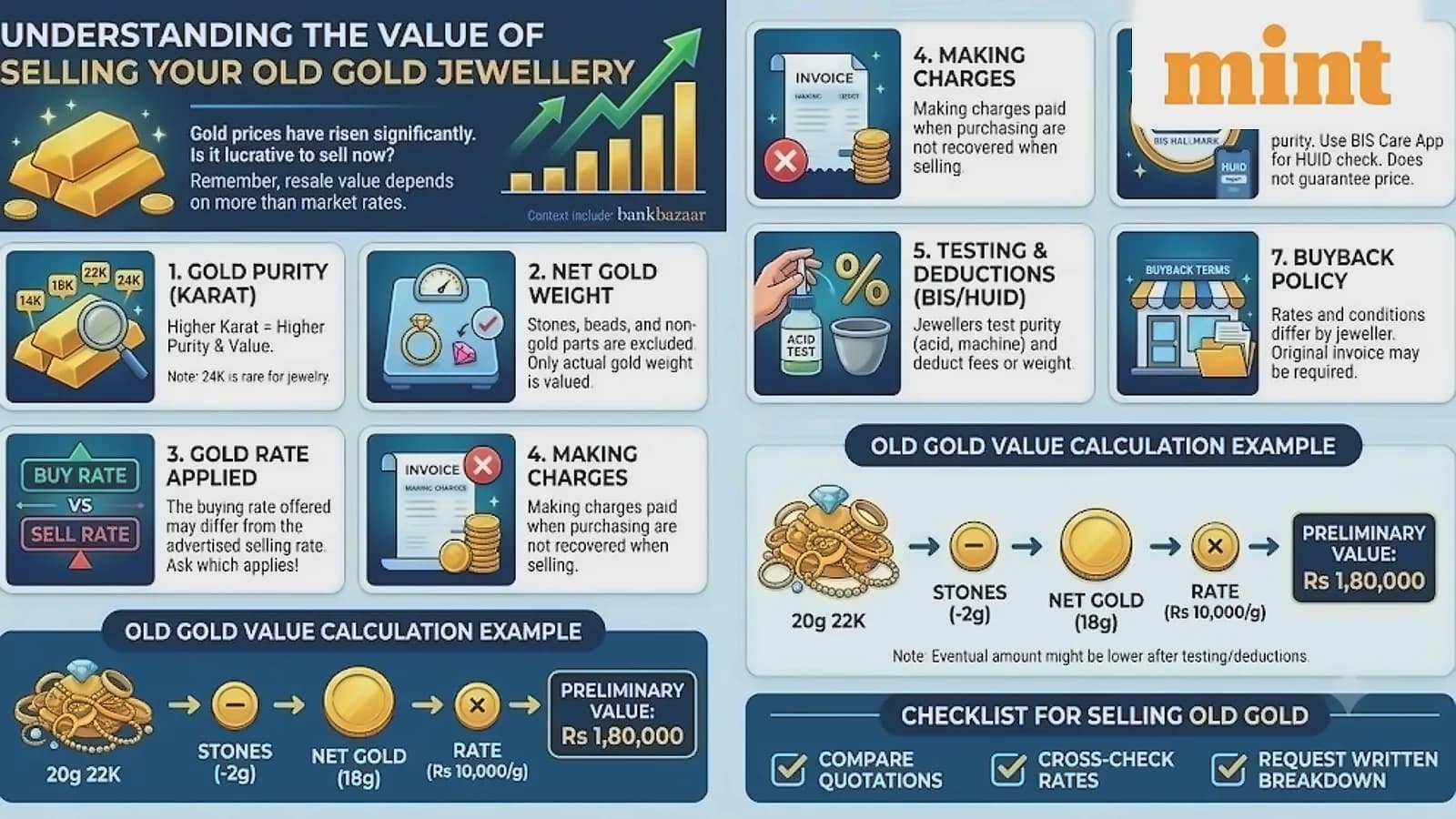
Gold loans allow borrowers to pledge eligible gold jewelry or bullion for short-term financing instead of selling their assets. According to The Economic Times, lenders such as Bajaj Finance use the lower of the previous day's closing price or the 30-day average price published by the India Bullion and Jewellers Association (IBJA) or a SEBI-regulated commodity exchange. This approach helps reduce the impact of short-term price fluctuations and supports fair and consistent valuation. The final loan amount depends on the gold's purity, net weight after excluding stones or other materials, applicable valuation methodology, and Loan-to-Value (LTV) limits.
Gold prices are influenced by global gold rates, currency movements, import duties and local demand, as reported by The Economic Times. Gold prices are usually quoted per 10 grams for both 22K and 24K gold, though the final price of jewelry also includes purity, making charges and GST. Two jewelry pieces of the same weight may have different prices due to differences in purity, design and making charges. The final price of gold also includes making charges and applicable GST, making it important for borrowers to understand these factors when evaluating their pledged assets.
Interest rates on gold loans vary widely depending on the lender, the loan-to-value ratio, and the repayment structure. When borrowers miss payments, the outstanding interest doesn't freeze - it gets added to the principal, creating a compounding effect that can quietly balloon debt to exceed the value of pledged items. As reported by Indian Television Dot Com, say you borrowed ₹2 lakh against gold jewelry worth ₹3 lakh. After months of missed payments, penalties, and compounded interest, your total liability might climb to ₹2.8 lakh or more. The comfortable margin between your loan and your gold's value has almost vanished, and if gold prices have dipped during that period, the math gets even worse.

Lenders have the legal right to auction pledged gold if borrowers fail to repay loans, with the Reserve Bank of India laying down guidelines for regulated entities. Before any auction, the lender must send adequate notice to the borrower, typically giving them a final window to settle dues and reclaim their valuables. For gold loans from banks and RBI-regulated NBFCs, borrowers receive proper notice before auction proceedings begin. If the auction fetches more than the total liability, the surplus is supposed to be returned to the borrower, though chasing that surplus can be frustrating and slow in practice. Borrowers have the right to request settlement or restructuring before auction begins, as many lenders prefer this option due to administrative costs and logistical hassles.
The blunt truth is that losing pledged valuables to lender auctions is almost always avoidable through proper financial planning and communication. Most lenders offer grace periods of a few days to weeks after missed payments, during which borrowers can make payments with late fees attached. The key is early communication with lenders at the first sign of trouble rather than waiting until the situation escalates. Borrowers should never borrow more than they can realistically repay and should understand the compounding effects of missed payments on secured loans. Using gold loan interest rate calculators before signing agreements can help stress-test scenarios and understand the true cost of borrowing.