June 15, 2026, marks a crucial compliance date for Indian taxpayers, coinciding with three major financial obligations. According to reports from Mint and Zee News, today marks an important compliance date for all taxpayers, salaried employees, central government staff, pensioners and associated stakeholders as several key financial and administrative deadlines converge. The deadline represents the final submission window for 8th Central Pay Commission representations, the availability of Form 16 and Form 16A documents for FY 2025-26, and the first instalment of advance tax for FY 2026-27. The 8th CPC website has confirmed that no further extensions will be granted beyond this final deadline.
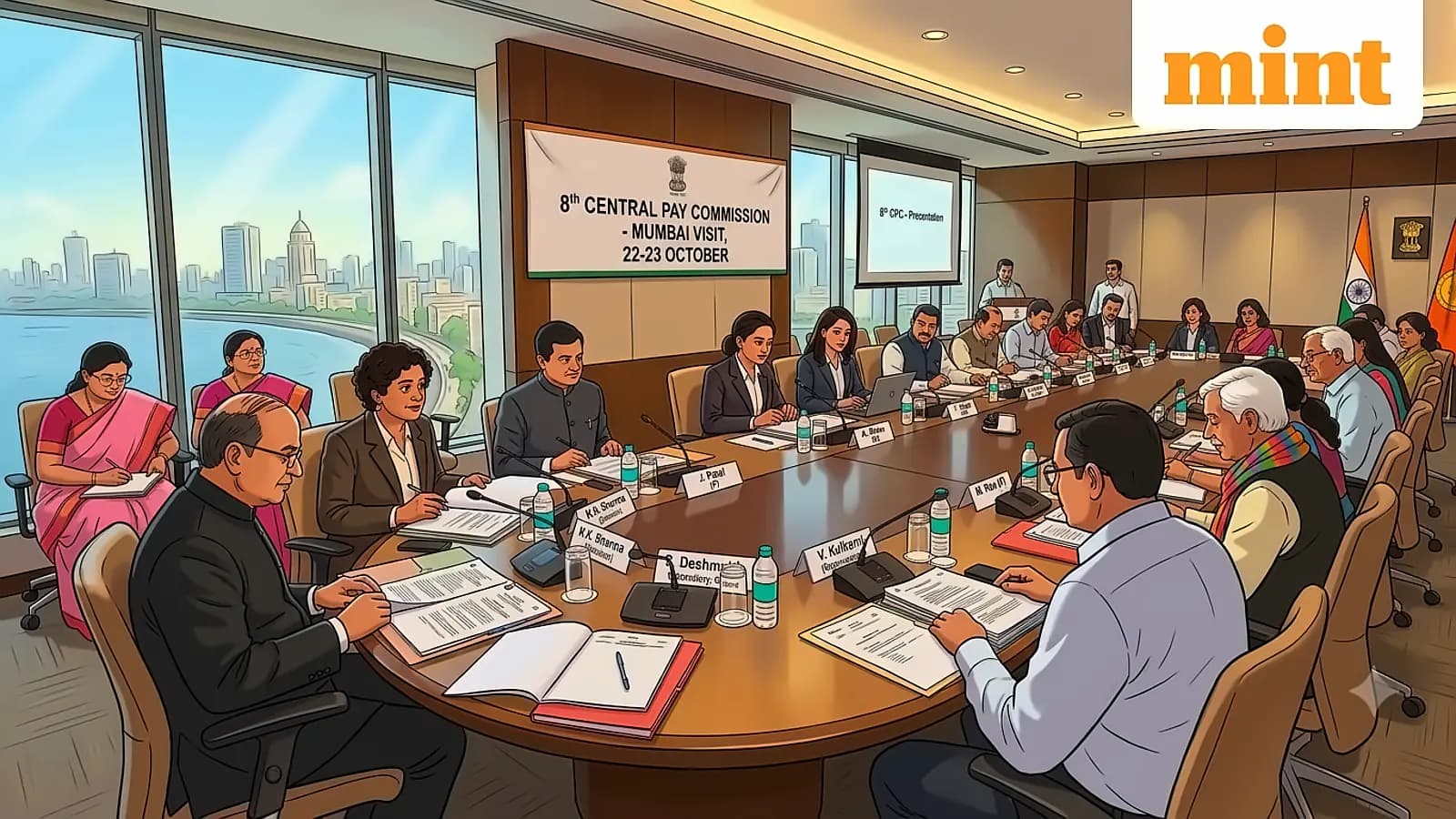
Today is the final day for all organisations, stakeholders, associations, employee unions, and pensioner groups to submit representations to the 8th Pay Commission. As reported by Mint and Zee News, the current deadline was extended several times during the consultation and discussion process, and finally concluded today. The commission has explicitly stated that they will provide no further extension, emphasizing the importance of meeting this critical deadline for government employees seeking pay revisions. The memorandum submission deadline was extended to June 15, 2026, providing additional time for employees, pensioners, and associations to submit their representations. The debate surrounding the 8th Pay Commission has gathered momentum after the staff side of NC-JCM called for a fitment factor of 3.833, with several prominent employee unions, participants and concerned stakeholders having already submitted recommendations covering pay revisions, allowances, pension reforms, gratuity limits and retirement-related benefits. Currently, the demand for fitment factor revision primarily hovers between 3 to 4x, with more submissions awaited.
The 8th Pay Commission has significantly expanded its stakeholder outreach through a comprehensive series of regional consultations across multiple states. According to Mint, the Commission has scheduled visits to Lucknow (June 22-23, 2026), Bhubaneswar (July 6-7, 2026), and Kolkata (July 9-10, 2026) to gather feedback from employee organizations and pensioner groups. Lucknow meetings are scheduled from June 22-23, 2026, with stakeholders having till June 10 to make appointments. Bhubaneswar consultations are planned for July 6-7, 2026, with appointment requests due by June 15, 2026. Kolkata meetings are scheduled for July 9-10, 2026, also requiring appointments by June 15, 2026. These planned visits highlight the Commission's clarity and focus on the importance of regional consultations, with the goal to provide ample opportunities for aspirants to share their views and grievances. The Union Cabinet cleared the Terms of Reference on October 28, 2025, after which the Commission formally initiated consultations, discussions and stakeholder outreach.
Form 16, the TDS/TCS certificate for salary income, must be issued by employers within the stipulated timeline and reflects tax deducted at source during FY 2025-26. According to Mint and Zee News, employers are currently in the process of issuing Form 16 for the financial year FY 2025-26, with the distribution underway ahead of the income tax return filing season. Under the Income Tax Act 2025, Form 16 has been renumbered as Form 130 for Tax Year 2026-27, but salaried taxpayers for FY 2025-26 will continue to receive Form 16 in the existing format. With approximately 45 days remaining for the July 31 ITR filing deadline, the Form 16 availability is crucial for tax compliance. As per the latest guidance, Form 16 is not mandatory to file ITR, but having it makes the process significantly more accurate and easier, with employers required to issue it by June 15, 2026 as per CBDT rules.
The first instalment of advance tax for FY 2026-27 must be paid by June 15, 2026, requiring taxpayers to pay tax on income during the financial year rather than waiting until year-end. As reported by Mint and Zee News, advance tax applies to taxpayers whose estimated tax liability for the financial year exceeds the prescribed threshold after accounting for TDS and other tax credits. It is particularly relevant for self-employed professionals or business owners, business owners with an established setup, freelancers and consultants, investors who have earned capital gains, and individuals with significant rental or interest income. Under the advance tax schedule, taxpayers are required to carefully review and pay off their estimated annual tax liability by 15 June. Taxpayers with an estimated net tax liability of more than ₹10,000 must pay 15 percent of their advance tax by this date, with a 1 percent monthly interest penalty if the deadline is missed. This marks the first advance tax cycle operating completely under the newly introduced framework of the Income Tax Act 2025 and the Income Tax Rules 2026.
The 8th Pay Commission, chaired by former Supreme Court Justice Ranjana Prakash Desai, is expected to submit its final recommendations around February 2027, approximately 18 months after its constitution on November 3, 2025. As per Mint reports, once the pay commission's recommendations are made, the rollout takes another 2 to 3 years to complete, meaning hikes announced in 2027 may only be fully implemented by 2029 or 2030. The commission includes Pankaj Jain, a former IAS, as Member-Secretary, and Professor Pulak Ghosh, tenured Professor of Finance, Member of the Economic Advisory Council to the Prime Minister, as a Member of the Commission. The panel is expected to make significant decisions impacting salaries of nearly 50 lakh central government employees, including defence personnel, and around 65 lakh retired central government pensioners, including defence retirees. Beneficiaries include industrial and non-industrial central government employees, personnel belonging to the All India Services, Defence Forces, Union Territories; officers and employees of the Indian Audit and Accounts Department, members of the Regulatory Bodies, officers and employees of the Supreme Court, officers and employees of the High Courts whose expenditure is borne by UTs, judicial officers of the subordinate courts in UTs, pensioners, service associations or unions, central government ministries or departments or organisations and UTs.