A record 7.8 crore income tax returns have been filed for Assessment Year 2026-27 by August 31, 2026, with the income tax department confirming this milestone. This achievement represents a significant increase from the previous year, when over 73 million ITRs were filed by September 16, 2025 for AY 2025-26. The latest figures include more than 59 million ITR-1 and ITR-2 returns filed by the July 31 due date, demonstrating unprecedented compliance levels among taxpayers. This achievement represents a significant increase from previous years and shows improved taxpayer awareness and preparedness for meeting statutory obligations. The ITRs filed so far mark the end of the revised statutory deadline for taxpayers with business or professional income whose accounts are not required to be audited.
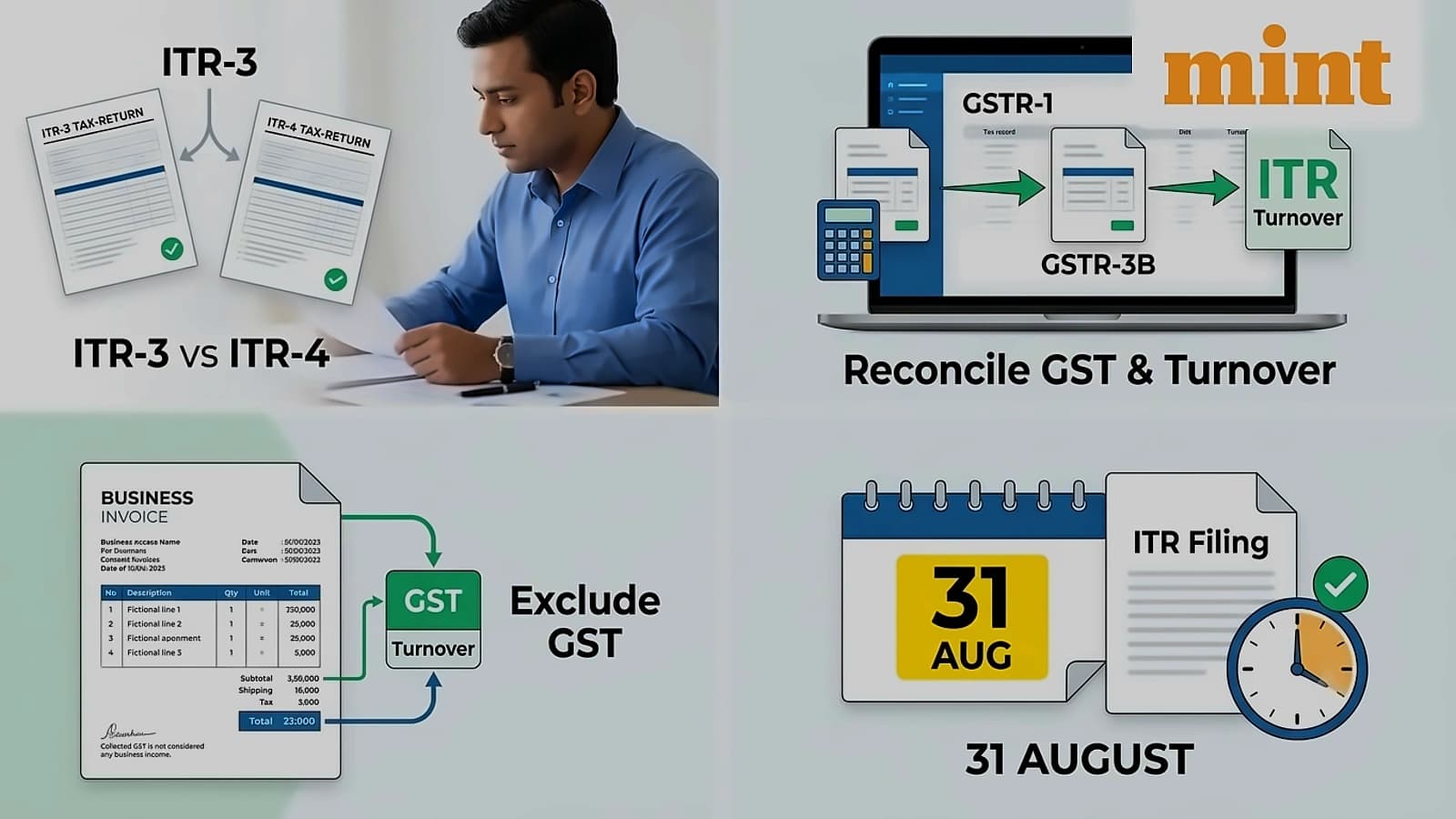
GST-registered taxpayers filing ITRs for AY 2026-27 must choose the correct form based on their accounting method rather than GST status alone. According to Mint reports, taxpayers who maintain regular books of accounts and declare business income on an actual basis are required to file ITR-3. ITR-4 is available to eligible resident individuals and HUFs who have opted for the presumptive taxation scheme under Sections 44AD, 44ADA or 44AE. The income should be reported under the head "Profits and gains of business or profession," as explained by Siddharth Maurya, Managing Director of Vibhavangal Anukulkara. For ITR-5, it applies to LLPs, AOPs, BOIs and other artificial juridical persons covered under ITR-5 and not requiring audit. ITR-7 is applicable to firms, LLPs, AOPs, BOIs, artificial juridical persons, co-operative societies and other entities excluding individuals, HUFs, companies and trusts.
Under the revised return-filing schedule introduced through amendments to the Income-tax Act, 1961, under the Finance Act, 2026, non-audit business and professional taxpayers had until August 31 to file their returns, while the due date for those under none of the specified categories was July 31. Business and professional taxpayers under the non-audit category have a month more than other taxpayers to file their Income Tax Returns. Business and professional taxpayers who need their income to be audited can file their returns till October 31, while November 30 applies to taxpayers covered by transfer-pricing provisions under Section 92E. Under Section 44AB, if the total sales, turnover or gross receipts of a taxpayer's business exceed ₹1 crore, a tax audit becomes mandatory. The threshold for businesses rises to ₹10 crore if cash transactions are within 5 per cent of the total transactions. For professionals, the limit comes down to ₹50 lakh, subject to other conditions under the Income-tax law.
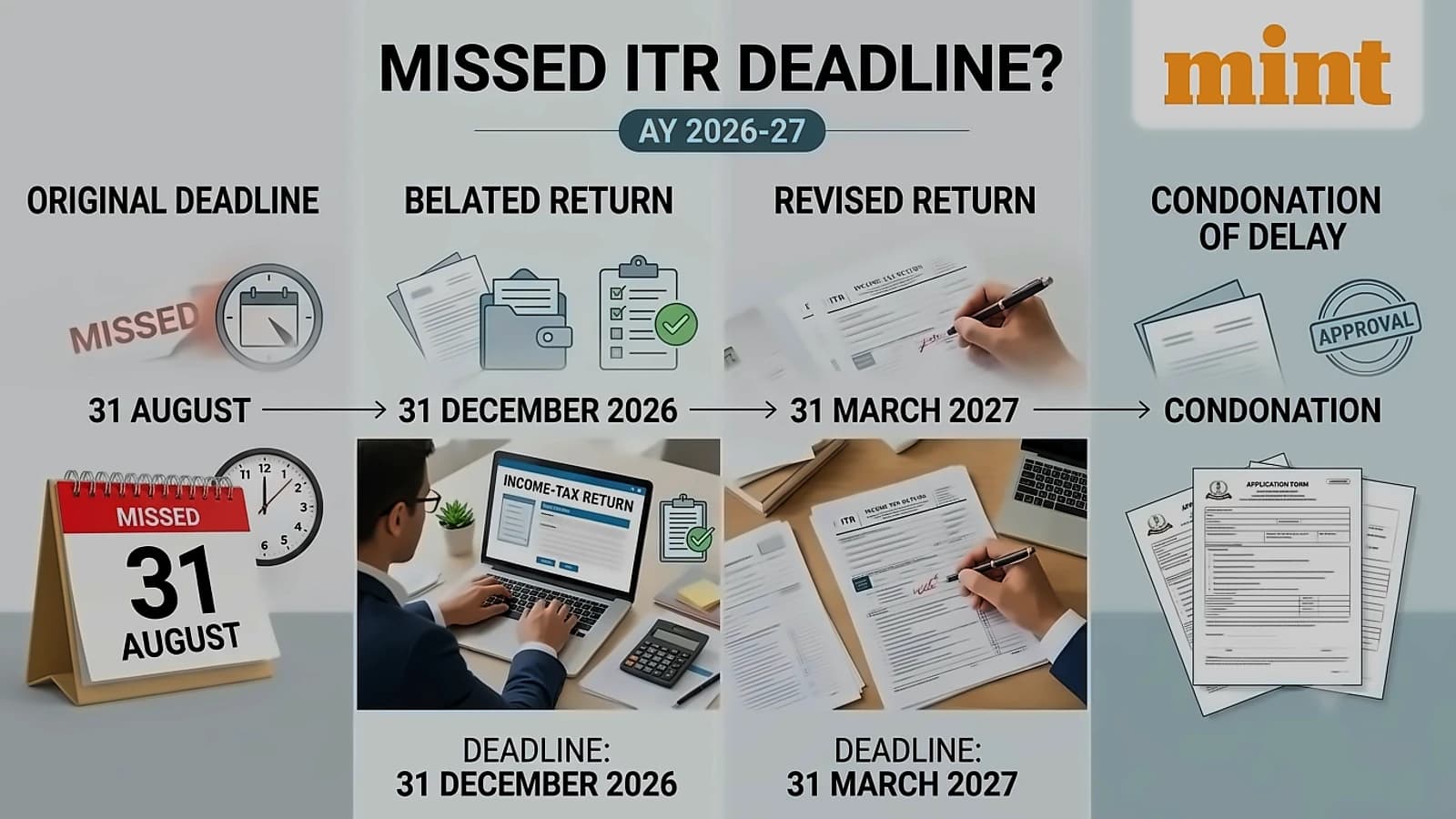
Missing the August 31, 2026 deadline attracts specific penalties based on income levels. For taxpayers with total income below ₹5 lakh, the late fee is ₹1,000, while those with higher income face a ₹5,000 penalty under Section 234F. Additionally, there is interest of 1% per month on unpaid taxes as per Section 234A. Those who have missed the deadline can still file a belated ITR, with the provision giving them until December 31, 2026, or before completion of assessment, whichever comes earlier, to file the returns. After filing the returns, taxpayers are required to complete the verification process either through e-verification within a 30-day window or by submitting ITR-V within 30 days of filing. The date of verification may be treated as the date on which the returns are filed, and if a taxpayer completes the verification process after the last date of filing returns, the consequences of late filing may follow.
Taxpayers filing ITR-3 or ITR-4 should ensure they select the correct form, report income accurately and reconcile financial information with the Annual Information Statement (AIS) to avoid late filing consequences. Choosing the wrong ITR form is a common mistake - ITR-3 is generally applicable to individuals and HUFs having income from business or profession, while ITR-4 is for eligible resident individuals, HUFs and firms where business income satisfies presumptive taxation scheme conditions. Assuming every freelancer can use Section 44ADA is another error - the provision applies only to specified professions including legal, medical, engineering, architectural, accountancy, technical consultancy and interior decoration. Selecting the wrong tax regime is critical - for taxpayers with business or professional income, the new tax regime is default, and those wanting to opt for the old regime must file Form 10-IEA within the prescribed deadline. Claiming ineligible expenses should be avoided - only expenses incurred wholly and exclusively for business or profession should be claimed. Taxpayers should also fail to reconcile income with AIS and Form 26AS, cross-check income against Annual Information Statement, and incorrectly report foreign income depending on residential status. Additional errors include incorrect personal details (name, address, PAN and Aadhaar), incomplete or incorrect bank details (account number and IFSC), missing e-verification, errors in capital gains (reconcile with broker statements and transaction records), and ignoring high-value transactions that may be reported under the Statement of Financial Transactions (SFT) framework.