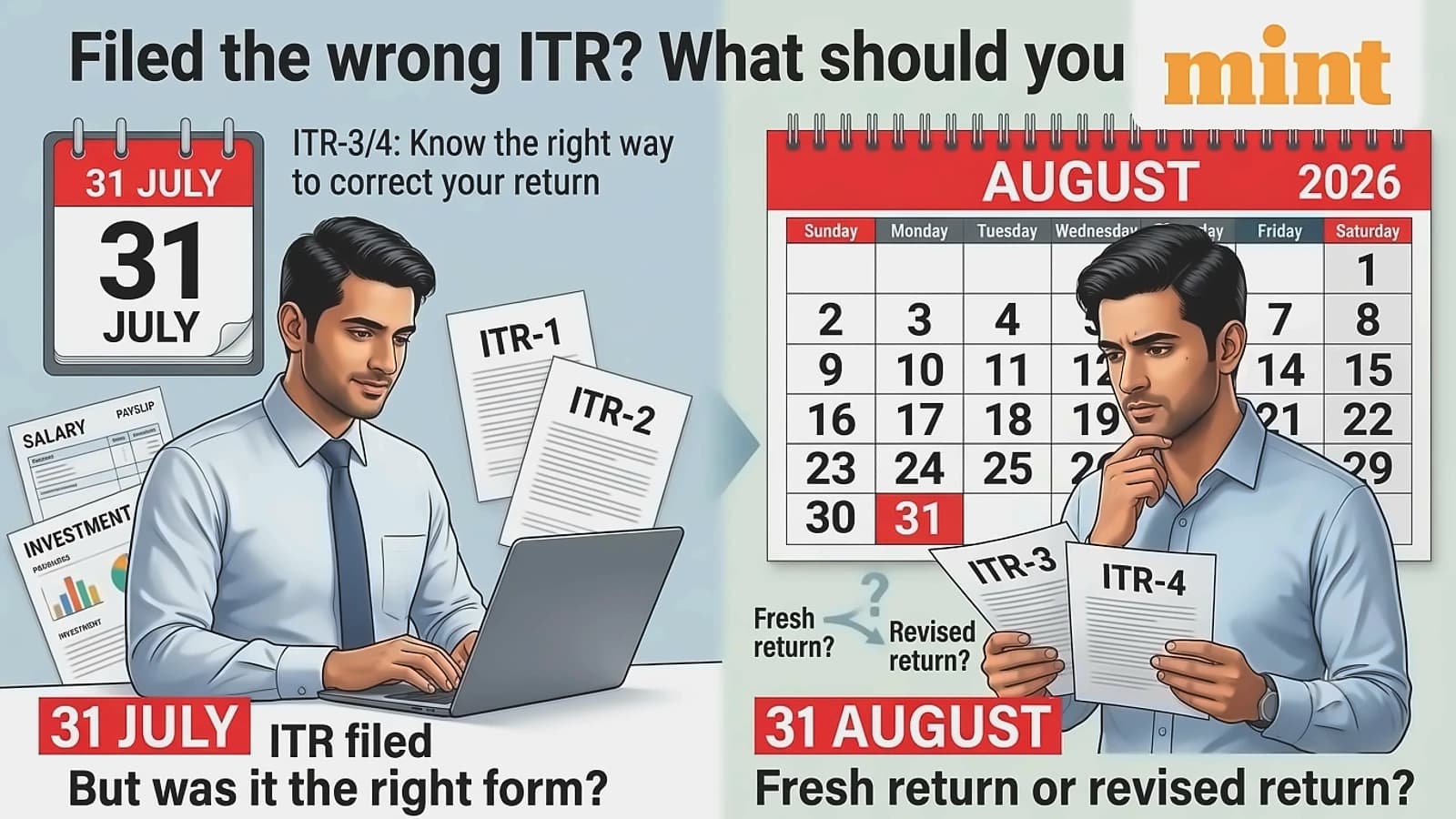
The due date to file an income tax return (ITR) for AY 2026-27 for most individual taxpayers is July 31, 2026. According to tax experts, missing this deadline does not automatically allow taxpayers to switch to filing ITR-3 by its later due date of August 31, 2026. As reported by Tax2win, the income tax return form you file is determined by the nature of your income, not by the filing deadline. The portal pre-fills your return from AIS, but taxpayers should not accept it blindly and should verify all details before submission. Filing itself takes under an hour on incometax.gov.in, but the real work involves making three critical decisions before logging in.
Tax experts emphasize that ITR-3 filing is restricted to taxpayers with actual business or professional income. CA Abhishek Soni from Tax2win explained that "You cannot choose ITR-3 just because it has a later due date. The ITR form depends on the type of income you have, not on the filing deadline." CA Gaurav Singh Parmar from Fincorpit Consulting added that "If your income is from salary, pension, capital gains, interest, or just one house property, then your applicable return is ITR-1 (Sahaj) or ITR-2." For salaried taxpayers, the rule of thumb is sold any shares or mutual funds beyond the ITR-1 allowance, or own two properties → ITR-2; otherwise ITR-1. The new regime is the default, but salaried taxpayers can choose the old regime fresh each year inside the return itself — no separate form needed. Business income holders face a stickier once-in-a-lifetime switch rule.
The tax regime switch rules for AY 2026-27 are governed by Section 115BAC(6) of the Income Tax Act, 1961, with Form 10-IEA required to be filed on or before the Section 139(1) due date of July 31, 2026 for non-audit cases. From April 1, 2026, the Income-tax Act, 1961 is repealed and the Income Tax Act, 2025 takes over, with the same switch-back provision moving to Section 202 applicable from Tax Year 2026-27. For business or professional income earners, there are two lifetime switches allowed: once to opt out of the New Regime into the Old, and once to re-enter the New Regime. After the second switch, the Old Regime becomes permanently off-limits, with the form treated as invalid and taxation under the default New Regime continuing even if genuine intent to opt for the Old Regime existed. The switch-back rules are confirmed directly from Form 10-IEA FAQs on the Income Tax Department portal, which confirms Form 10-IEA can be filed twice in a lifetime — once to opt out of the New Regime, once to re-enter it.

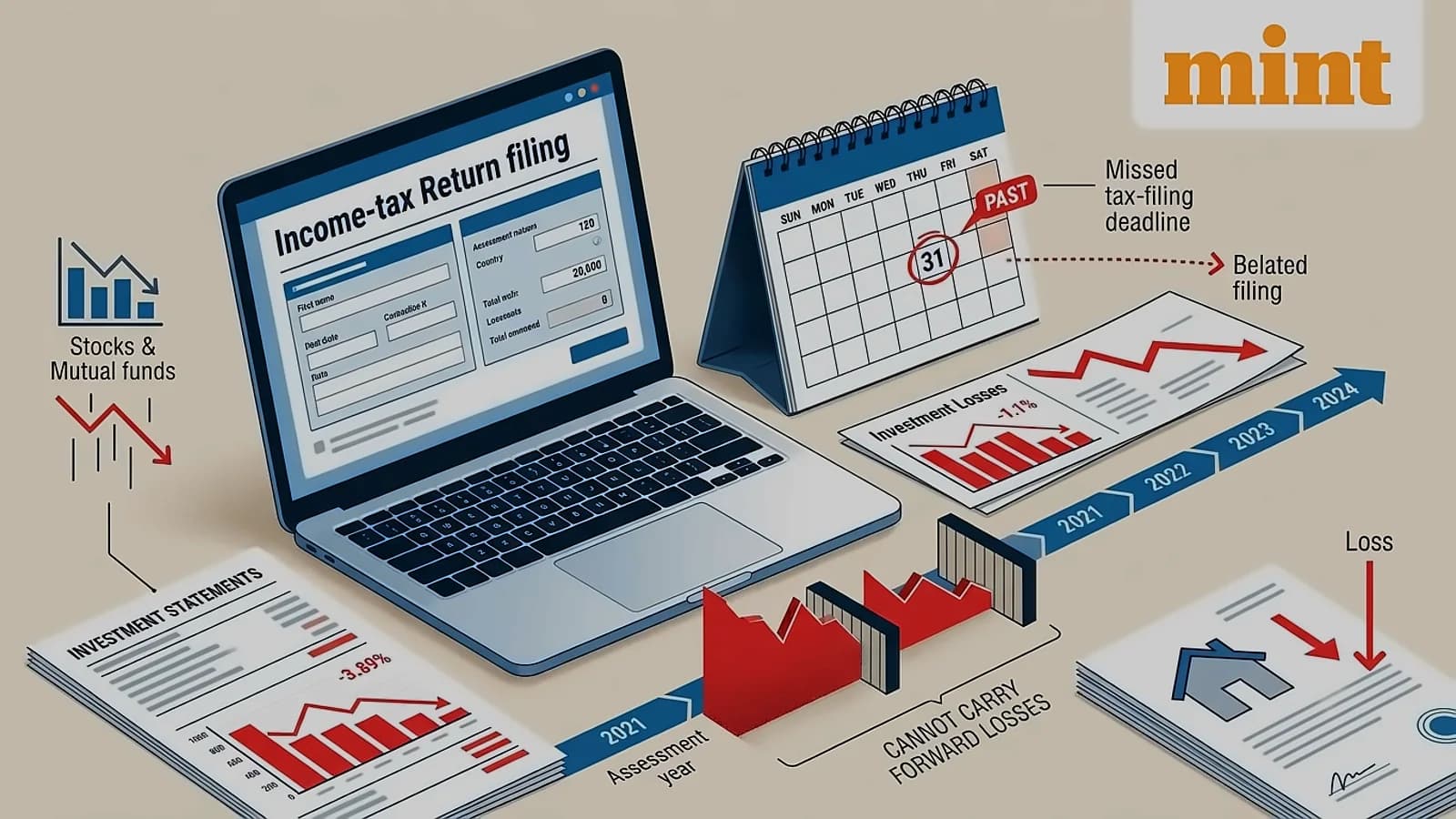
Taxpayers who miss the July 31 deadline must file a belated return under section 139(4) by December 31, 2026. According to tax experts, late filing penalties include late fees of up to ₹5,000 (₹1,000 if income is below ₹5 lakh), interest on unpaid tax, and loss of some carryforward benefits. CA Gaurav Singh Parmar warned that "Don't think the ITR-3 deadline is your ticket to delayed filing, it's only for legitimate business income." An unverified return is treated as never filed, making e-verification the highest-stakes low-effort step in the entire process. The portal pre-fills your return from AIS, but don't accept it blindly and don't contradict it silently — either path invites a notice. E-verification is mandatory and should be done immediately using Aadhaar OTP, net banking, or bank-EVC rather than leaving it for later, as thirty seconds of verification or the on-time return silently becomes a non-filing.