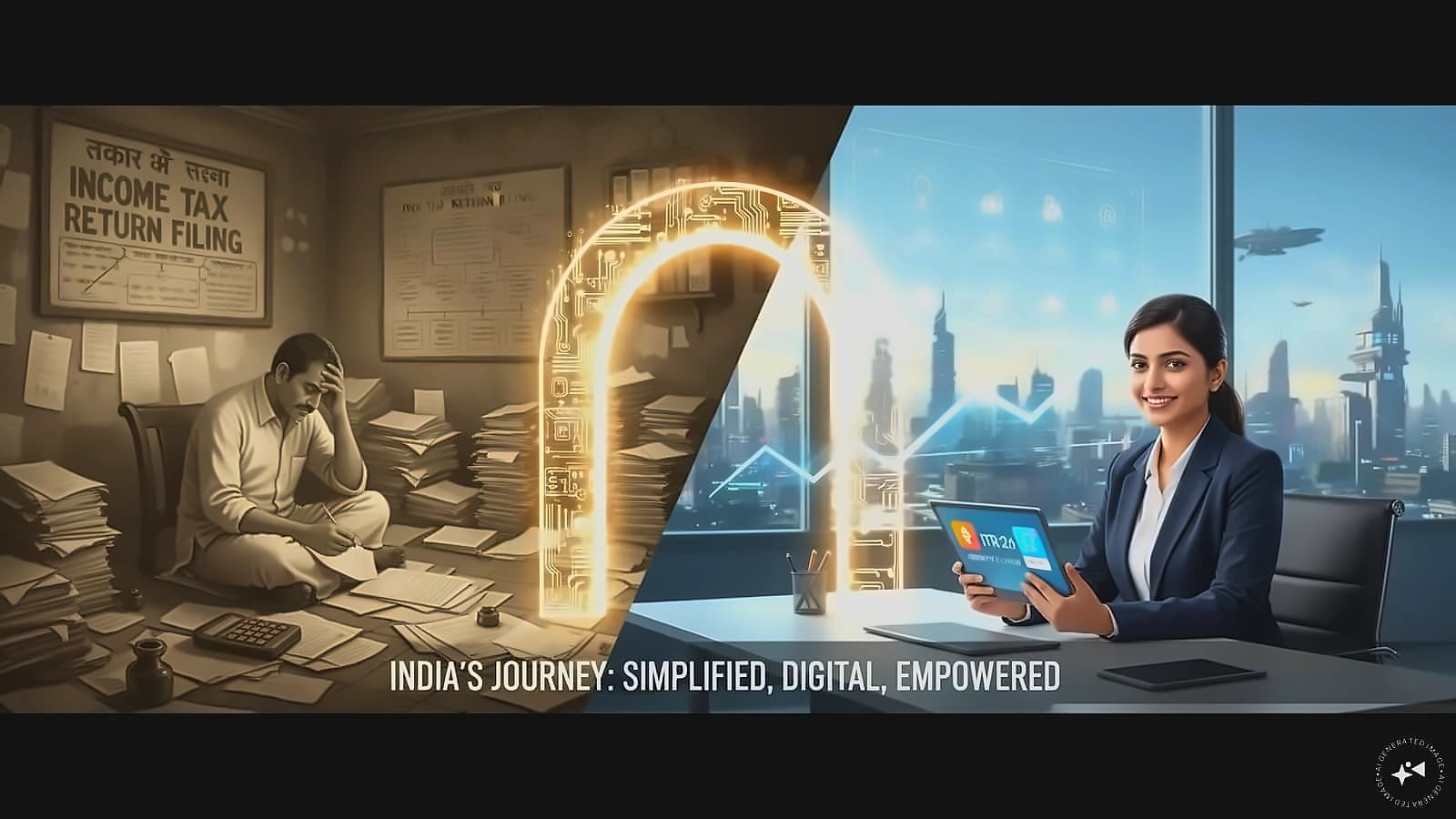
While most taxpayers view income tax return (ITR) filing as an annual compliance exercise, the importance extends far beyond simply reporting income and paying taxes. As reported by Mint, filing ITR serves as an important financial document that can prove useful in multiple situations including loan approvals, visa applications, and establishing financial credibility. The tax department has released Excel Utility for ITR-1, ITR-2 and ITR-4 forms for financial year 2025-26 (FY26) or assessment year 2026-27 (AY27). Taxpayers can prepare returns offline using the excel-based utilities before uploading them digitally, with the deadline for individual taxpayers filing ITR is 31 July 2026, while those using ITR forms 3 and 4 have until 31 August 2026.
From AY 2025-26, taxpayers must provide additional information when claiming deductions under various sections. As reported by Mint, for Section 80C deductions, taxpayers must enter the amount eligible for deduction and policy number or Document identification Number. Under Section 80CCD (1), they must provide the amount of investment and taxpayer's PAN. For Section 80DD and 80U deductions, taxpayers need to furnish Nature Of Disability, Type of Disability, Amount of Deduction, PAN of Dependent, Aadhaar of Dependent, and Acknowledgement no. of form 10 IA filed. Additionally, for Section 80D health insurance deductions, they must provide Name of the Insurer, Policy Number, and Health Insurance amount. For Section 80CCD(1B) deductions, taxpayers must enter the PRAN by clicking on PRAN tab.
Capital losses on listed shares can be carried forward for up to eight assessment years, provided taxpayers file their ITR within the prescribed deadline. As per Mint, carried-forward long-term losses can be used to offset only long-term gains in subsequent years, while short-term capital loss (STCL) can be set off against both short-term and long-term capital gains. This benefit is crucial for taxpayers looking to reduce future tax liability through strategic loss utilization.
Filing ITR every year can increase loan eligibility as banks and financial institutions consider filed returns as evidence of income, financial stability, and repayment ability. According to ClearTax, lenders may ask for ITRs for at least 3 years when applying for home loans or personal loans, applying to both self-employed and salaried individuals. For visa applications, particularly for the USA, taxpayers must submit filed ITRs for the last three years as part of the application process. This documentation can make visa applications smoother and increase approval chances, especially for countries with strict visa guidelines. Several countries ask visa applicants to submit documents that demonstrate their financial standing, with filed income tax returns commonly accepted as proof of income and financial stability.
The tax department has mandated that all taxpayers must complete e-verification (ITR-V) within 30 days after filing their returns to ensure smooth refund processing. According to Mint, e-verification can be completed using Aadhaar OTP, electronic verification code (EVC) generated using a pre-validated bank account or demat account, or net banking. The process involves visiting the I-T e-filing portal, entering PAN, assessment year, and acknowledgment number, then selecting the verification method. In cases where ITR-V is not completed within 30 days, the date of completing e-verification will be treated as the date of furnishing returns, making all late filing consequences applicable.