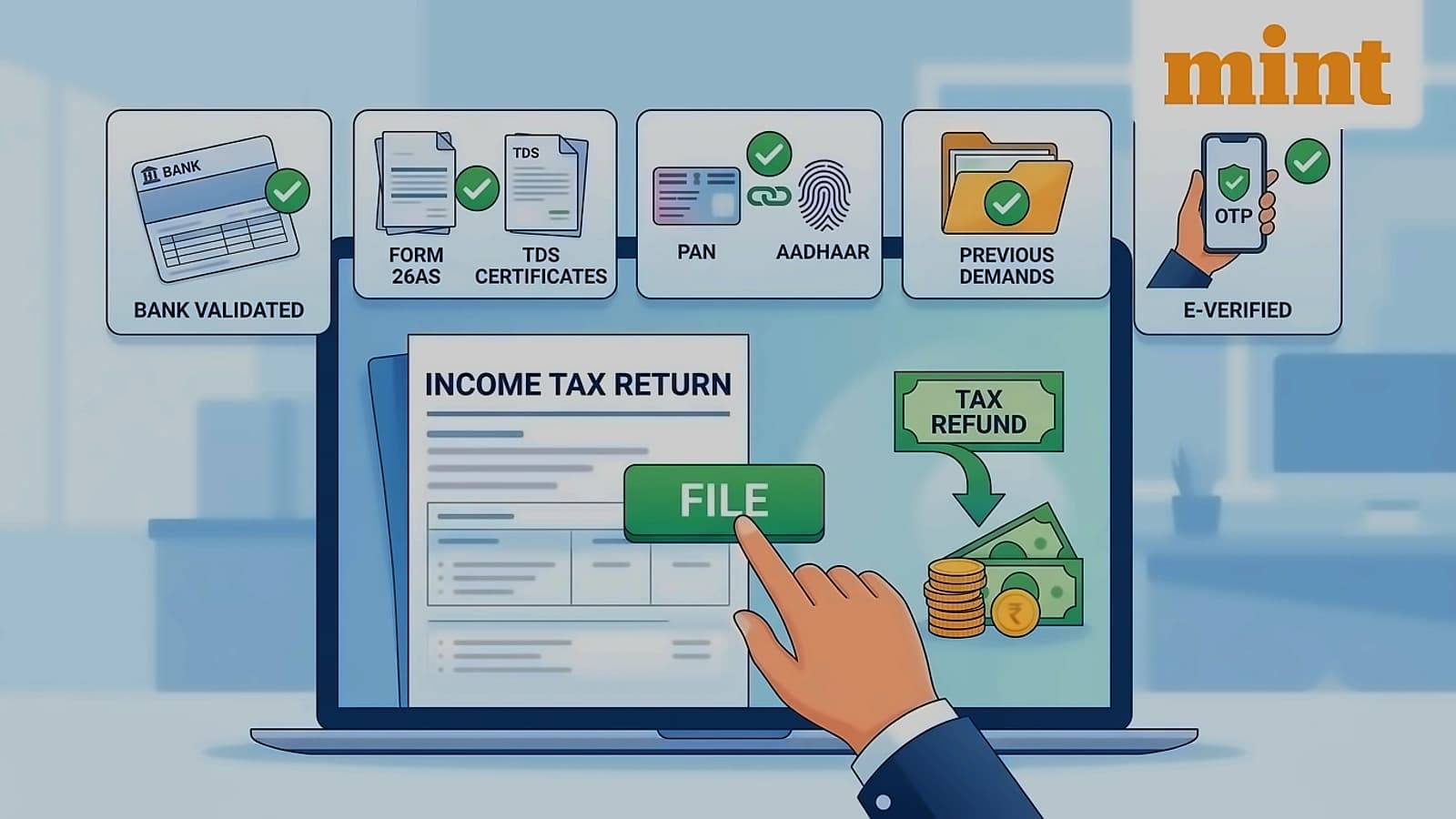
India's tax return filing process takes approximately 20-30 minutes for a salaried taxpayer with a simple profile, according to the latest guidance from tax experts. This represents a significant improvement from the previously reported 2 hours process. This compares significantly to Singapore's 5-minute filing process, as highlighted by Helios Capital founder Samir Arora. The time difference reflects fundamental differences in tax collection philosophies and systems across these countries.
The e-filing portal has undergone substantial improvements with built-in validation checks that flag incorrect entries immediately, allowing taxpayers to correct mistakes before submission. Cryptocurrency transactions are now being tracked more closely, making it mandatory to report crypto trading activities. The government is actively pushing for more people to file ITR, making the process simpler and offering better support. Filing ITR on time and accurately builds financial credibility, as lenders, employers, and government agencies view reliable taxpayers favorably for loans, jobs, and business opportunities.
Income Tax Return filing has evolved beyond tax compliance into a key financial document that strengthens taxpayers' financial identity across multiple sectors. According to CA Anshul Bhargava, an ITR is no longer limited to reporting tax liabilities but has evolved into a reliable financial record that helps establish credibility across the financial ecosystem. Home and business loans demonstrate stable income and repayment capacity, improving loan eligibility. Credit card upgrades support higher limits and strengthen financial credibility during lender assessments. Visa applications serve as proof of income and financial stability for travel, education, and immigration purposes. Tax refunds enable faster processing of eligible refunds when returns are filed accurately, while high-value insurance and investments act as verified proof of income for recruiters, insurers, and financial institutions.
There are six different ITR forms with specific requirements based on income sources. ITR-1 is designed for salary earners, pensioners, and income from one house property with total income below ₹50 lakh. ITR-2 handles capital gains and multiple properties, ITR-3 requires profit and loss statements for self-employed professionals, ITR-4 serves small business owners with turnover below ₹2 crore, ITR-5 covers partnerships and LLPs, and ITR-6 is for companies. PAN is compulsory to file ITR, and if income is below taxable limits, filing is optional but recommended for claiming refunds or building tax records.
The tax department is focusing more on data matching by comparing ITR with information from banks, stock brokers, and property registrars. For example, if claimed investment of ₹2 lakh doesn't match bank records showing only ₹50,000 outgoing, questions will be raised. E-verification is mandatory within 30 days of filing submission, and filing without e-verification makes the return invalid. The regular ITR filing deadline is July 31, 2027, with belated returns accepted until December 31, 2027, but missing this deadline results in loss of filing and refund claim opportunities. Taxpayers who have missed filing within the original due date may be able to file a belated return, provided the statutory deadline has not expired, or explore filing an updated return under Section 139(8A) of the Income-tax Act.