With just three days remaining for the income tax return (ITR) filing July 31 deadline, taxpayers face critical compliance requirements while avoiding common errors that can lead to form rejection or delays. According to reports from Personal Finance News, taxpayers earning rental income from commercial properties must report this income under the 'Income from House Property' head, similar to residential rental income. The filing process requires taxpayers to report rental income under Schedule House Property and claim eligible deductions, including municipal taxes paid and a standard deduction of 30% on net rental income.
As reported by Personal Finance News, taxpayers can claim deductions such as municipal taxes paid and the standard deduction of 30% on net rental income. CA Abhishek Soni explained that the correct ITR form depends on how the property income is earned, with taxpayers reporting rental income under Schedule House Property and claiming eligible deductions. If a loan has been taken for the property, interest deduction under Section 24(b) may also be available, subject to applicable conditions. Shourya Garg from Garg & Garg Tax Associates noted that taxpayers should first calculate rent received and deduct municipal taxes paid to arrive at the Net Annual Value, after which the flat 30% standard deduction can be claimed.
According to Garg from Garg & Garg Tax Associates, commercial rental income may require GST registration if it crosses the applicable threshold of ₹20 lakh annually. This GST registration may make the owner liable to charge 18% GST on the rent, which is separate from income tax obligations. Garg explained that this requirement often catches property owners by surprise, as it is distinct from income tax considerations. The GST rules apply specifically to commercial rental income and require separate compliance measures beyond standard income tax filing requirements.
As reported by ETWealth, chartered accountant Abhishek Soni from Tax2win has identified five common ITR filing mistakes that can result in form rejection or delays ahead of the July 31 deadline. These include not e-verifying the ITR after submission, mismatched personal details, incorrect income information, validation errors, and forgetting to e-verify the return. Taxpayers rushing to file in haste often make these small mistakes that can significantly impact their filing process, leading to non-submission or rejection of forms. Reconciling income with Form 16 and AIS is crucial for successful submission and avoiding these common pitfalls.
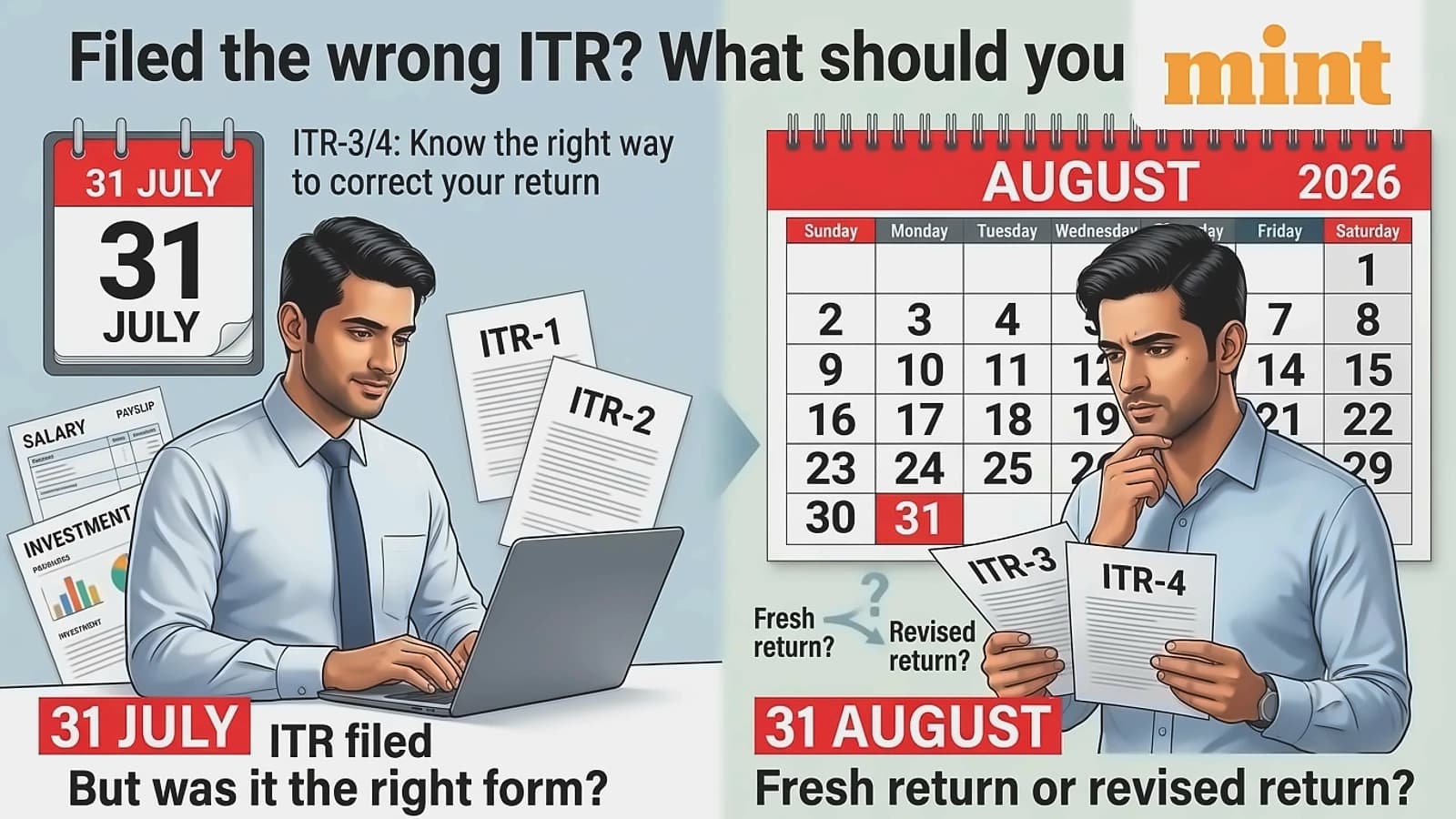
According to Mint, Adhil Shetty from BankBazaar warns that many salaried taxpayers assume ITR-1 is the correct form, but additional income or job changes can require different return forms. He emphasizes that taxpayers should review all sources of income during FY26, including capital gains, rental income, interest income and foreign assets, to determine the appropriate ITR form. Job switchers face particular risks as salary and TDS details may be spread across multiple employers, requiring taxpayers to collect Form 16 from every employer and reconcile details with Form 26AS and AIS. Shetty recommends essential pre-filing checks including verifying PAN, Aadhaar and bank details, matching salary income with Form 16 and AIS, and ensuring all income sources are reported before clicking 'Submit'.