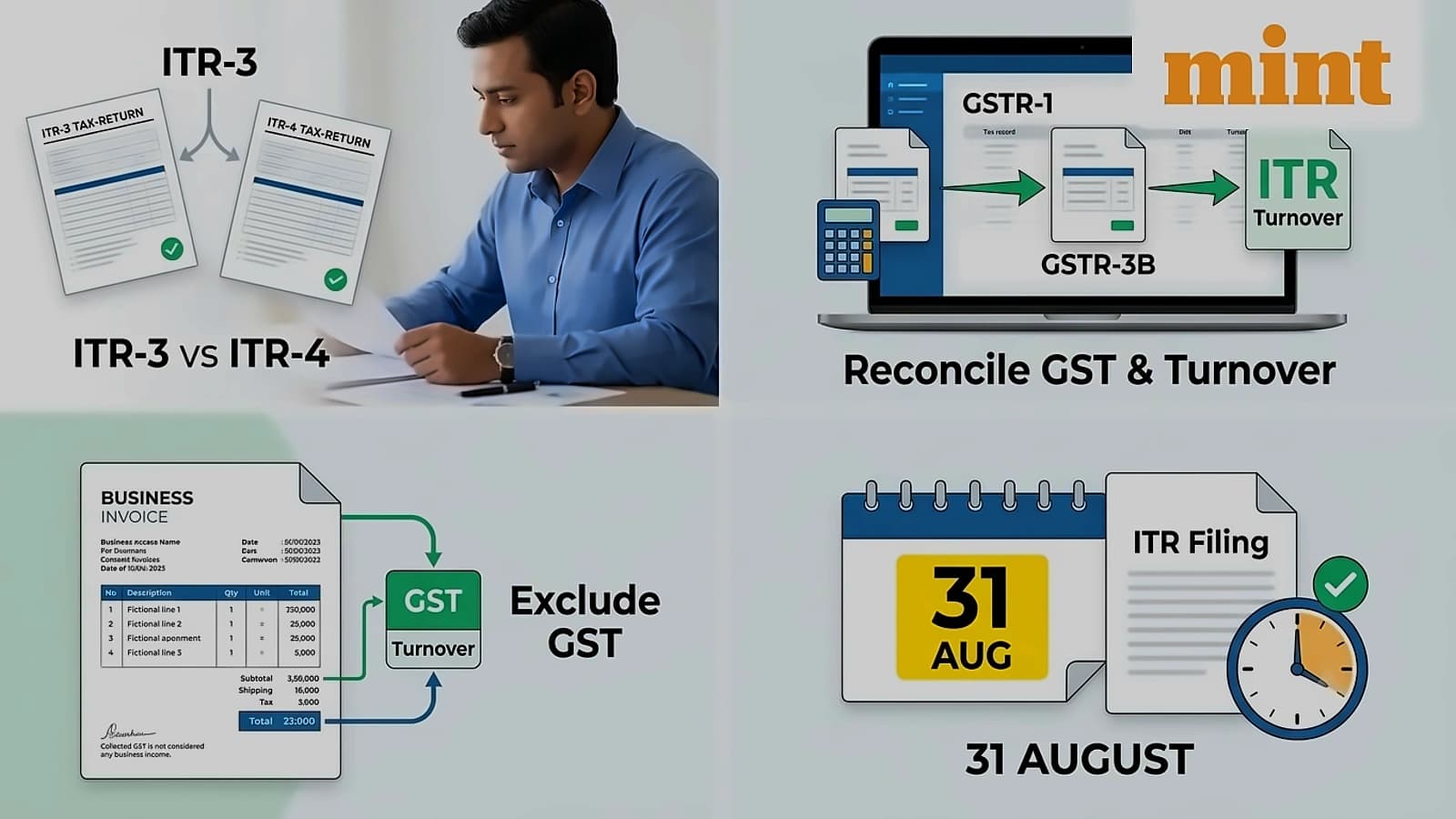
The Income Tax Department has issued urgent reminders for taxpayers as the August 31, 2026 deadline approaches. According to the latest reports, more than 6.5 crore income tax returns have been filed for Assessment Year 2026-27 as of August 20, with over 2 crore ITR-3 and ITR-4 returns submitted to date. The department has specifically urged non-audit taxpayers to complete their filings before the deadline, emphasizing the need to avoid last-minute rush and file ITR-3, ITR-4, ITR-5 and ITR-7 forms well in advance. The e-filing portal confirms that August 31, 2026 is the applicable due date for non-audit cases, while taxpayers whose accounts require audit follow separate extended deadlines. As per Business Standard, the department has urged taxpayers to "be the tax hero who files on time" and avoid the last-minute rush, with the latest reminder posted on Monday emphasizing the substantial progress already achieved.
Taxpayers filing ITR-3 or ITR-4 must carefully review and reconcile key schedules with their financial records to avoid common filing errors. According to Mint, ITR-3 filers should focus on Part A- Profit and Loss Account, Part A-Balance Sheet, Schedule BP, Schedule CG, Schedule OS, and where applicable, Schedules CYLA, BFLA and CFL. The most critical schedules include Schedule BP for converting accounting profit into taxable business income after adding back inadmissible expenses, and Schedule CG/112A for reporting capital gains from property, shares, mutual funds and other capital assets. ITR-4 filers should focus on Salary or Pension, House Property, Other Sources, Chapter VI-A Deductions and Payment Schedules, with the "House Property" section requiring disclosure of ownership, rental, unrealised rent, municipal taxes, and housing loan interest. As per Mint, taxpayers must have Form 26AS, AIS, TIS, Form 16 and 16A, bank passbooks and advance/self-assessment tax challans to complete proper verification.

Freelancers can consider the Presumptive Taxation Scheme under Section 44ADA which allows them to declare 50 percent of their gross receipts as income. According to Zee News, this scheme is available to specified professionals including advocates, engineers, architects, interior designers, medical professionals, CAs, film artists, software developers, CSs, and other eligible categories. The Presumptive Taxation Scheme aims to simplify the process for small businesses and professionals by allowing eligible taxpayers to declare income at a prescribed rate instead of maintaining detailed books of accounts and undergoing tax audit. Under this scheme, a tax audit is necessary only when the person reports a profit much lower than what the scheme specifies. However, taxpayers must not choose a form based on ease of filing alone - the form must comply with their circumstances. For example, if a freelancer's expenditures exceed 50 percent of their gross receipts, regular taxation may be more beneficial than opting for Section 44ADA. As per Zee News, small taxpayers who derive income primarily from business and profession while preferring a simplified method of filing taxes may choose ITR-4, which allows income to be computed on a presumptive basis.
Taxpayers must complete thorough verification processes to ensure accurate filing. According to Mint, filers should check the TDS break-up with Form 16 and match professional and other receipts with Form 16A, AIS and bank statements. Businesspersons must retain the Trial Balance, Profit and Loss Account, Balance Sheet, sales and purchase registers and invoices, while keeping GST returns, payment-gateway statements and the fixed-asset register. Property owners should retain rental agreements, municipal tax receipts, ownership records and housing loan interest certificates. The verification process requires checking that turnover matches sales as reported in sales register, GST return, bank and payment-gateway receipts, AIS and TDS certificates. For Schedule BP verification, taxpayers should ensure turnover aligns with all relevant documentation and that personal and capital expenses, unpaid statutory dues and other inadmissible expenses are properly added back.
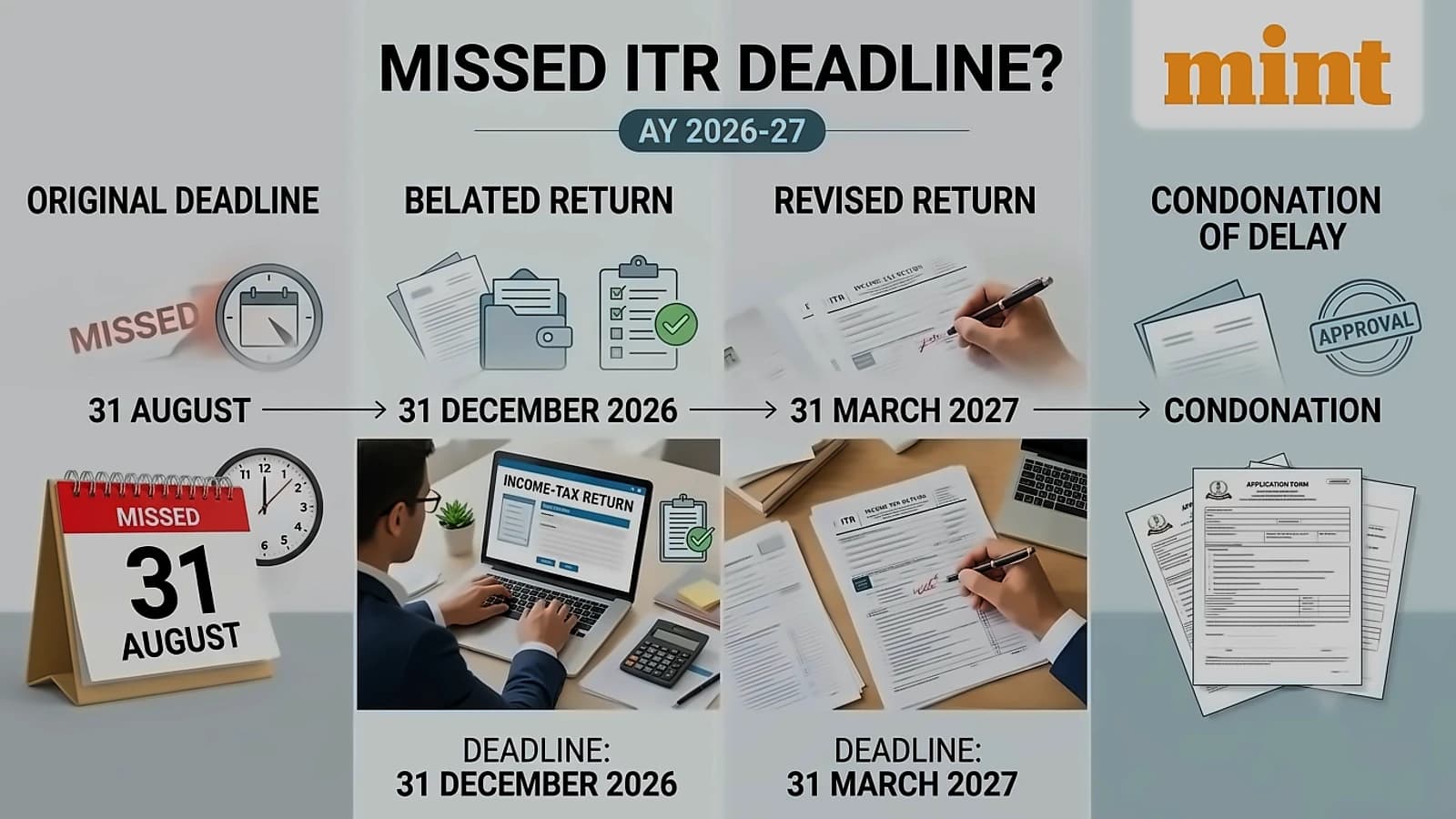
Missing the original ITR deadline results in specific penalties based on income levels. According to Mint, taxpayers with income above ₹5 lakh face a penalty of up to ₹5,000 for filing a belated return, while those with income up to ₹5 lakh can be penalized up to ₹1,000. Additionally, taxpayers are liable to pay 1% per month interest on unpaid tax amounts as per Section 234A, calculated from the applicable ITR due date until the actual filing date. Recent reports from LoansJagat highlight practical examples, including cases where missing the deadline by just 2.5 hours can result in a ₹5,000 late fee. The Section 234F fee structure applies with ₹1,000 where total income is up to ₹5 lakh and ₹5,000 in other cases. The department has advised taxpayers to select the correct ITR form and complete verification after filing, emphasizing that filing early can help address errors, documentation issues or technical problems before the deadline. As per Mint, taxpayers must complete the e-verification process within 30 days of filing, with failure to do so resulting in the ITR being treated as invalid or as if it was never filed.
Taxpayers can correct details or omissions in their filed ITR under Section 139(5) of the Income-tax Act, 1961. As reported by Mint, the window to file a revised return remains open until December 31, 2026, with an extended deadline of March 31, 2027 available after payment of prescribed late fees. This provision is particularly important for business owners and traders who may have eligible losses to carry forward to future years. However, LoansJagat analysis warns that losses other than house-property loss generally cannot be carried forward when the return is not filed within the prescribed time, which can affect specified business and capital losses. The extra month provides valuable time for taxpayers with multiple income streams to reconcile AIS, Form 26AS, invoices, bank records and trading statements before filing. According to Mint, taxpayers must read the conditions carefully on the e-filing portal before selecting any form, as any error can lead to tax notices and consequences. In case of incorrect ITR form selection, the income tax department may treat the return as defective under Section 139(9) and issue a notice requiring correction within a specified time, with returns not processed until defects are rectified.