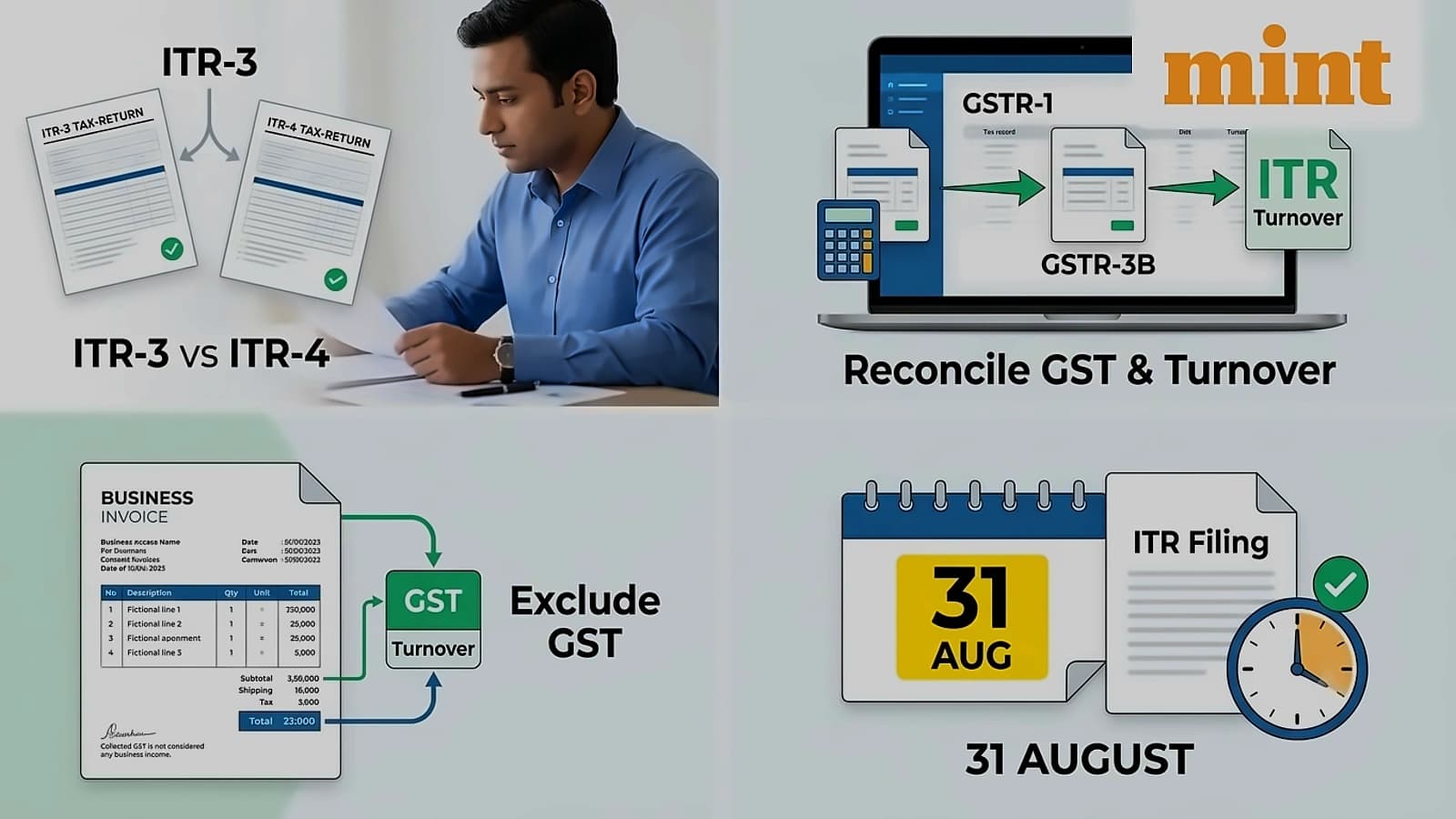
A record 7.8 crore income-tax returns have been filed for FY26/AY27 till 31 August 2026, marking a significant milestone for the Income Tax Department. The Income Tax Department announced this achievement, stating "A record 7.8 Crore+ ITRs have been filed for AY 2026-27 as on August 31, 2026." Of these returns, more than 5.71 crore ITRs have been processed according to the department. The August 31 deadline formed part of the revised return-filing schedule introduced through amendments to the Income-tax Act, 1961 under the Finance Act, 2026. Under this framework, non-audit business and professional taxpayers had until August 31 to file their returns, while other taxpayers not in specified categories had until July 31. For FY26/AY27, companies and taxpayers whose accounts are required to be audited face a 31 October 2026 deadline, while taxpayers covered by transfer-pricing provisions under Section 92E have until 30 November 2026. The Income Tax Department expressed gratitude for taxpayer compliance, stating "We sincerely thank the taxpayers and professionals for their timely compliance."
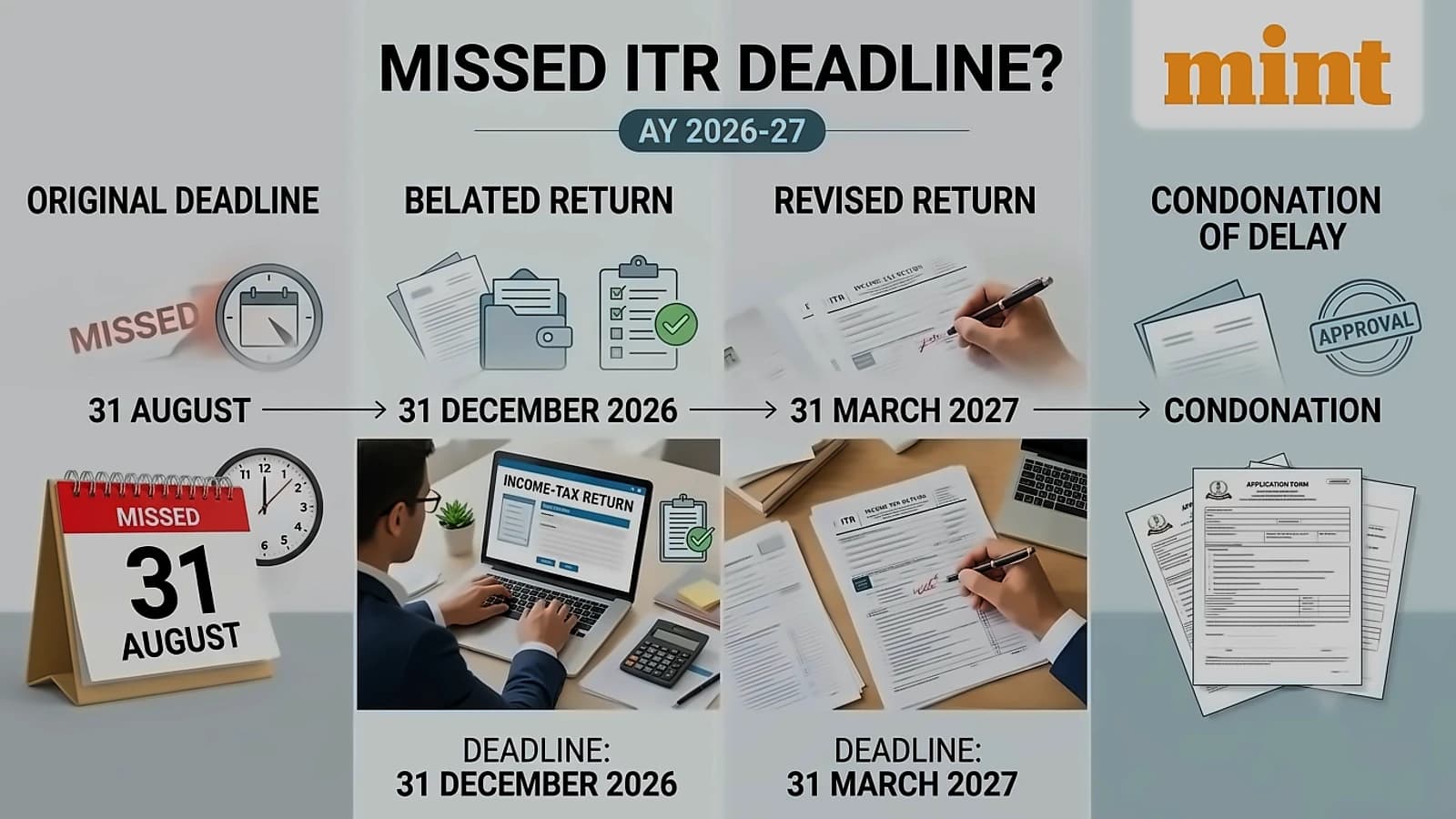
Taxpayers who missed the 31 August 2026 deadline for filing income tax returns for AY 2026-27 can still file a belated return until 31 December 2026 under Section 139(4) of the Income Tax Act, 1961. Late filing attracts significant penalties including a late fee under Section 234F of up to ₹5,000, or ₹1,000 if total income is below ₹5 lakh. Additionally, there is interest at 1 percent per month on unpaid tax under Section 234A. The most critical consequence is the loss of ability to carry forward business and capital losses to future years. A belated return also forces calculation into the new tax regime by default, removing planned deductions under the old regime. Late filing by entities that are required to undergo audit may result in fees up to ₹5,000, interest on unpaid taxes, and the inability to carry forward business or capital losses.
Taxpayers who have already filed their returns can still revise them by 31 March 2027 to correct errors such as incorrect income details, missed disclosures, or inaccurate deductions. An additional fee under Section 234-I may apply if a revised return is filed after nine months from the financial year end. For AY 2026-27, this nine-month period ends on 31 December 2026, making returns filed after this date subject to fees of ₹1,000 for taxpayers with total income up to ₹5 lakh and ₹5,000 for others. After filing, taxpayers are also required to verify their return within a 30-day window from the date of filing. If verification takes place beyond this period, the verification date can be treated as the date of filing and consequences of late filing may apply.
Both belated and revised returns carry specific limitations that taxpayers must consider. Belated returns can restrict the carry-forward of certain losses, while revised returns filed after the nine-month period may attract additional fees. The filing requirements under Section 139(1) or 139(4) of the Income Tax Act, 1961 must be met within the prescribed timelines, with condonation available only for genuine hardship cases where taxpayers can demonstrate valid reasons for the delay. Taxpayers can file their returns using the official e-filing portal at https://eportal.incometax.gov.in/iec/foservices/#/login, or engage with Chartered Accountants or registered tax experts for third-party filing assistance.
AY 2026-27 relates to income earned during the financial year 2025-26, specifically from April 1, 2025 to March 31, 2026. The Income Tax Department has clarified that such returns continue to be governed by the Income-tax Act, 1961, even though the new Income Tax Act, 2025 came into force from April 1, 2026. The revised schedule successfully decentralized tax season pressure by establishing staggered filing deadlines across different taxpayer categories, with statutory audit thresholds remaining anchored at ₹1 crore in gross receipts for standard businesses (extending to ₹10 crore where cash transactions account for under 5% of totals) and ₹50 lakh for individual professionals. If both the belated filing deadline and the extended period pass, taxpayers can still seek condonation of delay under Section 119(2)(b) of the Income Tax Act, 1961, though approval is not automatic and may be rejected for patterns of repeated non-compliance.