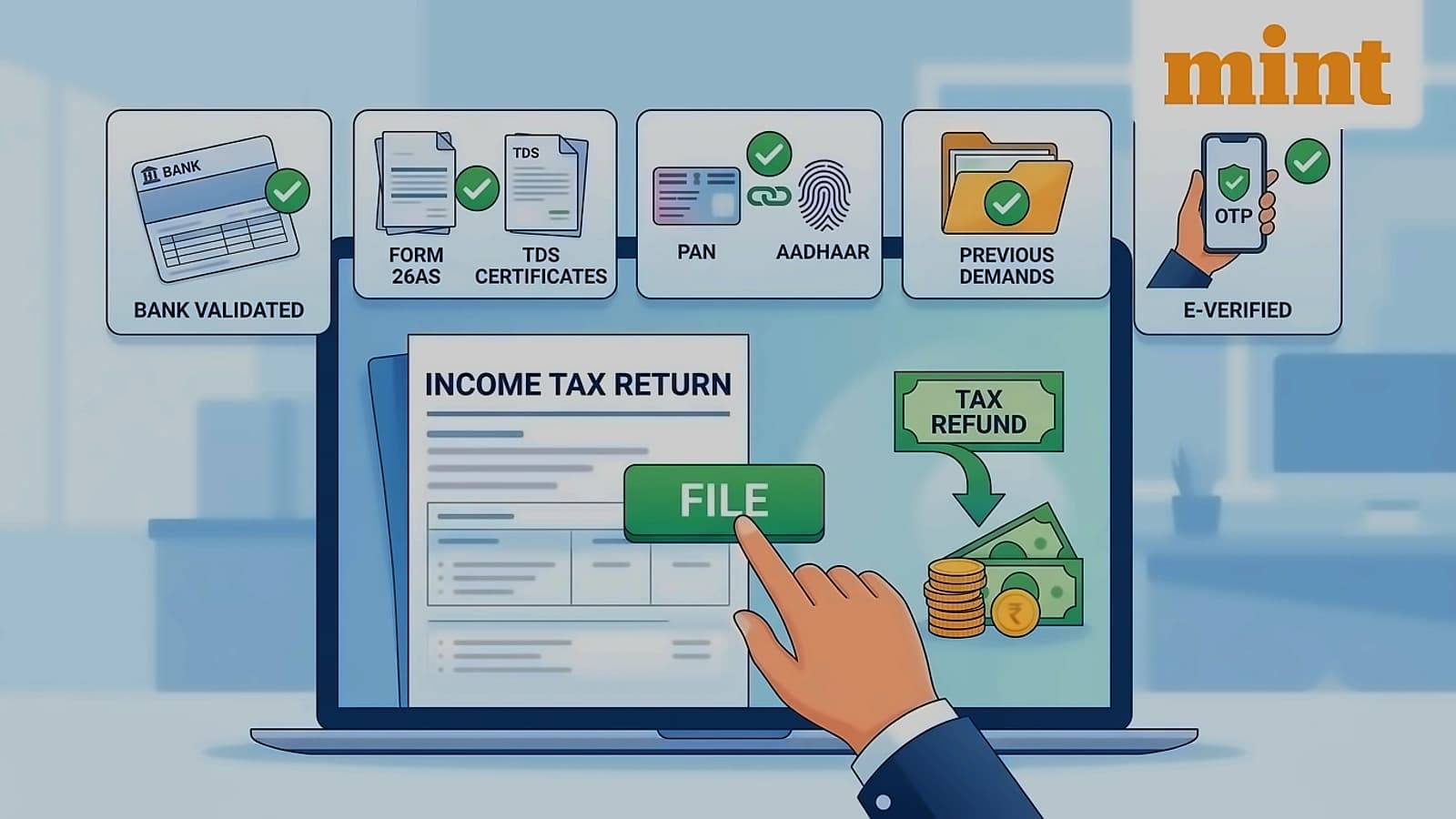
Despite missing the July 31 ITR filing deadline, taxpayers can still file a belated return to claim refunds. According to Mint reports, taxpayers who have not filed their return within the original due date can still file a belated return within December 31, 2026. The income tax department can process refunds after verifying details, provided the return shows excess tax has been paid. However, filing before the due date helps ensure the refund is processed sooner, as refund processing begins only after taxpayer e-verification, typically taking 4-5 weeks for credit to the account.
According to reports from Zee News, more than 5.9 crore income tax returns have been filed for the Assessment Year 2026-27 by the July 31 deadline. The Income Tax Department has confirmed that taxpayers whose refunds are due will soon receive them as processing has begun. However, as noted by CA Suresh Surana in conversation with Zee News, merely receiving an income-tax refund in the previous year does not automatically mean the taxpayer's refund route is clear for the current year. The key point is that a refund claim is linked to filing a valid ITR, and as long as taxpayers file the applicable return within the allowed time and provide correct bank account and tax details, they will still be able to receive the refund that is due to them.
As reported by Zee News, Surana explains that every income-tax return filed for every relevant year is processed independently. The Income-tax Department may verify the income reported, deductions claimed and tax credits appearing in Form 26AS and AIS/TIS. Refunds may be reduced, withheld or adjusted if there is any mismatch, incorrect claim, pending verification, outstanding tax demand or discrepancy in the return. This means that successful refunds in previous years indicate only that returns were processed and accepted based on information for that particular year, not guaranteed approval for current year refunds. The department processes refunds only after the return is filed correctly and taxpayer PAN, Aadhaar and e-filing account details are properly linked and active.
Filing a belated return comes with specific costs and penalties. According to Mint reports, taxpayers with total income above ₹5 lakh must pay a late filing fee of up to ₹5,000, while those with income up to ₹5 lakh face a maximum fee of ₹1,000. Additionally, if taxpayers have outstanding tax dues and fail to file their ITR by the due date, they will have to pay interest under Section 234A of the Income-tax Act. The department charges simple interest of 1% per month on the unpaid tax amount, calculated from the applicable ITR due date until the return is actually filed. If taxpayers miss the belated return deadline, the last remaining option is filing an updated return (ITR-U), which can be filed within 4 years from the end of the relevant assessment year.

According to Zee News reports, taxpayers with pending refunds have alternative remedies available. They can raise grievances with appropriate authorities through the income-tax portal or through the CPGRAMS route. In cases where refunds continue to be pending, these alternative channels provide additional avenues for resolution and faster processing of taxpayer concerns. However, taxpayers should note that if they have an unpaid tax demand from a previous year, the tax department can recover it by adjusting any refund that becomes payable to them, potentially reducing or completely absorbing the refund against dues from previous years.