Recent market developments have highlighted a significant shift in traditional asset correlations, with stocks and bonds now moving together more frequently than in the past. According to Nationwide Financial, rising correlations can reduce diversification benefits that investors have historically relied on to manage risk across their portfolios. This trend challenges the core principle that different asset classes should move independently, creating new challenges for portfolio construction and risk management strategies. Despite these changes, the core principles of risk management and portfolio construction remain intact, suggesting that investors must adapt their approaches rather than abandon fundamental investment principles.
The investment strategy advocates for a multi-asset approach to investing, where portfolios combine different types of assets to create nimble and broadly diversified investments. As detailed by BlackRock, this approach involves investing across multiple asset classes including stocks, bonds, real estate, credit, or cash to help meet a range of investment outcomes. The strategy leverages public and private asset classes and draws on the breadth of BlackRock's platform, including index and alpha-seeking investments. Multi-asset funds are actively managed by portfolio managers who use analysis, insights, technology, and tools to make informed investment decisions, with the flexibility to invest more assets overseas, shift from equities to bonds, or seek opportunities in non-traditional asset classes. The BlackRock Model Portfolio Solutions platform offers a range of diversified model portfolios, risk-targeted multi-asset funds and ETFs designed to try and achieve a given objective with a corresponding level of risk.

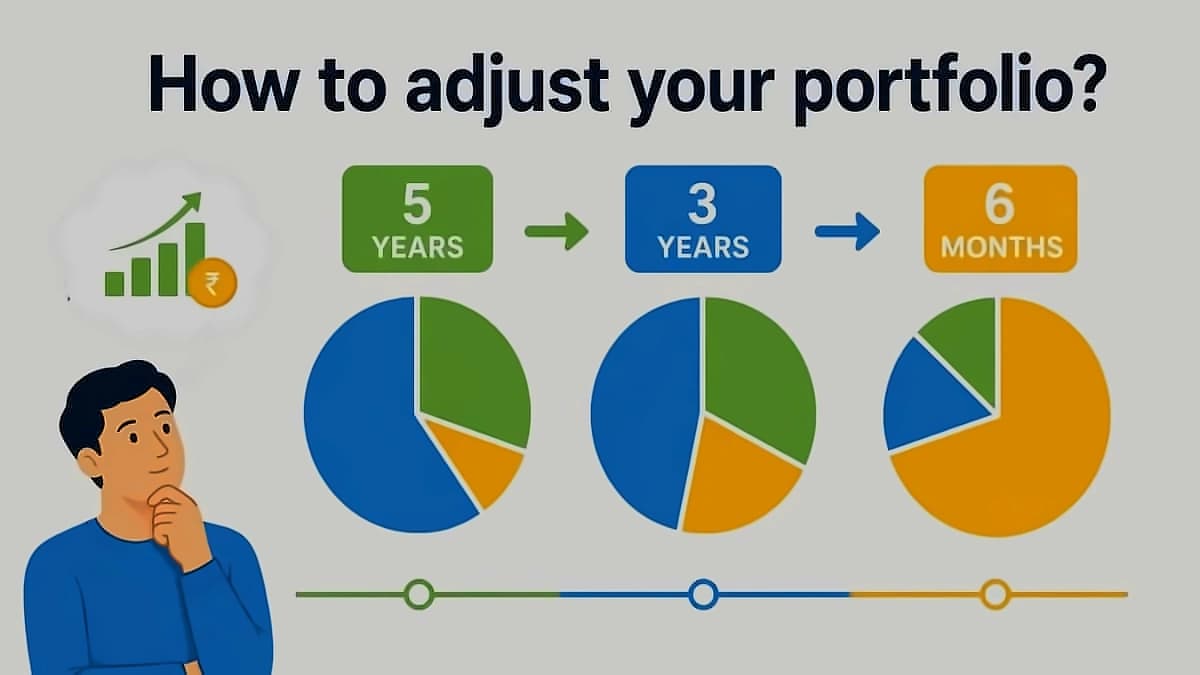
According to the investment guidance, the setup process involves deciding how much to save monthly for each goal and transferring that amount to separate savings accounts. As reported by the source, from each account, set up two SIPs (systematic investment plans) - one SIP goes into the equity ETF, while the other goes into the recurring deposit or bond fund. The source recommends bank recurring deposits for bonds and ETFs (exchange-traded funds) for equity, emphasizing that ETFs are passive products that track market indices rather than attempting to beat them. For bonds, a bank recurring deposit works well when matched with the goal's time horizon. Standard Chartered notes that portfolio rebalancing helps manage risk while assets offer stable performance, with investors able to rebalance once or twice a year to prevent portfolio value from becoming extremely volatile. Before making any changes, investors should look at their financial goals - big life decisions such as buying a house, planning retirement, or paying children's tuition often necessitate asset allocation shifts.
As detailed in the source, having a separate savings account for each goal makes rebalancing easier when adjusting the mix of equity and bonds over time. The guidance explains that as investors approach their goals, they should reduce equity exposure because they cannot afford big losses near the finish line. The source notes that managing multiple portfolios sounds complicated but does not have to be, as the process becomes largely self-sufficient once automated through SIPs. Standard Chartered explains that portfolio rebalancing helps instil a disciplined investment approach, helping to mitigate emotional decision-making during periods of market volatility. The portfolio rebalancing interval depends on an investor's investment preferences, including monthly, quarterly, semiannual, and annual intervals. Investors can classify their portfolio investments depending on major asset classes and convert each asset's total value into ratios to evaluate allocation against targets. Investors with higher risk appetites can have higher allocation to equity segments, while those with lower risk appetites can opt for more conservative allocations.