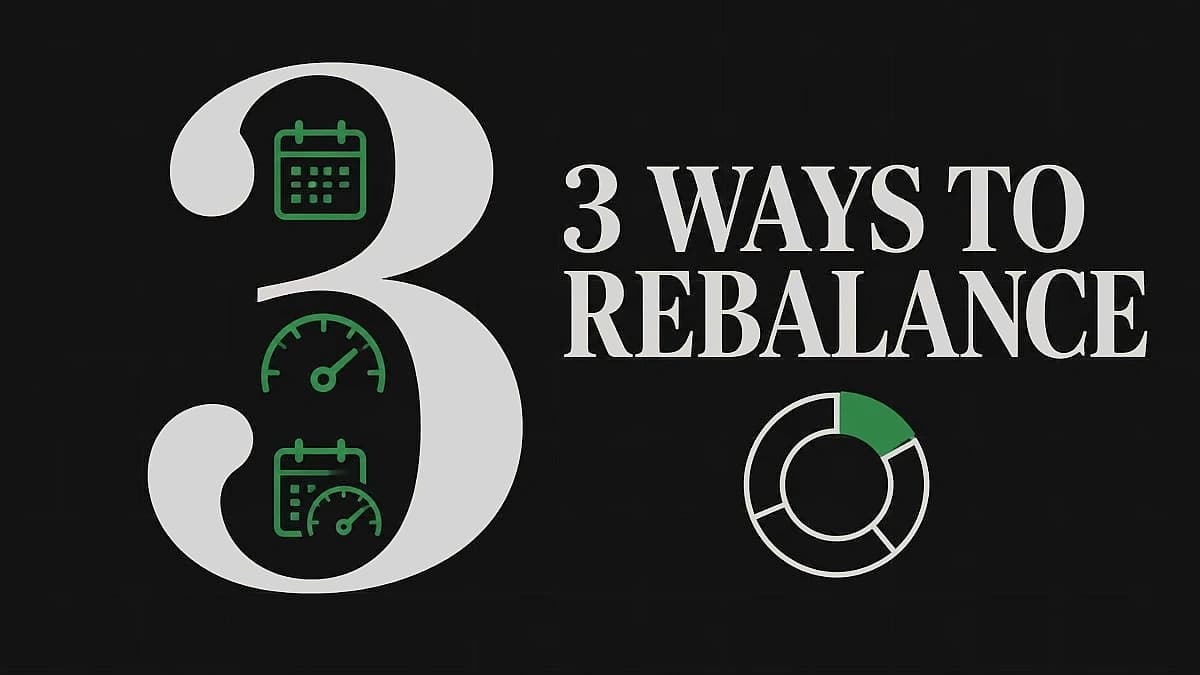
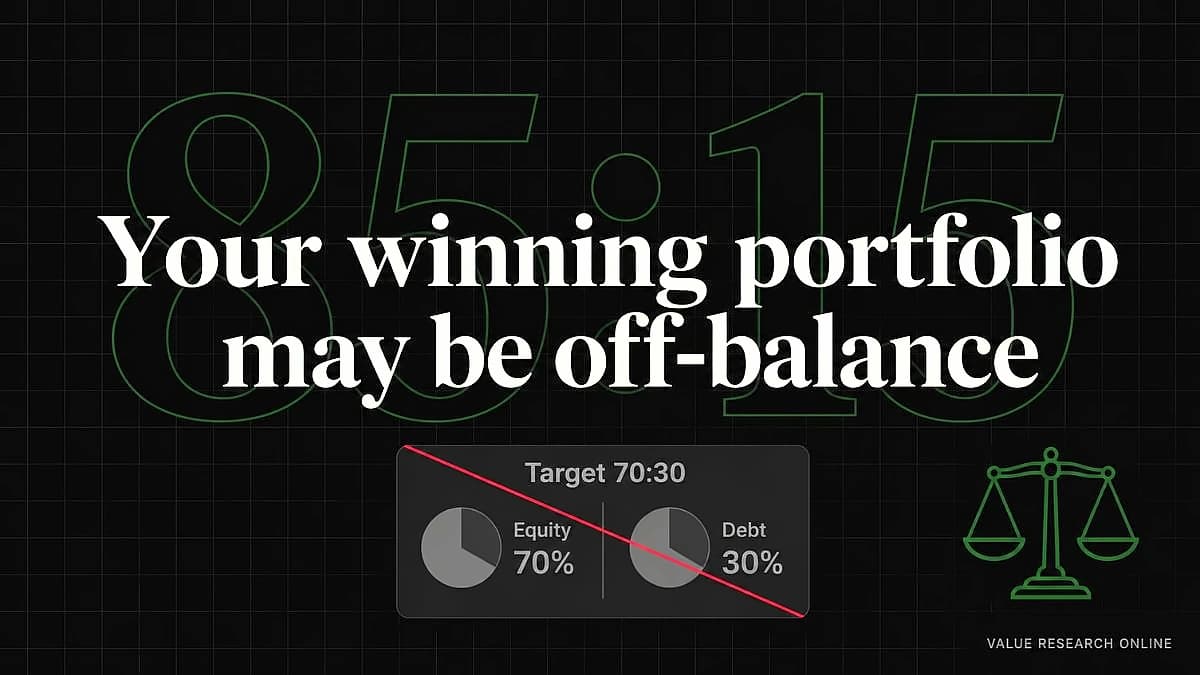
Financial experts Vikas Puri, Senior Partner at Complete Circle Capital, and Nitesh Buddhadev, Founder of Nimit Consultancy, explained during a Zee Business discussion that portfolio rebalancing is essential for maintaining discipline in investment strategies. According to Puri, investing is not a one-time activity and requires ongoing adjustments to maintain discipline. Investors typically set fixed asset allocations such as 70% equity and 30% debt, but market movements can disturb this balance, causing equity to rise to 80% or fall to 60%. The experts emphasized that rebalancing ensures risk remains controlled and aligned with the investor's original plan.
Buddhadev clarified the fundamental differences between rebalancing and restructuring during the discussion. Rebalancing is triggered by market movements and involves periodic adjustments to restore original asset ratios, while restructuring is driven by changes in goals, time horizon, or risk profile. Using a car analogy, he explained that rebalancing is like servicing a car or doing wheel alignment, while restructuring is like changing the car itself—moving from a hatchback to an SUV because needs have changed. The experts noted that many investors follow a 'set it and forget it' approach, which does not work because markets and life circumstances keep changing.
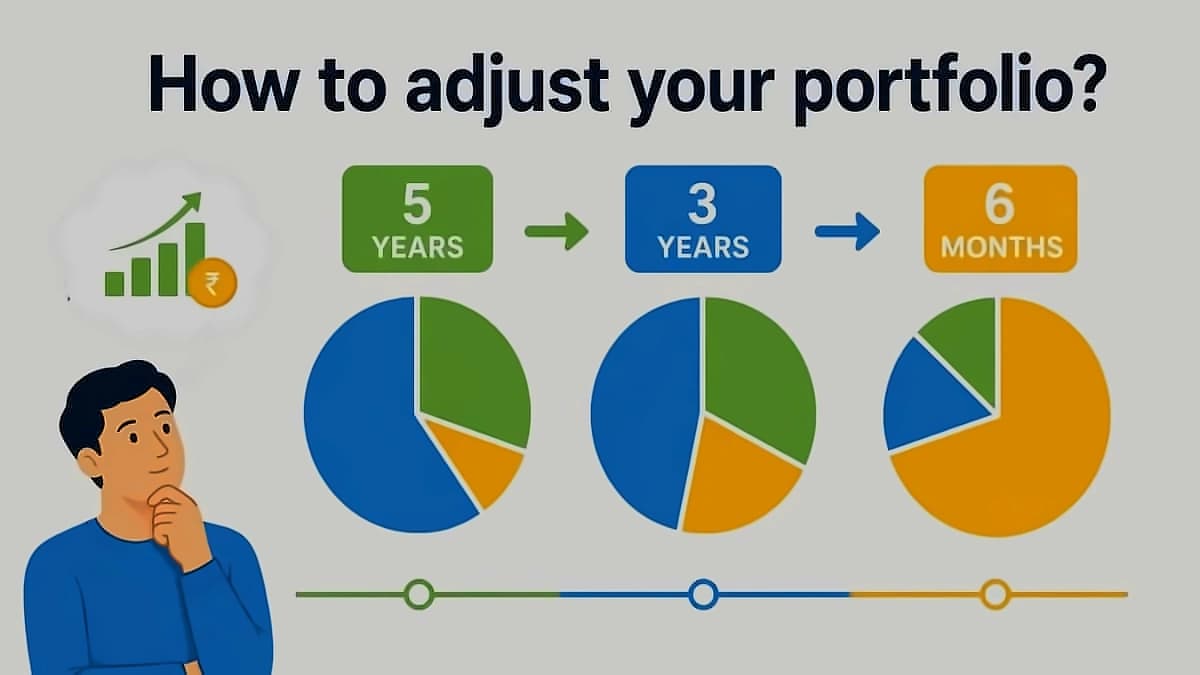
Buddhadev outlined specific allocation strategies based on investment timelines during the discussion. For goals 7+ years away, higher equity allocation is acceptable with lower debt or hybrid exposure. As the goal approaches 5 years, investors should start shifting toward safer assets and increase hybrid allocation. For goals 3 years away, investors should move significantly toward conservative or balanced strategies, preferring large-cap, hybrid, and balanced advantage funds. For goals 6 months to 1 year away, focus shifts to capital protection through ultra short-term, liquid, or arbitrage funds. For goals less than 6 months, investors should prioritize safety and liquidity over returns using liquid or near risk-free instruments. Experts stressed that return expectations must adjust accordingly, noting that equity-like returns cannot be expected when goals are near.
The experts highlighted a critical distinction between market performance and portfolio performance during the discussion. Even when benchmark indices appear stable, individual portfolios—especially stock-heavy ones—may experience higher volatility or deeper drawdowns. Buddhadev explained that this is why reviewing portfolios is essential instead of only looking at indices. Puri noted that rebalancing is necessary in both market conditions—when equity rises significantly, portfolios become overweight in expensive valuations, while when equity falls, allocation reduces. This creates a natural discipline of selling high and buying low to control risk and maintain alignment with the investor's risk profile.
Buddhadev warned that investors often make emotional decisions during market cycles, creating significant risks. In rising markets, investors delay restructuring due to greed and remain in equity longer than planned, while in falling markets, investors panic and exit at the wrong time. He emphasized that ignoring restructuring near goal completion can lead to major risk exposure, noting that global or unexpected events—such as geopolitical tensions or crises like COVID-like disruptions—can significantly impact portfolios even if markets appear stable. The experts recommended regular portfolio reviews at birthday every year, financial year-end, and calendar year-end, with rebalancing necessary when allocation has drifted significantly—say from 60–40 to 80–20 or 50–50.