According to The Economic Times, investment management expert Charles Ellis has highlighted a fundamental truth about market behavior during crisis periods. His observation that stocks often "all go down together" reflects the tendency of markets to move in unison during periods of extreme uncertainty. While investors typically build diversified portfolios to reduce risk, broad market sell-offs can temporarily overwhelm the benefits of diversification, as reported by The Economic Times. Recent academic research supports this observation, with studies showing that portfolio diversification can reduce risk without sacrificing expected returns - though the quality of diversification matters more than the number of assets involved.
As reported by The Economic Times, the mix of assets can have a significant influence on long-term portfolio outcomes. For example, a portfolio of 80% stocks/20% bonds will experience larger declines during market downturns compared to a 20% stocks/80% bonds allocation. This principle is backed by decades of academic research, with studies showing that spreading investments across different asset classes can help manage risk while maintaining return potential. The research emphasizes that higher risk potential generally involves accepting more risk, but diversification helps manage that risk through asset allocation strategies. In the current financial landscape of 2026, successful investors often use a 5% thumb rule, taking action only if equity allocation grows beyond 65% or falls below 55% of their target allocation.
As reported by The Economic Times, during market panics, investor psychology often becomes the dominant force. Concerns about recession, geopolitical tensions, financial crises, or unexpected economic shocks can trigger widespread selling across asset classes. In such environments, correlations between stocks rise sharply, causing many investments to decline simultaneously, according to the report. Recent studies confirm this behavior, showing that markets are generally efficient, especially large, liquid ones, because prices already reflect publicly available information and consistently outperforming the market can be difficult, particularly after fees and taxes. A dangerous error known as the "winners' trap" occurs when investors see their equity portion grow from 60% to 75% and decide not to sell because the market is doing well, increasing risk at exactly the moment when prices are highest.
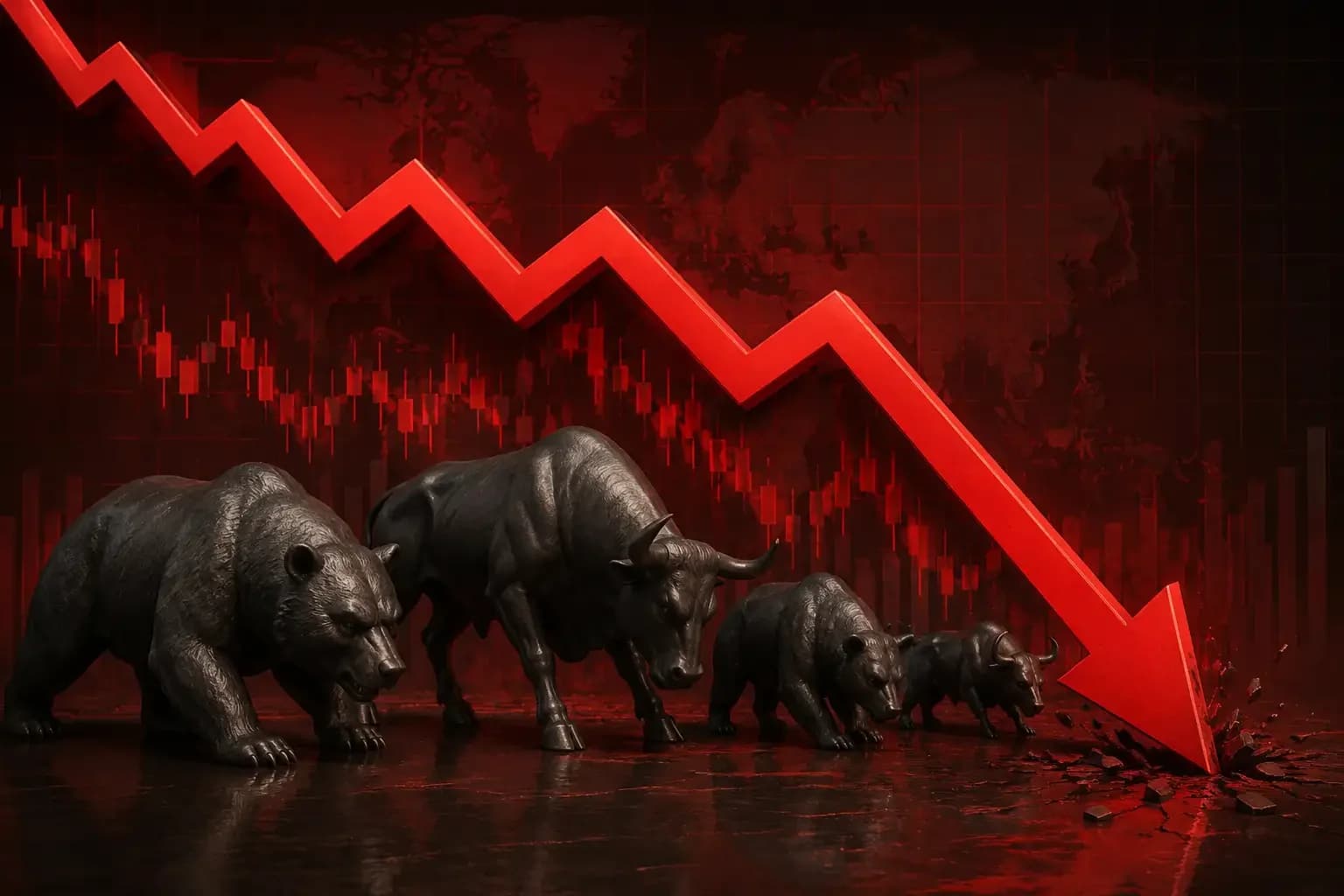
According to The Economic Times, even companies with strong balance sheets and resilient business models often saw their share prices fall alongside weaker peers during market turmoil. The distinction between quality and risk frequently becomes blurred in the early stages of market turmoil as investors rush to reduce exposure, as reported by the publication. Recent research supports this observation, noting that investments with higher return potential also tend to involve higher levels of risk, with stocks historically delivering some of the highest long-term returns compared with other major asset classes, though outcomes can vary depending on the market and timeframe. In current market conditions, investors must verify that their growth funds haven't quietly changed their strategy to something even riskier, as style drift can significantly impact portfolio risk profiles.
As reported by The Economic Times, periods when "everything goes down together" are typically followed by a phase where investors once again differentiate between strong and weak businesses. Companies with durable competitive advantages, healthy cash flows, and capable management teams often emerge stronger over time, according to the expert analysis. Recent academic findings suggest that portfolios that start with 70% stocks/30% bonds will likely drift over time as asset prices move differently, making rebalancing to a target asset allocation crucial for maintaining intended risk profiles. The research emphasizes that short-term market movements can be difficult to predict, while long-term returns have historically been less volatile. In 2026, it is often more tax-efficient to rebalance by directing new money into underperforming assets rather than selling winners and triggering capital gains tax.
According to The Economic Times, a well-constructed portfolio may still experience temporary setbacks during broad sell-offs, but diversification remains one of the most effective tools for managing investment risk across market cycles. The report emphasizes that while diversification may not provide immediate protection during market downturns, it remains crucial for long-term risk management strategies. Recent studies confirm this importance, showing that different portfolios may suit different investors depending on their objectives and tolerance for risk, with risk tolerance varying from person to person and requiring individualized portfolio strategies that match time horizons, investment goals, and personal circumstances. A standard starting point for moderate investors in their 30s follows the 50-30-20 rule: 50% in growth (equity), 30% in stability (debt/guarantees), and 20% in liquidity (cash/liquid funds).