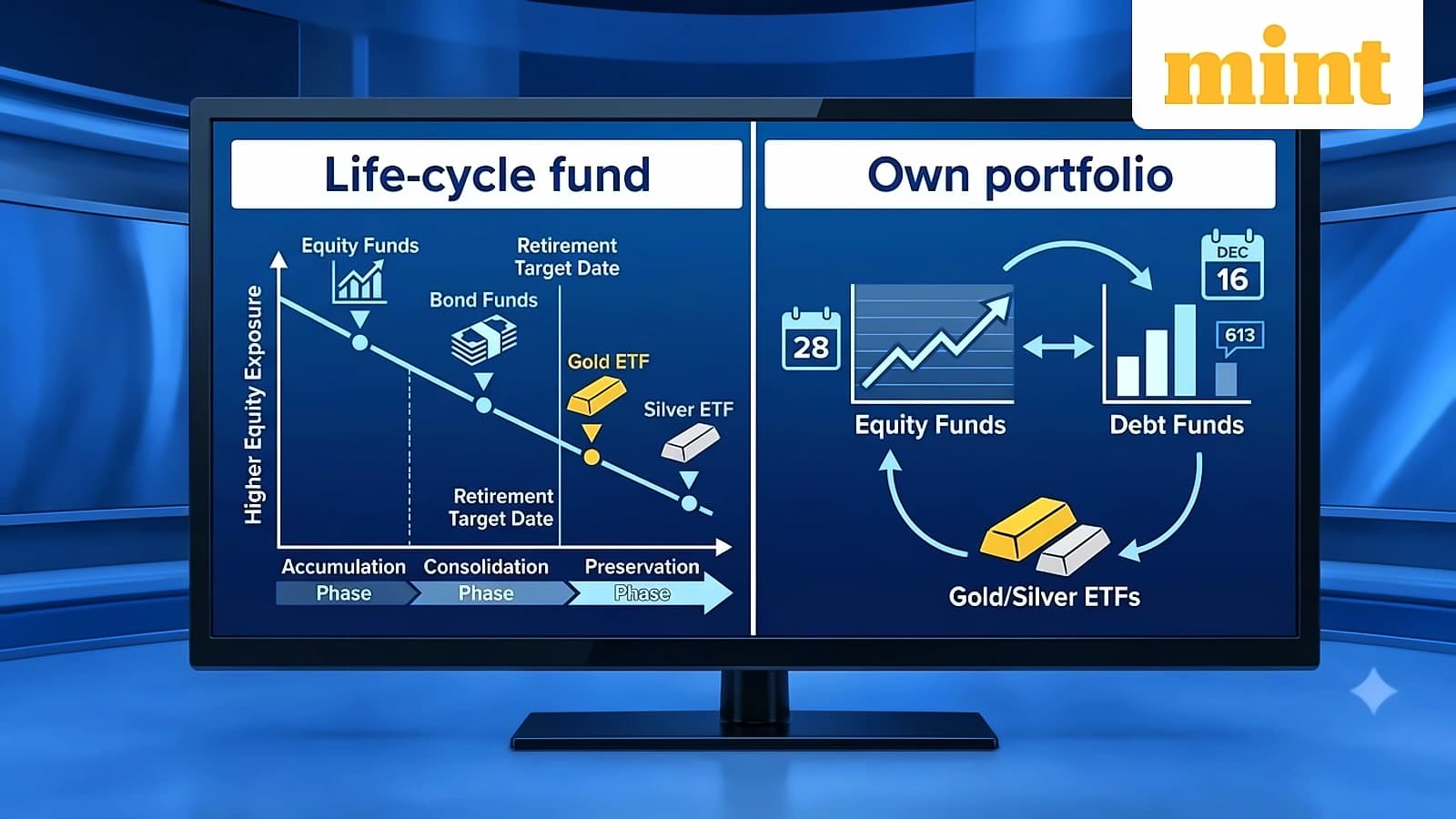
According to Mint reports, a seven-year house purchase goal can justify high equity exposure initially, but the portfolio should gradually move towards safer assets as the purchase nears. The investment strategy requires balancing growth in early years with capital protection as the goal approaches, as a market fall close to the purchase date can derail plans if too much corpus remains exposed to equities. As reported by Mint, the starting point should be the target amount required for the house purchase, which will depend on whether the investor plans to use a down payment, bank loan, mutual fund corpus, or a combination of these options.
For seven-year goals, experts suggest an initial 80:20 allocation between equity and debt, with the debt portion providing stability and liquidity during market uncertainty. Chirag Muni (Anand Rathi Wealth Limited) recommends an equity-heavy portfolio for the first five years, suggesting 70-100% equity exposure with the balance in debt and gold. However, the appropriate allocation depends on the amount needed to accumulate, the investor's risk profile, and how the house purchase is expected to be financed. As noted by Mint, investors should avoid assuming they need to accumulate the entire property value, as the amount required may primarily be the down payment and associated costs if a home loan is part of the plan.
For the equity component, experts recommend active diversified equity categories such as large-cap, mid-cap, small-cap and multi-cap funds, along with value, flexi-cap, focused and dividend-yield funds. Muni advised against sectoral and thematic funds for fixed house-purchase goals because their performance can be cyclical and may require tactical entry and exit, potentially increasing portfolio volatility. Garg similarly cautioned against using high risk appetite as justification for concentrated categories, emphasizing that goal-fit is a different question entirely from risk tolerance. For debt allocation, investors in higher tax brackets could consider arbitrage funds, while those in lower tax brackets could consider target-maturity funds.
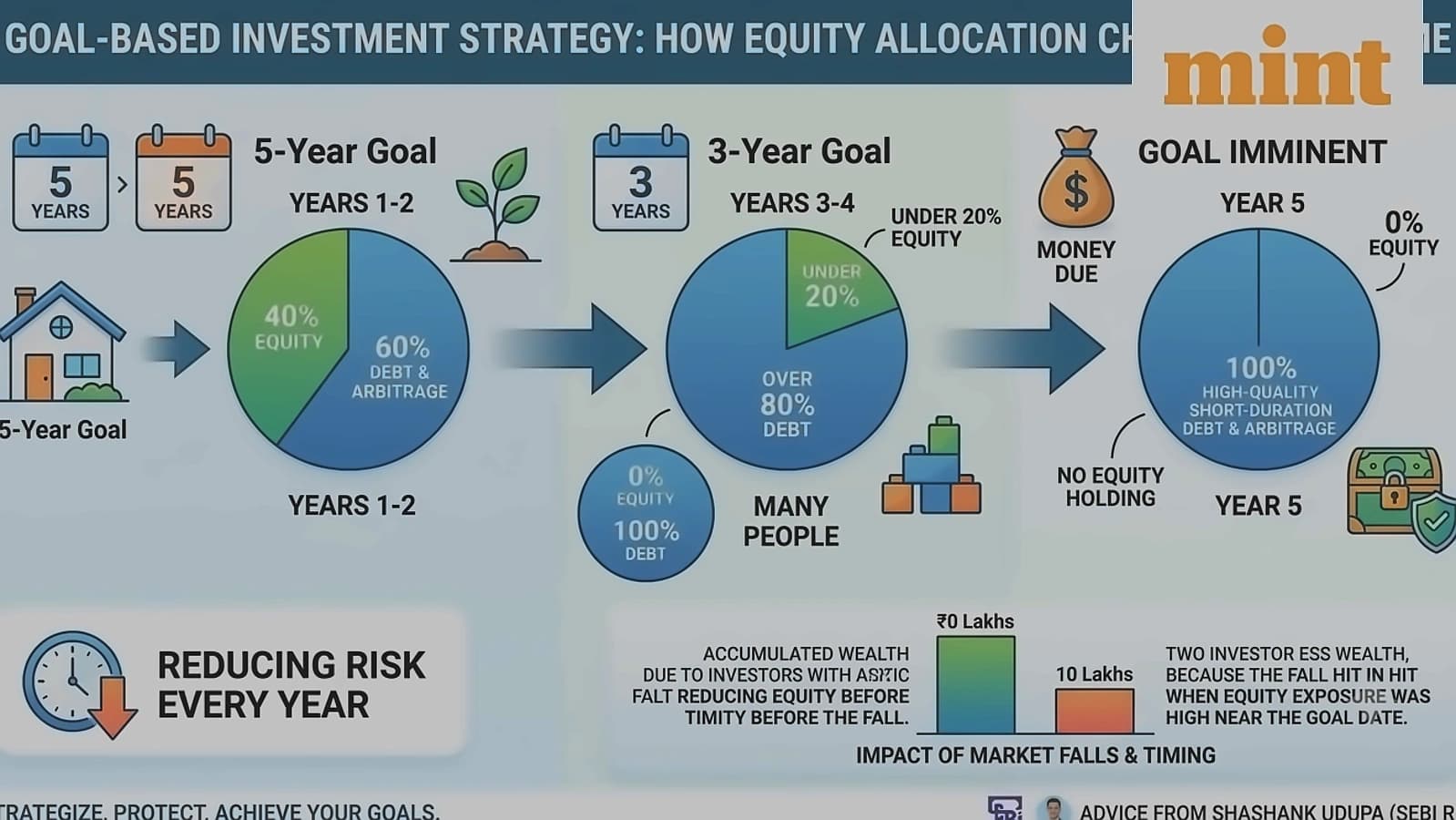
The biggest mistake in seven-year investment plans is waiting until the final year to reduce equity exposure. Muni suggests gradually shifting the portfolio towards debt as the purchase date approaches, with an investor potentially moving towards 60:40 equity-debt allocation around two years before the goal and potentially shifting to 100% debt one year before the purchase. Garg recommends investors can shift towards short-term debt funds or balanced and hybrid funds as the goal approaches, particularly where the purchase timeline is flexible. Investors with substantial equity portfolios should consider creating separate house-purchase buckets with their own targets, asset allocation, and de-risking schedules to better assess goal progression.