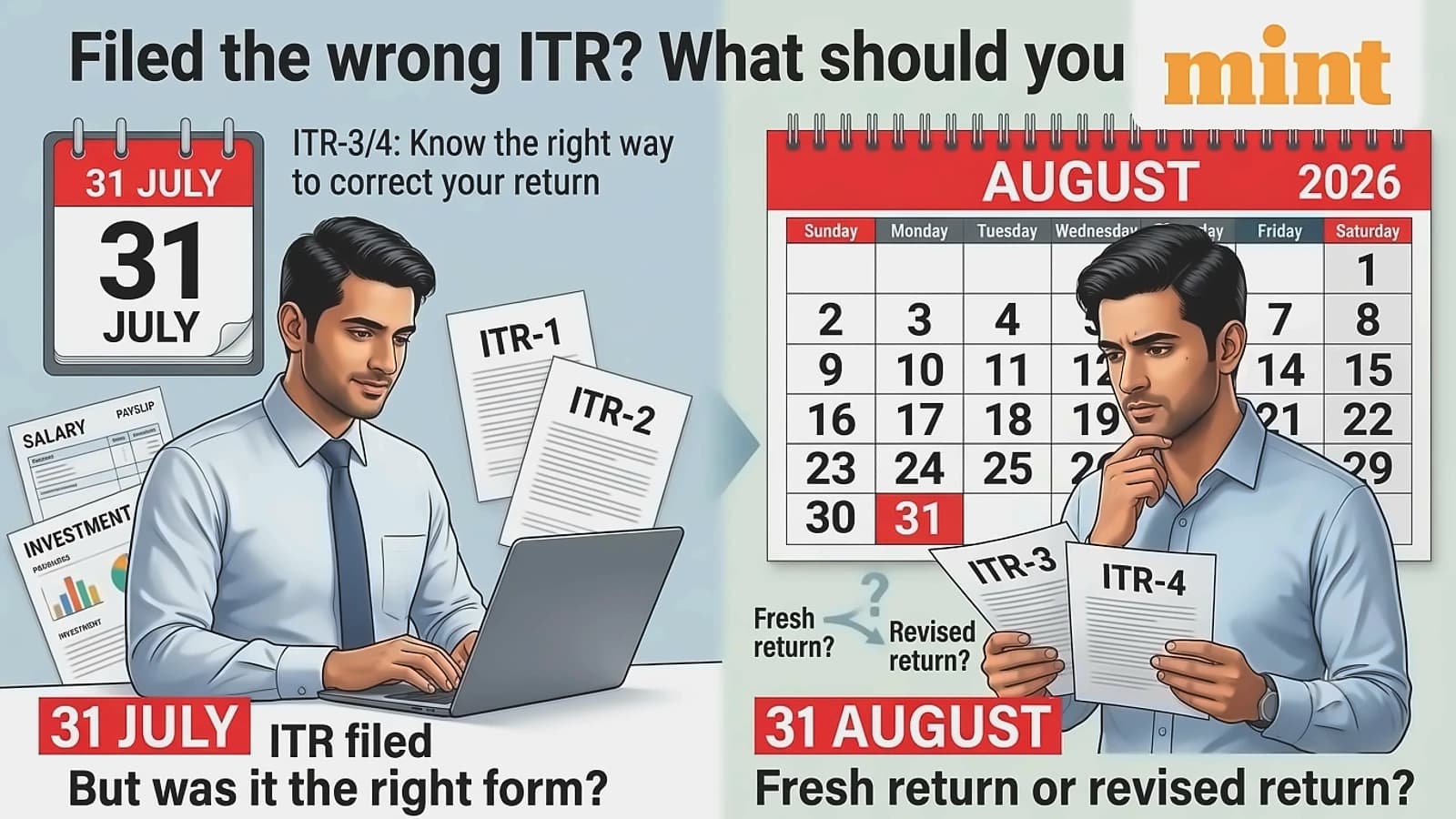
Taxpayers have until 31 July 2026 to file their income tax returns for assessment year 2025-26 (AY27/FY26) through the e-filing portal. According to reports from Mint, the deadline was extended by a month from the earlier 31 August deadline. The income tax department has notified all ITR forms for AY27 and enabled Excel Utility for ITR-1, ITR-2, ITR-3, ITR-4, ITR-5, and ITR-7 forms. Taxpayers must register on the portal using Aadhaar, PAN, and other details to file their returns, with those filing for the first time needing to register using their PAN, Aadhaar and other required details.

Filing ITR alone is insufficient - taxpayers must complete e-verification within 30 days of filing to ensure return validity. As reported by Mint, the department has mandated this process to be completed under the ITR-V section on the official e-filing portal. Failure to complete e-verification within the 30-day window may result in returns being registered as 'incomplete' or 'invalid', thereby delaying the refund process from the tax department. Without verification, the Income Tax Department may treat the return as invalid, regardless of how accurately it was filed, which could result in delayed refunds, penalties and other tax-related issues.
Taxpayers can complete e-verification through five secure methods including OTP sent to the mobile number linked with Aadhaar, electronic verification code (EVC) generated using pre-validated bank accounts or demat accounts, or net banking. According to latest reports, authorised banks provide EVC through their net banking portals, and taxpayers can also use digital signature certificates (DSC) for verification. The process involves logging into the income tax e-filing portal, entering PAN, assessment year, and acknowledgment number, then selecting from available verification options. Successful e-verification results in an acknowledgment being sent to the taxpayer, with a success message displayed along with a Transaction ID and an email sent to the registered email ID.
Additional verification methods include logging into net banking portals through the e-verify ITR segment or using Aadhaar OTP to the mobile number registered with Aadhaar. As reported by Mint, taxpayers can also complete offline verification through EVC at bank ATMs or by sending ITR-V to the Centralised Processing Centre in Bengaluru. For speed post verification, the date when the duly verified ITR-V is received at CPC determines the 30-day period. With the July 31 deadline approaching, taxpayers should ensure they have all necessary documents and verification methods ready to avoid delays.
Authorised signatories or representatives can e-verify returns on behalf of assessees using Aadhaar OTP sent to the registered Aadhaar number, net banking EVC sent to mobile and email registered with the e-filing portal, or EVC generated through pre-validated bank accounts or demat accounts. According to Mint, this process ensures secure verification while allowing representatives to complete the necessary steps for taxpayers who cannot do it themselves. With the approaching deadline, representatives should ensure they have proper authorisation and all necessary verification documents ready to avoid delays in the process.