Bond platforms are currently advertising double-digit returns of up to 14% on high-yield bonds, according to reports from Business Standard. These bonds typically offer yields above 11% and fall in the AA- to BBB rating range. As reported by BondsIndia founder Ankit Gupta, high-yield bonds form a very small portion of the overall corporate bond market, but retail participation is growing significantly. More than 50% of bonds bought by retail investors on platforms like Indiabonds.com are high-yield, as noted by co-founder Vishal Goenka. According to Mint analysis, globally, bonds rated below BBB are generally considered high-yield, while in India, investors can find relatively higher-yielding opportunities in the AA and A+ segments without necessarily taking on the level of risk associated with bonds rated below BBB.
The primary appeal of high-yield bonds lies in their significantly higher yields compared to traditional fixed-income avenues such as fixed deposits and AAA-rated bonds, according to BondsIndia reports. As noted by Mint, the higher interest offered by these bonds is linked to the credit risk of the issuer, with investors generally compensated through a higher yield when the perceived risk of repayment is higher. Since there is a higher perceived risk of repayment, investors are generally compensated through a higher yield compared with bonds that have stronger credit ratings, as explained by Souvik Biswas, head of research at Bajaj Capital. Rhishabh Garg, CEO of FundsIndia Digital, emphasized that the higher coupon should not be viewed separately from the risk being taken, with a weaker credit rating indicating a higher level of repayment risk reflected in the yield offered by the bond.
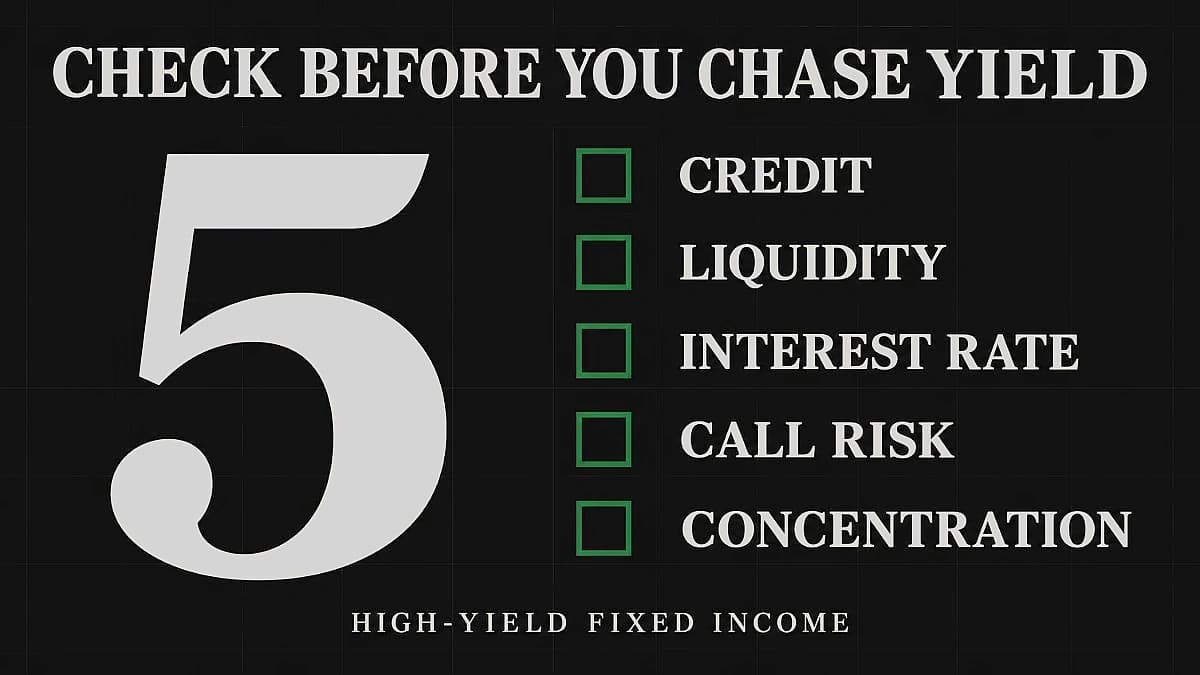
Default risk represents the primary concern for high-yield bond investors, as reported by Business Standard. A bond offering 12-14% yields instead of around 8% indicates the issuer cannot raise money at lower rates, signaling greater perceived risk. However, as noted by Mint, investors must consider multiple interconnected risks including credit-rating downgrades, liquidity risk, interest-rate risk and concentration risk. A rating downgrade can signal higher credit risk, making investors demand a higher yield, which can result in a fall in the bond's market price. The market can therefore reprice a bond following a downgrade because the new rating indicates higher credit risk, with the coupon on an existing bond being fixed, its market price can fall to bring its yield in line with the return investors now demand. Liquidity risk becomes more problematic in lower-rated bonds, with many high-yield bonds trading thinly in the secondary market, making selling before maturity more difficult and potentially requiring acceptance of lower prices.
According to Business Standard analysis, investors should maintain 15-20% allocation to high-yield bonds within their fixed-income portfolio, with exposure limits becoming tighter as credit quality declines. For a portfolio containing approximately 20 bonds, exposure to any single issuer should not exceed around 5%. As noted by Mint, there is no one-size-fits-all allocation to high-yield bonds, with the appropriate exposure depending on factors such as the investor's risk appetite, income requirements, investment horizon, liquidity needs and existing portfolio composition. Bonds rated BBB and below should be approached with considerably greater caution because of their higher credit risk and potential for loss of capital in the event of default. High-yield exposure should generally be a smaller, satellite allocation within the overall debt portfolio rather than a substitute for the core fixed-income allocation.
Only investors who understand credit risk and can assess issuer balance sheets should consider high-yield bonds, according to Business Standard analysis. As noted by Mint, true high-yield bonds, or those rated BBB and below, require a strong understanding of the issuer and its business, along with a higher tolerance for risk, and are generally not suited to conservative investors. For investors considering these bonds, the key factors highlighted by experts include the issuer's credit quality, the underlying business, the bond's maturity, liquidity and the investor's own risk appetite and income requirements. For most retail investors, professionally managed routes may be more practical than direct bond purchases, as noted by wealth advisors. A credit risk fund can provide professional credit assessment and better diversification than individual investors can achieve on their own, though returns may appear lower due to inclusion of higher-rated securities.