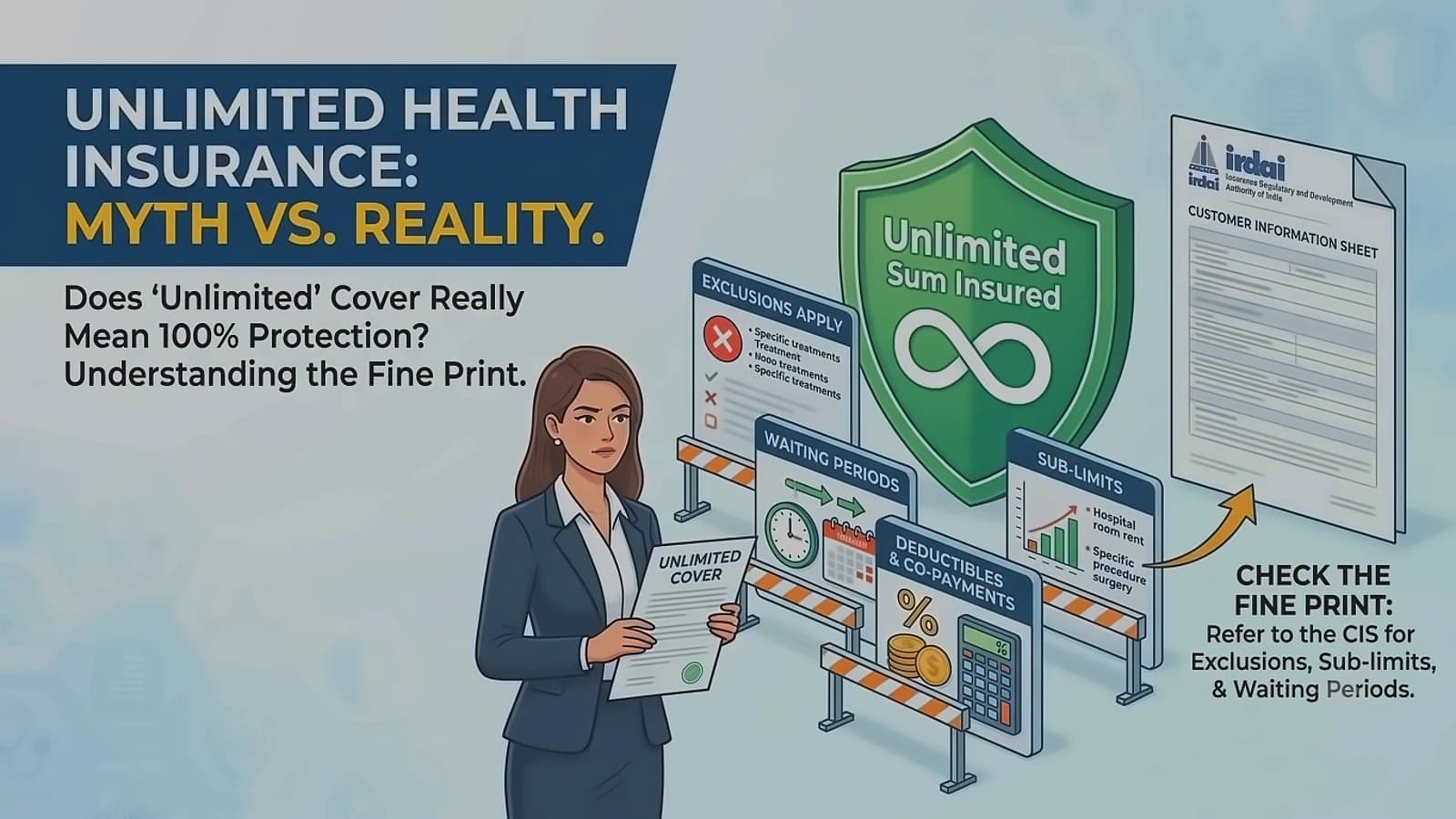
One of the most critical policy terms to understand is room rent restrictions, which cap daily charges at 2% of the sum insured. According to Shilpa Arora, co-founder and COO of Insurance Samadhan, this restriction often leads to disputes during hospital admission. For example, if your sum insured is ₹3 lakh, you can only take a room charging a maximum of ₹6,000 per day. All hospital expenses, including doctor fees, nursing charges, and operation theatre charges, are tied to room rent, making this restriction particularly significant for policyholders. Some policies also limit room choices to twin-sharing rooms or general ward only, which may not be suitable for single occupancy requirements during hospitalisation.

Health insurance policies often impose sub-limits on specific treatments that can severely restrict payouts despite adequate overall sum insured amounts. As reported by Renuka Kanvinde, vice president of Health Insurance at Tata AIG General Insurance, policies may cap payments for procedures such as cataract surgery, knee replacement, and maternity expenses. For instance, cataract surgery for a single eye can cost over ₹1 lakh in most cities, but policies may allow only ₹50,000 under sub-limits. This means policyholders may need to pay the difference from personal funds or opt for ordinary procedures. The same applies to modern treatment methods, creating significant gaps between expected and actual coverage.
Many health insurance policies include co-payment clauses that require policyholders to pay a certain percentage of their claim amount from personal funds. According to Arora, co-payment can inflate out-of-pocket expenses significantly, as it applies to every hospitalisation and is a recurring expenditure. For example, if your hospital bill is ₹2 lakh and you have a 20% co-payment, you must pay ₹40,000 from your pocket. Senior citizens and those with co-morbidities often receive policies only with co-payment clauses, making it essential to restrict this percentage to 10% or 20% to lower hospitalisation costs.
Health insurance policies include waiting periods for specific ailments and conditions that vary by insurer. As reported by Kavinde, most policies don't cover pre-existing conditions, specific illnesses, or maternity benefits immediately. The initial waiting period typically lasts for 30 days, during which no illness-related claims are covered. Pre-existing disease waiting periods range from one to four years, while specific diseases like cataract surgery can have waiting periods of up to two years. Some policies also have maternity waiting periods of two to four years before pregnancy-related expenses can be claimed.
Health insurance operates on the legal principle of Utmost Good Faith, meaning concealing medical conditions breaches this agreement and can result in severe penalties. According to recent reports, non-disclosure can lead to immediate claim rejections, policy cancellations, and forfeiture of all premiums paid over the policy period. The most devastating consequence is a Permanent Exclusion that prevents future coverage for any illness related to the hidden condition. Policyholders must disclose all health conditions, even controlled ones like diabetes, hypertension, or thyroid issues, as insurers evaluate risk based on complete medical history. Failure to disclose can result in legal battles with insurers, potentially leaving families paying thousands in legal fees without any advantage, as courts tend to favor insurers with documented medical evidence.