A consumer commission in Belagavi has directed Star Health and Allied Insurance to pay the balance of a stroke claim after the insurer failed to establish that a disease-specific cap formed part of the renewed policy. Devdutt Kopikar had held the policy since 2019 and increased its sum insured from ₹3 lakh to ₹5 lakh. Following a stroke in March 2025, his family claimed ₹4,28,308, with the insurer paying ₹2 lakh citing a disease-specific sub-limit. The commission ordered the insurer to pay ₹2,28,308 with 12% annual interest, ₹10,000 in compensation and ₹5,000 towards litigation costs within 60 days. This case demonstrates why policyholders should examine renewal documents carefully, especially when increasing coverage.
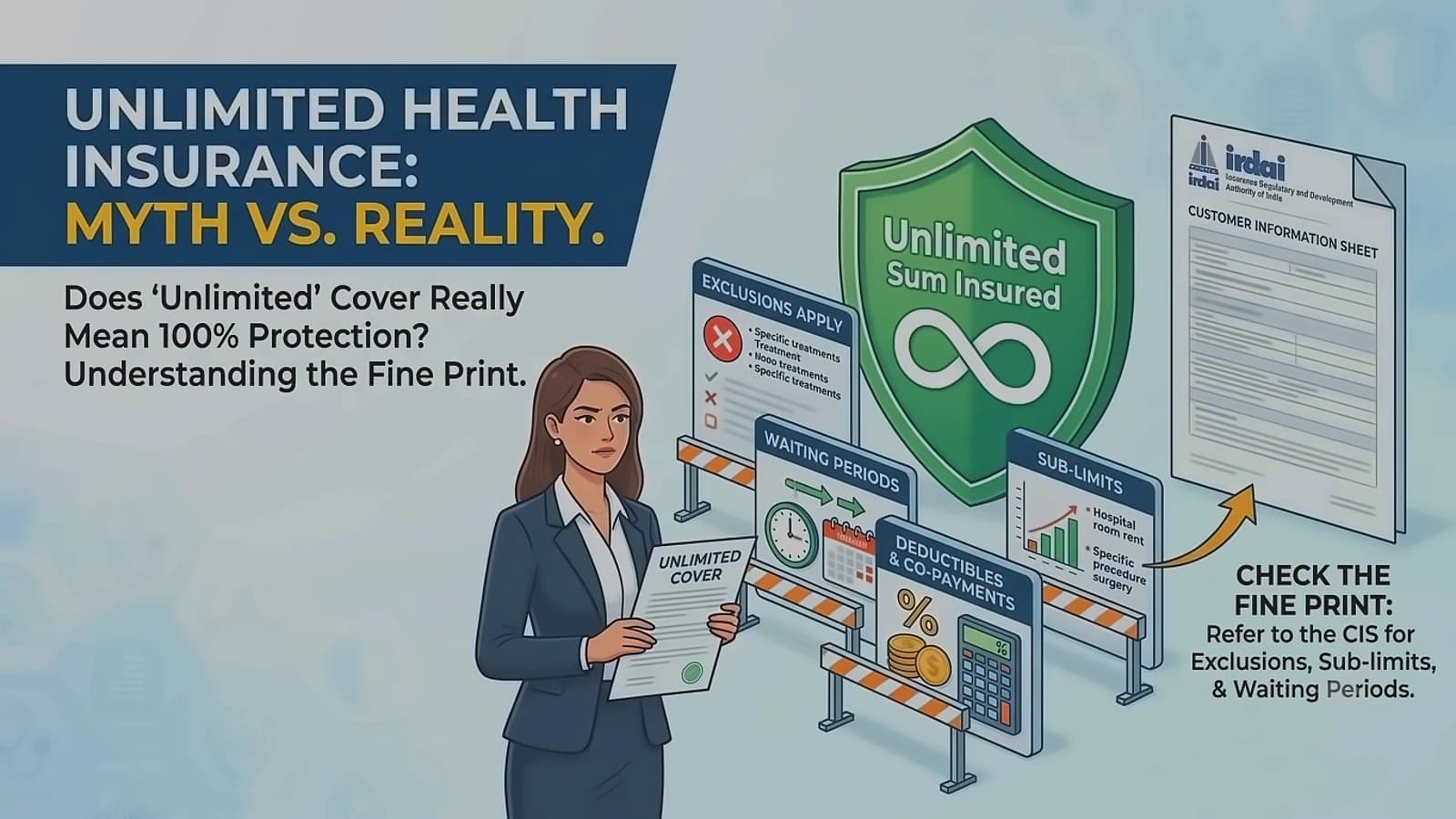
While the term 'unlimited health insurance' sounds like comprehensive medical coverage, it rarely provides 100% coverage of all claims. According to reports from Mint, an unlimited cover typically applies only to the total sum insured or specific benefit limits, not the entire scope of medical care. A conventional health insurance policy comes with a specified sum insured, which represents the maximum amount the insurer will pay for eligible claims during the applicable policy period. With unlimited cover, the overall sum insured may be removed or substantially increased, but this feature does not override other policy conditions.
As reported by Mint, exclusions remain a fundamental limitation even under unlimited coverage plans. An exclusion means that a particular disease, treatment, service or circumstance is outside the scope of the policy. The Insurance Regulatory and Development Authority of India (IRDAI) requires insurers to provide important information such as coverage, exclusions, sub-limits, deductibles and waiting periods in the Customer Information Sheet. IRDAI has also mandated insurers to offer products and add-ons that provide wider choices, including coverage options for areas such as outpatient treatment, homecare and domiciliary treatment, though this does not mean every policy automatically includes all such benefits.
According to Mint reports, waiting periods remain a significant limitation even under unlimited coverage policies. IRDAI's current health insurance information states that the maximum waiting period under a health insurance policy should not exceed 36 months. Policies may also prescribe specific waiting periods for certain diseases, treatments or procedures. Buying a policy with unlimited coverage shortly before undergoing planned treatment does not necessarily mean that the entire cost will be covered. Policyholders should carefully examine waiting-period provisions, particularly those relating to pre-existing diseases and specified treatments, before purchasing a plan. Portability facility allows eligible policyholders to transfer waiting-period credits to new insurers at renewal, subject to applicable rules and new policy terms.
Before accepting any renewal proposal, policyholders should compare sum insured, premium, waiting periods, exclusions, deductibles, co-payments, room eligibility, restoration provisions and network hospitals between policies. According to Business Standard, the Customer Information Sheet (CIS) is mandatory and summarises key features and limits, but in the Belagavi case, it did not mention the sub-limit later cited by the insurer, which the commission found could not be enforced. Policyholders should disclose all material health changes since policy issuance, including diagnoses, hospitalisations, procedures, medication and ongoing tests. Enhanced cover should be treated as approved only when the insurer confirms it in writing, and the new policy schedule shows the enhanced sum insured along with any conditions attached to it.