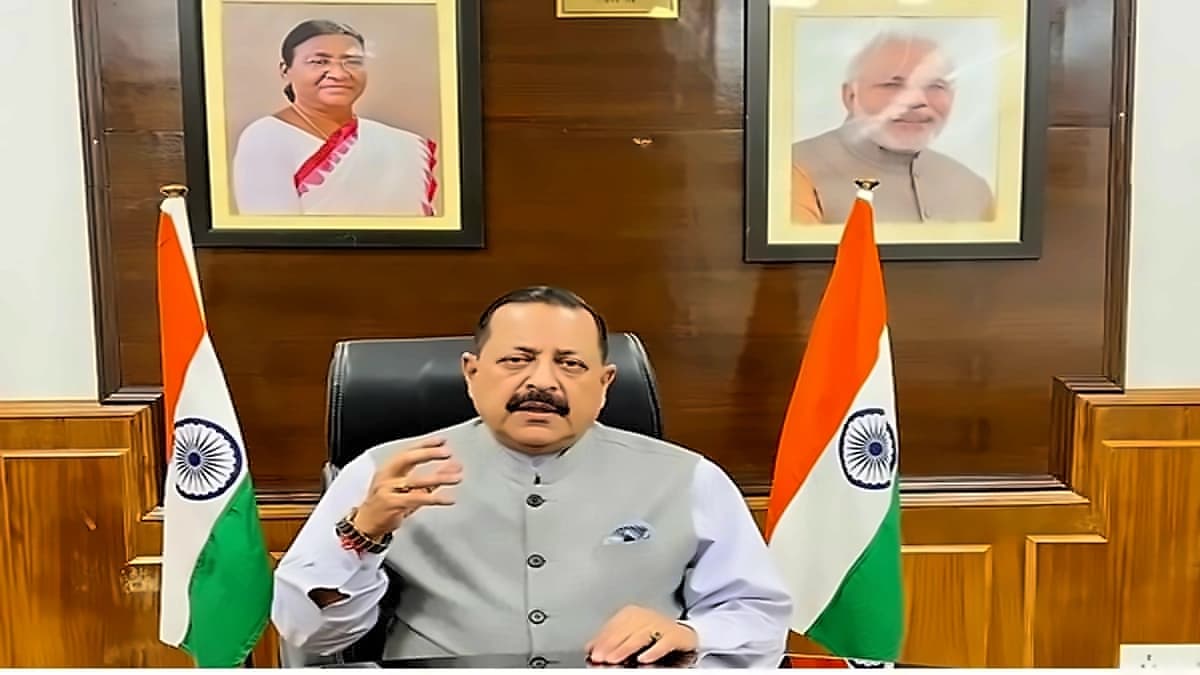
Union Minister of State for Personnel, Public Grievances and Pensions Dr. Jitendra Singh announced that the government will continue to review and reform pension rules and procedures in line with changing social needs. According to reports from ThePrint and PTI, Singh made these remarks while addressing the 9th National ANUBHAV Awards Ceremony-2026 and the 60th Pre-Retirement Counselling Workshop at Vigyan Bhawan in New Delhi. The minister emphasized that pension reforms are aimed not only at providing ease of living to pensioners but also at making the entire administrative system more efficient. As per ThePrint, Singh said the pension system must remain in a continuous state of reform, with changes guided by experience, feedback and evolving social requirements. The minister described retiring employees as a national asset and called for continued use of technology and feedback from pensioners to make the pension system simpler, more responsive and aligned with changing social requirements.
Singh highlighted several pension reforms introduced in recent years, including significant changes to family pension provisions. As reported by The Times of India, the minister said family pension provisions have been amended to benefit divorced and separated daughters. He also highlighted provisions giving women government employees greater flexibility in nominating their children for family pension instead of their husbands in specified circumstances. These changes reflect the government's stated approach of updating pension provisions in response to changing social requirements, demonstrating the government's commitment to ensuring fair treatment for all family members. According to ThePrint, Singh noted that the government has continued to simplify pension procedures in response to changing administrative and social requirements, with unnecessary provisions removed from pension forms and cumbersome procedures replaced with simpler processes.
Singh highlighted the enhanced family pension available to families of government employees who die while in service. According to The Times of India, under the applicable Central Government pension provisions, the enhanced family pension is 50% of the last pay drawn for 10 years in cases covered by the rules. The minister also referred to the removal of the earlier seven-year service requirement for enhanced family pension in cases where a government employee dies in service. Singh explained that the government had reviewed this requirement because families of employees who die early in their careers may need financial support, allowing eligible families to receive enhanced family pension without the earlier seven-year minimum service requirement.
Singh highlighted technology-based initiatives that have transformed pension service delivery and improved administrative efficiency. As reported by ThePrint, the minister said technology-driven pension service delivery has brought greater efficiency, while saving significant manpower and financial resources. The increasing use of technology in pension services has simultaneously improved convenience and reduced the administrative burden on the system. Singh emphasized that the government has simplified pension forms and procedures to reduce unnecessary paperwork and make the process easier for pensioners. The minister referred to the Digital Life Certificate and Face Authentication initiatives that have replaced earlier physical verification requirements with convenient digital processes. According to ThePrint, Singh noted that the initiative has evolved into a wider public campaign, with banks, government departments, pensioners' associations and family members helping elderly citizens submit their Digital Life Certificates. The minister also highlighted the Bhavishya portal and other technology-enabled initiatives that have further simplified pension processing and service delivery.
The ANUBHAV initiative, launched in 2015 on the vision of Prime Minister Narendra Modi, was conceived to preserve and make use of the vast experience acquired by government employees during their years of public service. As reported by ThePrint, Singh said the value of ANUBHAV goes beyond recognizing individual awardees, as each experience can provide the Government with practical feedback to improve policies, procedures and administrative practices. The minister congratulated all the national ANUBHAV awardees and jury award recipients, saying government employees who have devoted decades to public service constitute a valuable national asset. Secretary, Department of Pension and Pensioners' Welfare, Ms. Nivedita Shukla Verma reported that ANUBHAV has become an important platform for capturing and sharing the institutional experience of retired government employees, with over 14,000 experiences shared on the portal so far, while the 2026 awards received over 2,000 nominations, the highest number so far. According to ThePrint, the minister noted that the experiences of retiring and retired employees provide valuable feedback for identifying systemic gaps and improving government practices.
The 60th Pre-Retirement Counselling Workshop brought together around 800 Government of India officials in the National Capital Region scheduled to retire in March 2027. As reported by ThePrint, the workshop covered retirement benefits, CGHS facilities and procedures, Digital Life Certificate and Face Authentication, cyber security, investment choices for pensioners, family pension, income-tax related issues, and other relevant topics. Singh emphasized that pension reforms are therefore not merely about processing retirement benefits but about ensuring dignity, convenience and continued engagement with the experience and expertise of those who have contributed to the nation's development. The minister noted that employees retiring at 60 are often in good health and possess valuable professional expertise accumulated over decades of public service. Instead of allowing this experience to remain untapped after retirement, the Government is creating avenues through which their knowledge, skills and energy can continue to contribute to nation-building.