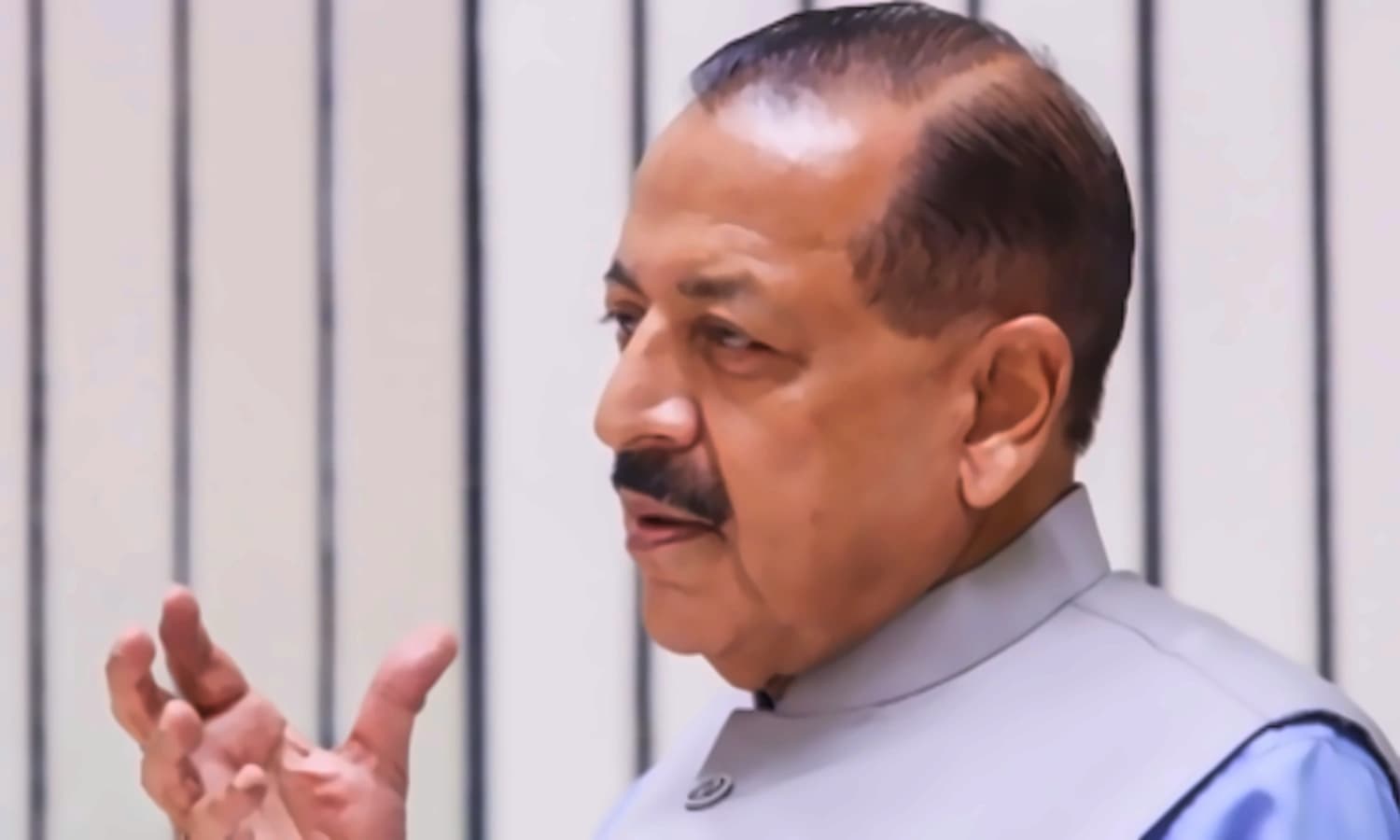
Bharatiya Janata Party's Rajya Sabha MP Ajeet Madhavrao Gopchade has formally petitioned Prime Minister Narendra Modi to resolve long-standing hurdles surrounding the Employees' Pension Scheme (EPS) higher payout mechanism. According to reports from Mint, the MP's detailed appeal raises five primary concerns regarding the ongoing administration of the higher pension scheme, seeking top-level intervention by the Prime Minister's Office to achieve equity and streamline processing. The MP has highlighted that despite the government's assurance about uniform implementation, many pensioners continue facing procedural problems and cases are still pending in different courts across India.
Under standard Employees' Provident Fund (EPF) guidelines, an employer allocates 8.33% of an employee's basic pay plus dearness allowance (DA) toward the EPS pension corpus. Historical caps restricted the calculation salary to ₹15,000, limiting monthly contributions to ₹1,250—a ceiling anticipated to reach roughly ₹2,083 under an upgraded ₹25,000 wage limit. However, the Supreme Court's November 2022 ruling protected an employee's right to contribute based on actual, uncapped salaries to secure higher retirement payouts. Despite these judicial mandates, only a tiny fraction of eligible pensioners have actually received adjusted benefits. The EPS contribution from the employer's side to the employee's EPS pension fund is 8.33% of the employee's basic salary and dearness allowance (DA).

Citing a May 2023 Labour Ministry memo, Gopchade highlighted that administrative rules like Para 26(6) of the EPF Scheme are acting as major bottlenecks. As reported by Mint, the Ministry noted that under Para 26(6), employers/employees must give an option for remittance on higher wages, but the EPFO never prescribed any format for giving this option, and field offices have not issued permission for remittance on higher wages despite employers/employees remitting contributions on higher wages. The MP writes that in view of the continuing difficulties faced by pensioners, this issue should be reviewed comprehensively so that an identified procedural anomaly does not become an impediment to the legitimate consideration of eligible higher-pension claims.
To achieve equity and streamline processing, Gopchade submitted six core interventions to the PMO. According to Mint reports, these include removing administrative impediments caused by Para 26(6) of the EPF Scheme, mandating identical treatment for eligible applicants across both exempted and unexempted establishments, forming an institutional mechanism that automatically applies established High Court and Supreme Court precedents, conducting a thorough financial and actuarial assessment of the EPS-1995 contribution design, enforcing time-bound processing for all pending higher-pension applications, and fulfilling Parliamentary Assurance No. 271/72 transparently. The MP also seeks to establish an appropriate mechanism for extending the final settled legal position to similarly situated beneficiaries without avoidable repetitive litigation.
The MP noted that following his August 6, 2026 inquiry in the Rajya Sabha, the government assured the House that the ruling was applied uniformly to both exempted and unexempted trusts. However, this commitment remains unresolved as Parliamentary Assurance No. 271/72 currently remains marked as 'pending.' As reported by Mint, the continued influx of court cases across several High Courts demonstrates that structural ambiguities surrounding trust rules and past contributions persist, while retired personnel in similar public sector enterprises face glaring inequalities. The MP has highlighted that employees in the same trusts are getting different types of pensions - as per representations received, employees associated with certain BHEL/SAIL trusts are reportedly receiving higher pension benefits, while similarly placed employees with certain other BHEL/SAIL trusts are facing difficulties in receiving the same pension benefits. Such differences create uncertainty and distress among retired employees.