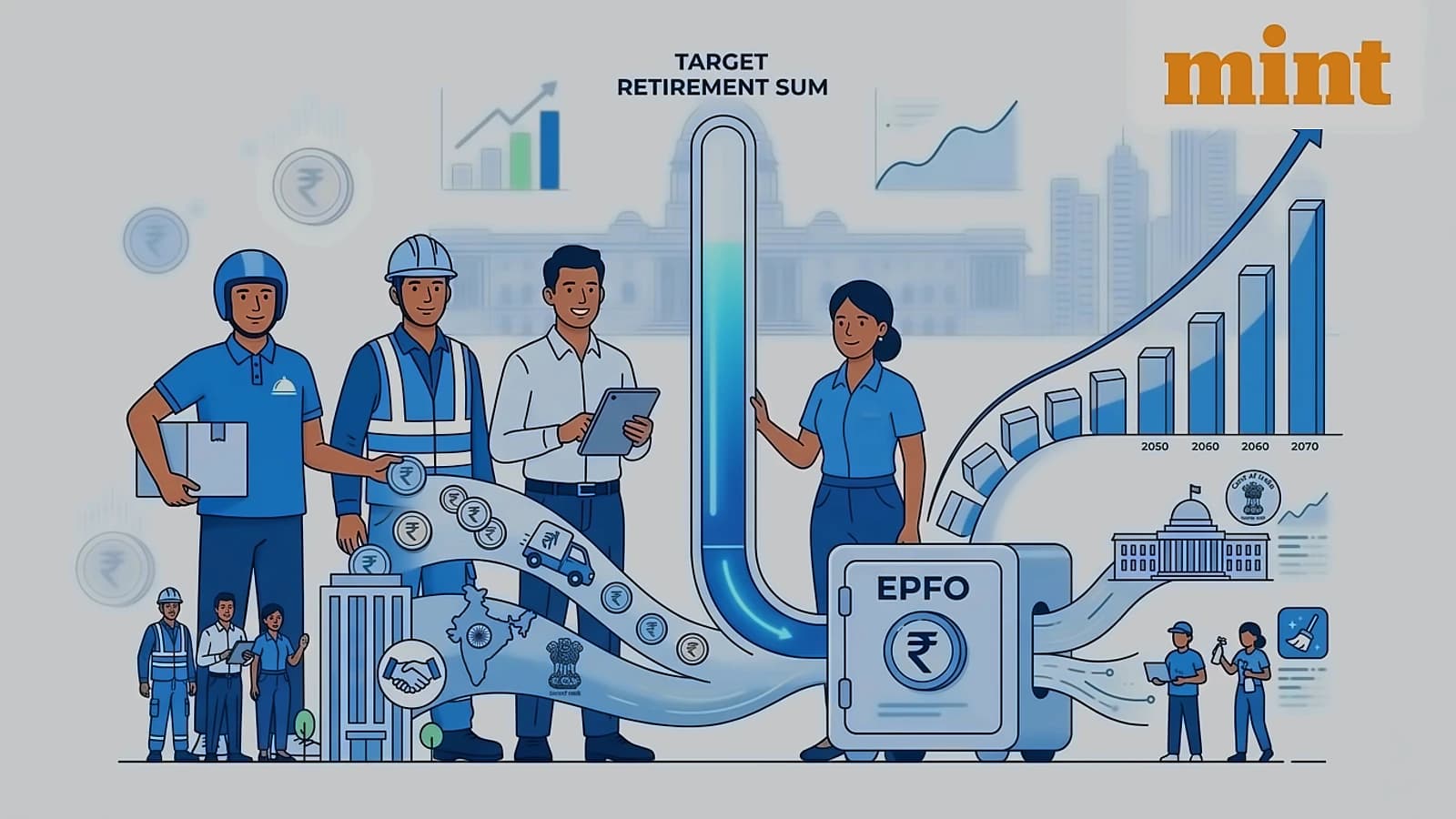
PFRDA has introduced NPS Sanchay, a simplified variant of the National Pension System (NPS) under the All Citizen Model and Multi Scheme Framework (MSF) to expand pension coverage among India's informal workforce. As per the latest PFRDA circular, the scheme simplifies investment choices and facilitates easier onboarding while promoting long-term retirement savings for underserved segments. The Account Aggregator (AA) framework holds perhaps the most transformative long-term potential by enabling consent-based sharing of financial data across institutions, creating the technical foundation for personalised pension advice and automated contribution optimisation. The eNPS platform has evolved from a supplementary channel to the primary mode of subscriber onboarding, with Aadhaar-based eKYC now enabling account creation within minutes.
NPS Vatsalya, introduced in 2024, enables parents to initiate pension savings for minor children — creating the possibility of a contribution period spanning from childhood through retirement, potentially fifty years or more. According to the latest PFRDA analysis, at a 9% annual return, a ₹1,000 monthly contribution begun at age 10 generates over ₹1.5 crore by age 60, compared to approximately ₹35 lakh for the same contribution begun at age 30. The financial mathematics are compelling, with the years lost to early investment being impossible to recover later because early contributions get more time to compound. Gig workers can maintain small base contributions when possible and make catch-up contributions during higher-earning months.
For irregular earners, contribution amounts can vary based on income fluctuations. As reported by Mint, someone earning ₹30,000 in one month and ₹70,000 in another does not need to contribute the same amount each time. Shukla suggests a practical starting point of earmarking 5-10% of every payment received, while Dwivedi indicated someone who can afford it could gradually aim to save around 15-20% of income for retirement. For eligible platform workers under the NPS e-Shramik model, contributions can be flexible with PFRDA not prescribing regulatory minimum or maximum contribution thresholds. The challenge is building auto-contribution integration with platform payment flows — so that a defined percentage of each platform payment is automatically routed to the worker's NPS account, transforming the behavioural economics of pension saving from opt-in to opt-out.
Young subscribers with 25-30 years until retirement may benefit from higher equity allocation for long-term growth potential. As reported by Mint, under common NPS schemes, Active Choice allows equity exposure of up to 75%. Shukla suggested an allocation of around 60-75% equity may be reasonable for young investors with adequate risk capacity, with the remainder invested in corporate bonds and government securities. However, Dwivedi cautioned that age alone should not determine asset allocation, noting that risk capacity depends on income stability, loans, family responsibilities and emergency savings. The latest developments include PFRDA's amendment to include Rupee-denominated Bonds issued by the New Development Bank (NDB) as eligible investment instruments for both Government and Non-Government sector schemes, with existing credit rating requirements remaining unchanged.
PFRDA has introduced Retirement Income Schemes (RIS) and Drawdown Options under the National Pension System (NPS) to enhance flexibility during the decumulation phase. Under the RIS framework, subscribers can select phased withdrawal of their designated pension corpus through different drawdown options, with the remaining corpus continuing to generate returns through the RIS lifecycle fund. The RIS Steady variant employs a continuously declining annual glide path that reduces equity exposure from 35% at age 60 to a floor of 10% at age 75, held constant thereafter until age 85. This design preserves the statutory lifelong pension guarantee while adding flexibility around the remainder, with withdrawals under the RIS mechanism having no impact on the mandatory annuitisation requirement. The regulatory design challenge is to provide sufficient flexibility to accommodate genuine subscriber circumstances without compromising the assurance that gives the system its social purpose.