The tax treatment for ETFs depends significantly on the holding period, with 12 months serving as the key cut-off for capital gains classification. According to reports from Mint, mutual fund units held for 12 months or less are treated as short-term capital assets, while those held for more than 12 months qualify as long-term capital assets. This distinction is crucial as the tax rate can change substantially after the holding period crosses one year. However, recent developments have highlighted tax classification mismatches, with investors finding discrepancies between Annual Information Statements (AIS) and broker reports for Silver ETF transactions.
Equity ETFs, such as Nifty 50 ETFs, qualify as equity-oriented funds as they invest more than 65% of their corpus in equity and equity-related instruments. As reported by Mint, short-term capital gains (STCG) on such units are taxed at 20%, while long-term gains (LTCG) are taxed at 12.5% on gains exceeding the overall annual exemption of ₹1.25 lakh in a financial year. For example, an investor buying an equity ETF for ₹1 lakh and selling after 15 months for ₹3 lakh would have a capital gain of ₹2 lakh, with ₹75,000 taxable at 12.5% after the exemption, resulting in a capital gains tax of ₹9,375. According to updated Section 50AA, the holding period for equity-oriented schemes has been reduced from 36 months to 24 months for schemes without equity exposure exceeding 65%.
Gold and silver ETFs follow a different tax treatment structure compared to equity ETFs. According to Mint reports, short-term gains are taxed at the investor's applicable income-tax slab rate, while long-term gains are taxed at 12.5% when held for more than 12 months. Unlike equity-oriented funds covered by section 112A, the ₹1.25 lakh annual exemption does not apply to these gains. For instance, a gold ETF bought for ₹1 lakh and sold after 18 months for ₹3 lakh would result in a fully taxable ₹2 lakh gain at 12.5%, generating a basic tax of ₹25,000. Recent cases have shown tax classification mismatches, with investors finding discrepancies between AIS reports and broker statements for Silver ETF transactions.
Debt ETFs present a unique tax structure as gains are taxed at the investor's applicable income slab rate, irrespective of whether the gain is STCG or LTCG. As reported by Mint, if an investor falls in the 30% income-tax slab, the entire gain would be taxable at 30%, resulting in a capital gains tax of ₹60,000. For example, buying a debt ETF for ₹1 lakh and selling for ₹3 lakh would result in a ₹2 lakh gain taxed at 30%. However, the tax treatment varies significantly based on purchase date. For units purchased before April 1, 2023, profits are taxed at 12.5% without indexation benefits if held for more than 24 months, while newer investments are always taxed as short-term capital gains regardless of holding period. According to updated Section 50AA, debt-oriented schemes with more than 65% debt exposure continue to be taxed as short-term capital gains regardless of holding period, except for those acquired before March 31, 2023.
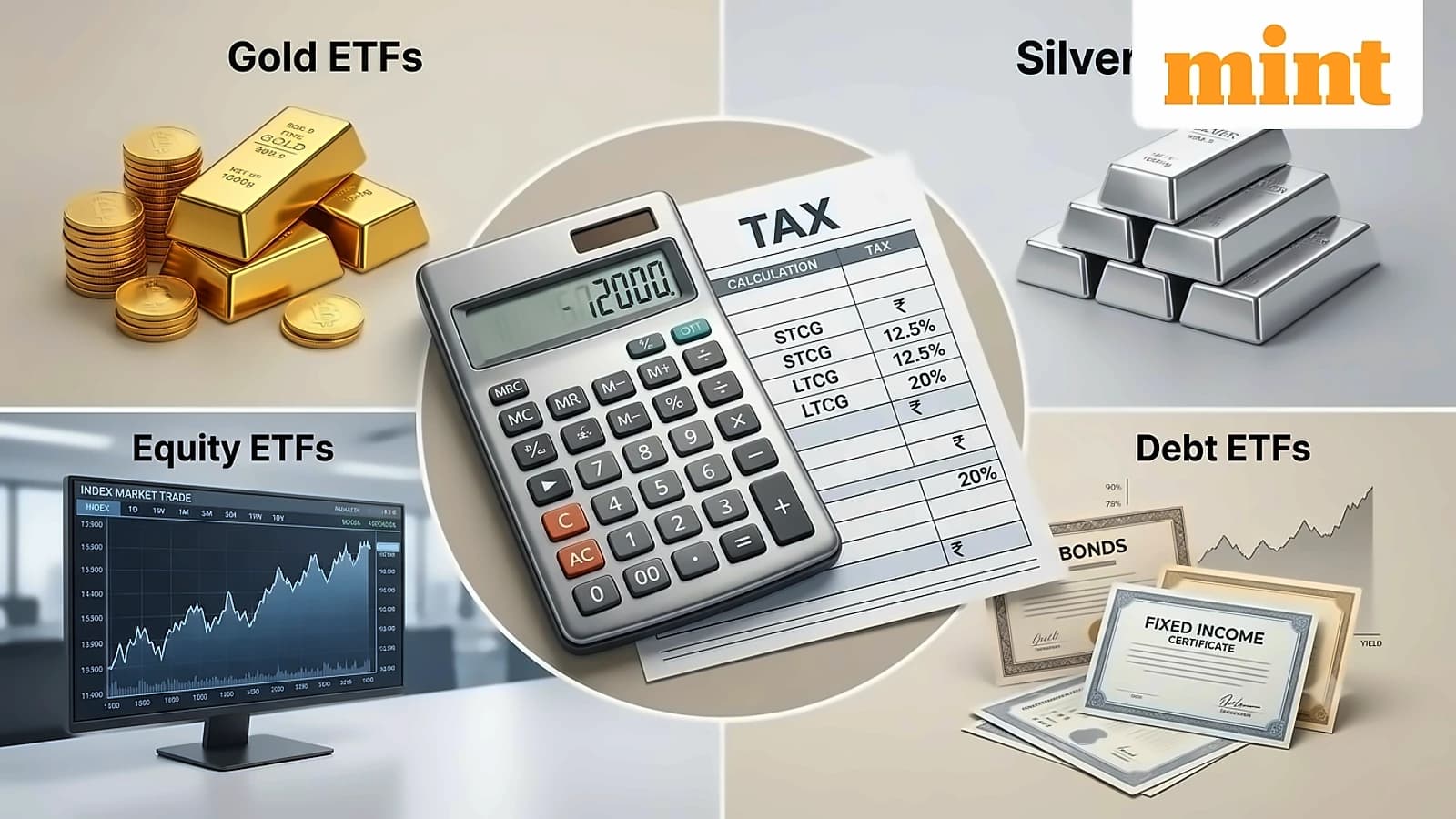
The tax treatment varies significantly across different ETF categories, as detailed in the comparison table from Mint. Equity ETFs offer preferential rates with STCG at 20% and LTCG at 12.5% above ₹1.25 lakh exemption, while gold and silver ETFs follow the investor's applicable slab rate structure. Debt ETFs maintain the highest tax burden at applicable slab rates regardless of holding period, with the tax treatment depending on purchase date. According to the report, two ETFs delivering the same profit can result in different tax liabilities depending on their underlying assets and tax classification, emphasizing the importance of understanding ETF categories before calculating post-tax returns. Recent developments have highlighted the need for clarity on tax classification, particularly for Silver ETFs where AIS reports may not align with broker statements.