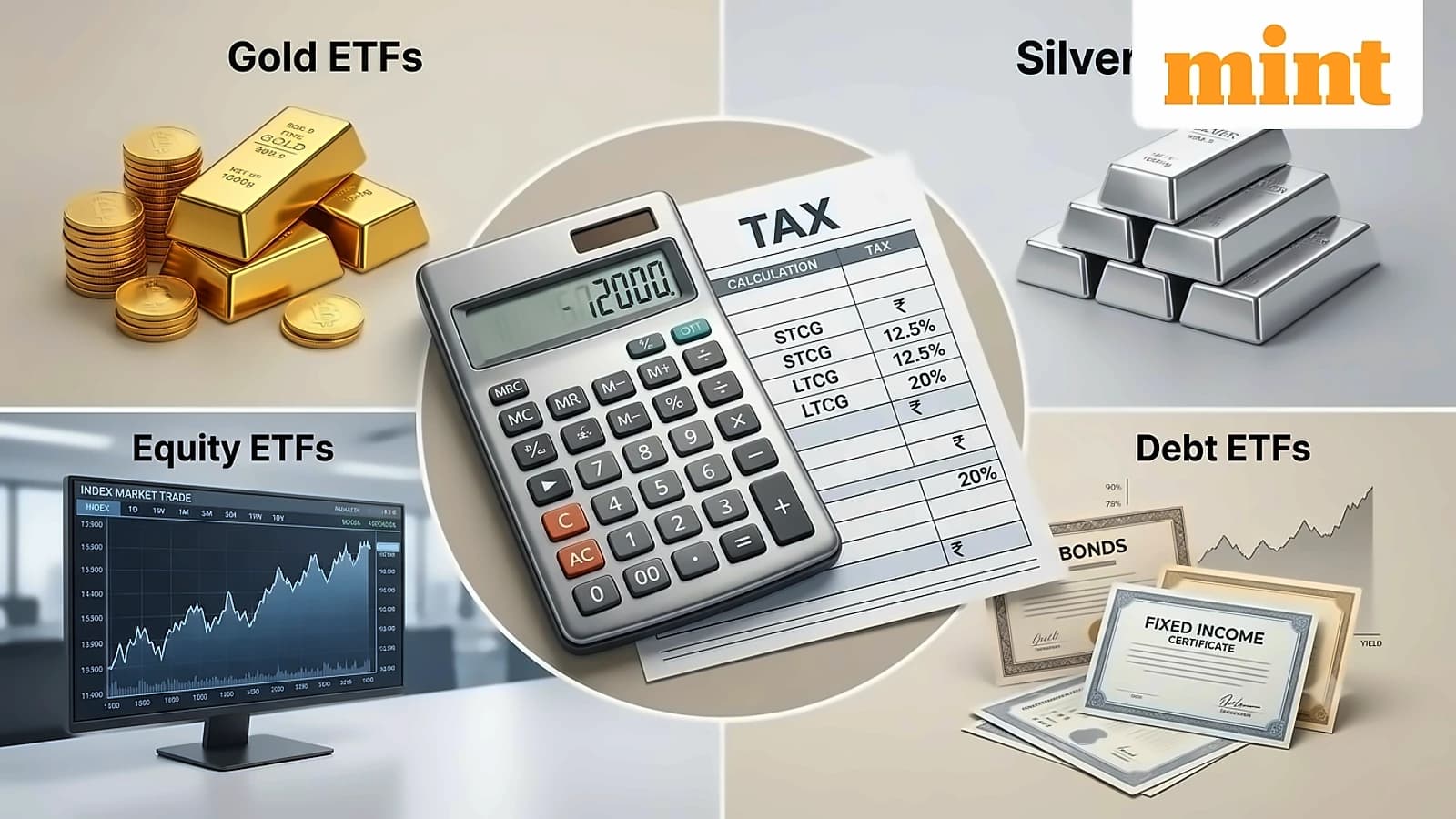
Index funds and ETFs are often categorized as passive investments that mirror market indices rather than actively trying to outperform them. While both share similar characteristics, their tax treatment varies significantly across different asset classes. According to reports from The Economic Times, the tax differences primarily emerge in specific categories rather than across the board, making it crucial for investors to understand these nuances before making investment decisions.
For equity index funds with at least 65% domestic equity exposure, the tax rules mirror those of traditional equity mutual funds. As reported by The Economic Times, if investors sell within 12 months, gains are treated as short-term capital gains and taxed at 20%. For holdings beyond 12 months, long-term capital gains are taxed at 12.5%, with the first ₹1.25 lakh of such gains in a financial year exempt from taxation. This exemption applies only when securities transaction tax (STT) has been paid, which is typically the case for equity mutual fund redemptions.
Debt index funds face more restrictive tax treatment following changes effective from April 1, 2023. According to The Economic Times, any debt-oriented fund investing over 65% in debt and money-market instruments now sees all gains taxed at the investor's income slab rate. The reform eliminated indexation benefits and long-term concessions, significantly altering the appeal of debt funds for many investors. Debt ETFs similarly mirror these changes, with gains deemed short-term and taxed at slab rates for units purchased on or after April 1, 2023.
Gold and silver ETFs present the most significant divergence in tax treatment due to their exchange-listed status. As reported by The Economic Times, these ETFs are treated as listed non-equity assets, which brings the long-term holding threshold down to 12 months rather than the standard 24 months for unlisted equivalents like gold fund-of-funds. Gains held under 12 months are taxed at applicable income tax slab rates, while gains beyond 12 months attract 12.5% tax without indexation. Importantly, the ₹1.25 lakh exemption available to equity assets does not extend to gold or silver ETFs, and STT is generally not levied on these transactions.
The primary distinction lies in gold and silver ETFs, where their listed status provides a significant advantage over unlisted alternatives. According to The Economic Times, ETF investors benefit from shorter holding periods for long-term treatment, something fund-of-fund investors in the same commodities do not receive. Equity treatment remains nearly identical between index funds and ETFs, while debt treatment is now similarly aligned following the April 2023 reforms, making the tax differences most pronounced in precious metals investments.