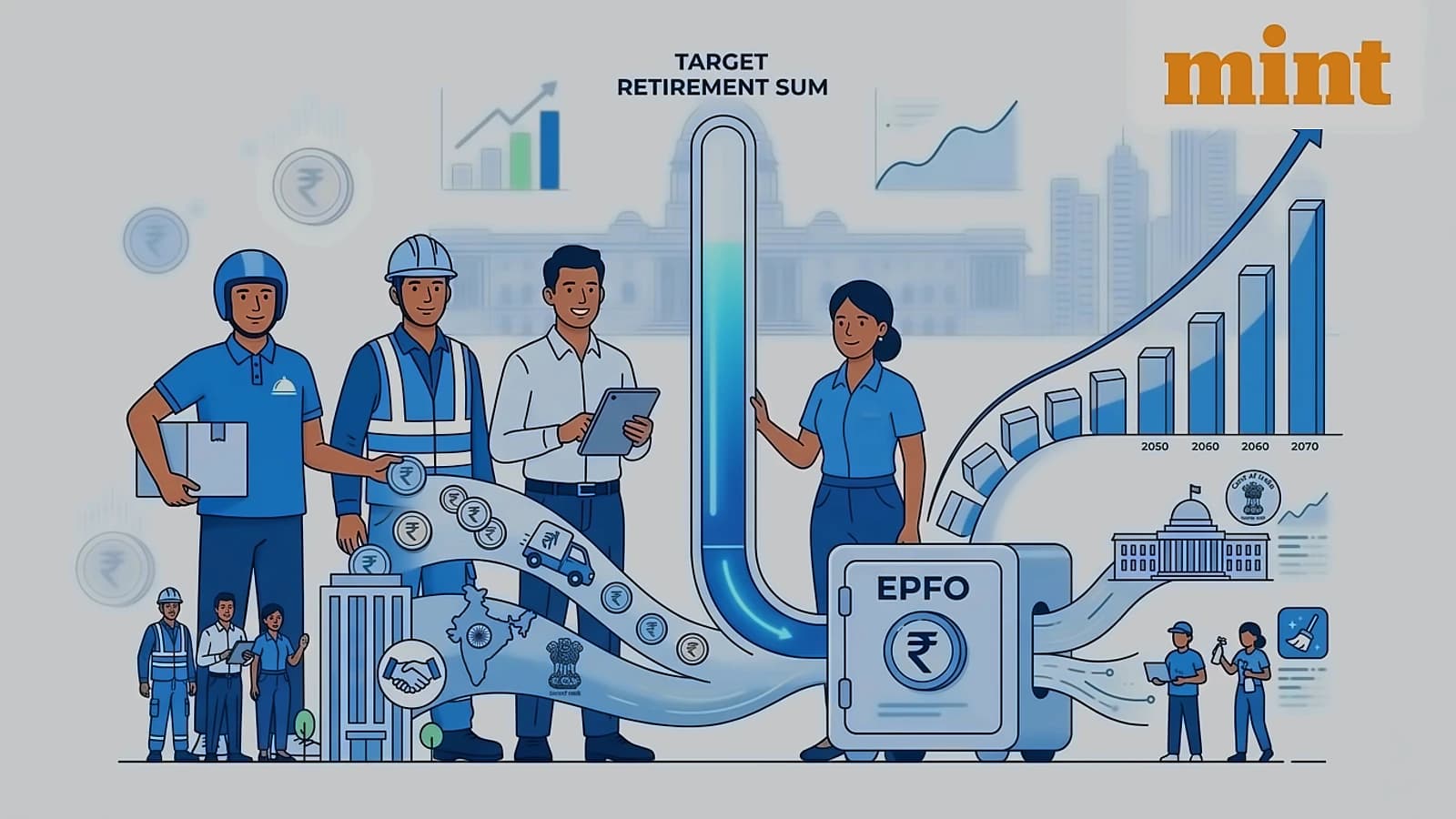
The labour ministry has prepared a concept note for a proposed universal pension scheme that would allow subscribers to opt for higher payouts in the initial years of retirement by drawing down part of their savings, then reduce the payout later to let the remaining corpus continue earning interest. According to reports from Business Standard, the proposed framework is expected to introduce a 'Target Retirement Sum' (TRS) under which subscribers could set a retirement income goal and estimate the corpus required to meet it. The system would factor in variables such as the subscriber's age, expected retirement age and desired pension, and project the contributions required to reach the target.
The accumulation phase is expected to follow the existing EPFO model, with contributions earning annual interest and receiving similar tax treatment. As reported by Business Standard, subscribers would have flexibility in the frequency of contributions, rather than being required to make fixed monthly payments. The proposed framework could allow a worker's retirement account to receive contributions from several sources, including employers, government support for lower-income workers, gig platforms, CSR programmes, NGOs and other third parties. The framework is also examining ways for individuals to make voluntary contributions to such accounts.
The proposed retirement framework is considering two ways to use the accumulated corpus: converting it into a pension through an annuity, or retaining it with EPFO for systematic withdrawals. According to Business Standard, under the new framework, subscribers could instead retain their accumulated retirement corpus with EPFO and make systematic withdrawals from it, with the flexibility to increase or reduce the payout over time. This would differ from the existing Employees' Pension Scheme (EPS), where eligible EPFO members receive monthly pension based on pensionable salary and years of service.
The new scheme would not replace EPS but continue to operate alongside it. As reported by Business Standard, it would extend retirement savings to workers outside the existing EPFO network, including gig workers, the self-employed, workers in the unorganised sector, and employees of exempted establishments. The proposal was reported by Business Standard in June when the ministry was considering a universal, flexible pension product under EPFO. It is now being developed as part of the broader EPFO 3.0 reforms, which also include an overhaul of the organisation's technology systems and plans to introduce a core banking solution.