The Employees Provident Fund Organisation (EPFO) has successfully completed a major database consolidation and software upgrade to enhance service delivery and member experience. As reported by EPFO, member and employer services have been made live in a phased manner and are now available for use by all stakeholders. This upgrade represents a significant technological advancement that will improve the overall efficiency and accessibility of EPFO services, though the restoration process faced nearly two weeks of downtime due to the major system overhaul. The new facility comes as EPFO restores online services following this major technology upgrade and database consolidation under its ongoing digital modernisation initiative.
The Employees Provident Fund Organisation (EPFO) has introduced two new ways for salaried employees to transfer their EPF account balances from previous employers to their current accounts. According to reports from The Economic Times and Business Standard, these options are now available under the revamped EPFO portal, offering enhanced flexibility for members seeking to consolidate their retirement savings. The latest feature aims to simplify the provident fund balance transfer process, reduce paperwork and help employees consolidate their retirement savings without any procedural delays. The new transfer methods are accessible through the 'Online Services' tab and 'Member Service History' section of the EPF member portal, which can be accessed only after logging into the unified member portal.
Employees can now initiate EPF transfers through two distinct methods after logging into the EPFO Member Portal using their Universal Account Number (UAN). As reported by Mint and Business Standard, regardless of the chosen option, users will be redirected to the 'Online Service/Transfer Request' page where they enter their previous employer's Member ID and other required details. An OTP is then sent to their Aadhaar-linked mobile number for verification and submission. The process eliminates paperwork requirements and ensures complete online transfer capabilities. The 'Request for Transfer of Account' option is available under the Online Services section, while the 'Member Service History' option provides an additional route through the service history section. Members who do not know their UAN can obtain it from their employer or find it on their salary slip.
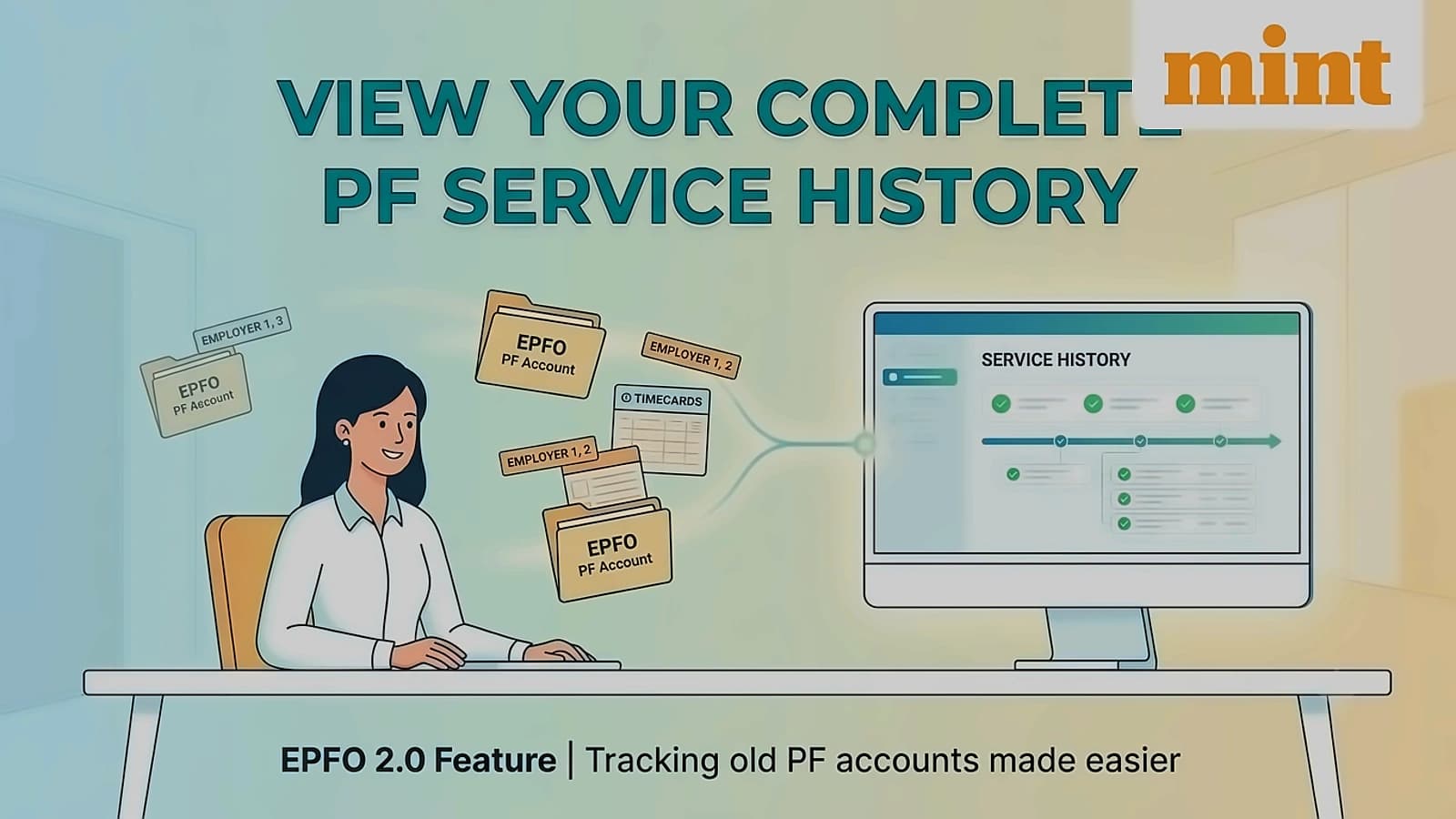
Under the revamped EPFO portal, members can now access their 'Member Service History' feature to check their past service records and initiate transfer requests. As reported by The Economic Times and Business Standard, this feature displays all past and current services along with Aadhaar-seeded UAN and corresponding member IDs. The portal provides details of the present establishment into which the transfer will be affected, with members able to click on UAN and member IDs for additional details. The service history also shows past member IDs due for transfer and the status of past claims, with no claims showing as 'no' while providing options to make service transfer claims through Form 13. The 'Member Service History' section now gives members another way to access the transfer facility without separately navigating through the Online Services menu, offering two distinct routes for initiating transfers.
As part of the post-migration stabilization process, claims and service requests will be processed in a phased and calibrated manner with additional verification and validation checks to ensure accuracy during the initial period. According to EPFO, the upgraded portal may take two to three weeks to fully stabilise, so users may experience occasional technical glitches during this period. While services are now operational, PF claims and other service requests may experience some delays during this stabilization phase, as noted by EPFO on its website. Members and employers are requested to bear with slightly longer-than-usual processing times for claims and certain services during this stabilization phase. Employees submitting fresh transfer requests should therefore be prepared for processing timelines to remain longer than usual during this transition period.
EPF account transfer provides significant advantages for salaried employees, as highlighted by the EPFO. As reported by The Economic Times and Business Standard, the consolidation of PF balances leads to higher payouts for advances and full settlement, while avoiding TDS on final settlement. The process also increases higher pension eligibility for 10+ years' service and provides better insurance coverage up to ₹7 lakh through the Employees' Deposit Linked Insurance (EDLI) Scheme. These benefits make EPF transfer crucial for employees seeking to maximize their retirement benefits through consolidated service history. Under the EPF-2026 framework, both employee and employer each contribute 12% of the employee's basic salary and dearness allowances towards EPF, with the contribution capped at ₹1,800 for both parties, though they can choose to contribute more funds on a voluntary basis. The EPF interest rate for FY26 stands at 8.25 per cent, continuing to make it one of the relatively attractive fixed-income retirement savings options available to salaried employees.