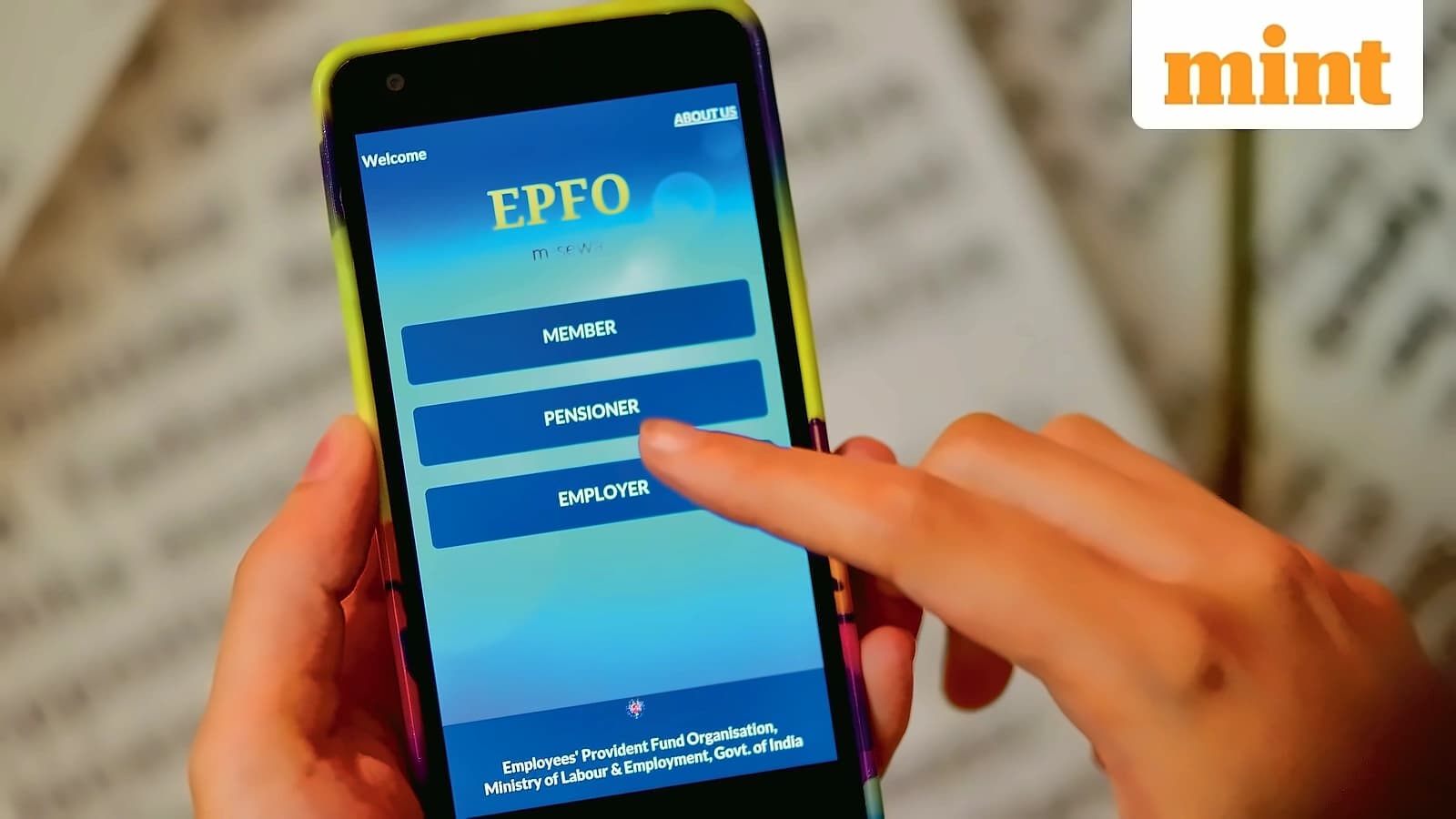
The Employees' Provident Fund Organisation (EPFO) recently launched its new portal (epfo.gov.in) that brings a range of services under a single dashboard accessible from phones or computers without visiting EPFO offices. Unlike the previous cumbersome website, the new portal allows subscribers to undertake various activities such as activate Universal Account Number (UAN), file claims, update KYC details, view passbook, and manage nominations. The portal now carries a direct link to activate UAN, which is a prerequisite to accessing all EPF services online, with the portal stating "Activate your UAN to access EPF services online." According to an EPFO circular on UAN activation, the process can be completed using an Aadhaar-based OTP, requiring members to enter their UAN, Aadhaar number, name, date of birth, and Aadhaar-linked mobile number, with authentication through OTP sent to the member's UIDAI-registered mobile number.

The new EPFO portal introduces several eight key services that employees can complete online, significantly expanding the platform's functionality. Key additions include "Know Your UAN" service for retrieving account numbers without employer assistance, "View PF passbook and balance" with online download capabilities, and "Check balance by missed call" through 9966044425 or SMS to 7738299899. The portal now offers e-nomination as mandatory, ensuring families can claim PF, pension, and insurance benefits without legal complications when members pass away. Additionally, the platform provides "KYC update" links and "File e-nomination" options, making the entire process more streamlined and accessible for subscribers.
When switching jobs and the new employer remains covered under Employees' Provident Fund Organisation (EPFO), the EPF balance and service history can be transferred seamlessly to the new member account. According to reports from Mint, the new employer continues making EPF contributions in this consolidated account, allowing employees to maintain their retirement savings without separate accounts. The Universal Account Number (UAN serves as a 12-digit EPFO identifier that links an employee's PF member IDs across jobs, as reported by Mint, meaning employees must mandatorily declare their existing UAN to the new employer rather than obtaining a new one. Employees must ensure their UAN and KYC details are correctly updated to avoid transfer complications, with member portals and the UMANG platform providing access to UAN services supported by upgraded electronic contribution tracking. The UAN brings multiple aspects of EPF management under a single identity, enabling employees to check and access several EPFO services online with little dependence on their employer.
Employees can now file three types of claims directly from the member interface without employer attestation using the new EPFO portal: Form 19 for PF final settlement, Form 10-C for pension withdrawal benefit, and Form 31 for PF part withdrawal. As per EPFO guidelines, the withdrawal process involves a two-month waiting period after resignation before the forms can be submitted to the PF office. After completion of this waiting period, the forms are submitted to the regional provident fund commissioner office, and employees receive their amount along with interest within 90 days. The new portal offers a dedicated facility for nominees with two options: "Death Claim filing by Nominee (Claims)" and "Death Claim filing by Nominee (Pension)" - Pension Claim filing by Family or Nominee in case of member's demise. For most services, the prerequisites remain the same: an activated UAN, Aadhaar seeded in the EPFO database, a bank account with IFSC code seeded in the database, and a PAN seeded for PF final settlement claims where service is less than five years.
For pension fund eligibility, employees must complete membership for 10 years of continuous service, with the calculation including transfers between employers. The pension scheme provides three types of benefits: Superannuation Pension for members with 20 years service retiring at 58 years, Retirement Pension for members with 20 years service retiring before 58, and Short Service Pension for members with 10-20 years service. Compound interest as declared by the government is provided for every year of service, with accounting year running from March to February. Employees can also make voluntary contributions at higher rates than the standard 12% of basic salary through a joint declaration form, though this option is unavailable during career breaks.