Employees must verify that their Provident Fund (PF) contributions are deposited with the EPFO, as salary slip deductions do not automatically confirm deposits. According to reports from Mint, companies are required to deposit both employee and employer contributions with the Union retirement fund body within 15 days of the close of the month. The current EPF interest rate is 8.25% per annum for the current financial year, computed monthly based on the running balance. As reported by latest EPFO guidance, employees should compare their EPF passbook with salary slips to ensure contributions are properly credited, as salary slips only show deductions but not actual deposits.
Employees can track monthly PF deposits through the EPFO member portal using their Universal Account Number (UAN). As reported by Mint, the EPF passbook shows contributions credited under your UAN, including your contribution, employer's contribution, and Employees' Pension Scheme (EPS) contribution. The passbook provides a month-by-month record that makes it easier to spot missing contributions, with members receiving SMS notifications when contributions are credited. EPFO offers Passbook Lite for simpler viewing and all services are available through the UMANG app. Latest EPFO guidance emphasizes that employees should look at all entries - not just their own contribution - as mistakes in employer or EPS entries can cause problems during PF transfers, withdrawals, or pension claims.

If an employer deducts PF but fails to deposit it on time, the delay can attract interest liability and penal damages under EPFO rules. According to Mint reports, affected individuals can file a grievance on the EPF i Grievance Management System (EPFIGMS) portal or submit a written complaint to PF authorities. The EPFO FAQ states that after realizing dues, PF members will receive full interest for each due month, with employers charged penal interest under section 7Q and penal damages under section 14B of the Act. Latest guidance suggests that if contributions remain missing even as later month entries appear, employees should contact their employer's payroll or HR department immediately, as EPFO can take action against employers that fail to deposit contributions.
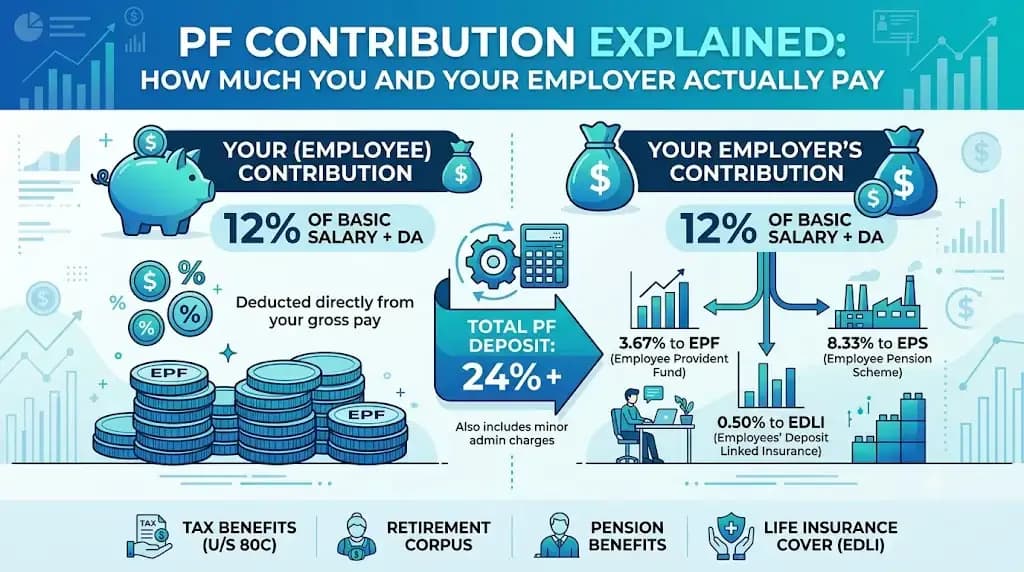
The EPF-2026 framework specifies that this contribution is capped at ₹1,800 for both parties, though they can contribute more voluntarily or according to company standards. As reported by Mint, this government-backed savings scheme requires both employee and employer to contribute 12% each of the employee's basic salary and dearness allowance. The total accumulated interest is credited to subscriber accounts annually, with the responsibility for depositing EPF contributions lying entirely on the employer. Latest EPFO guidance notes that contributions are generally required to be deposited within 15 days of the close of the month, so employees should not panic if money doesn't appear immediately after payday, as there can be delays due to processing or technical issues.