According to reports from Mint, credit reports and credit scores serve distinct purposes in financial assessment. A credit score is a three-digit number ranging from 300 to 900, with scores above 750 considered excellent. Credit reports, however, record an individual's borrowing and repayment history, credit utilisation and other relevant details. The reports are provided by leading credit bureaus including CRIF High Mark, Experian, Equifax and TransUnion CIBIL. Regular checking and correcting discrepancies is essential for maintaining an accurate credit profile that helps individuals secure new loans and credit cards.
As reported by Mint, individuals should focus on five critical areas to maintain creditworthiness. Check your mobile number and personal details including name, address, and other identifying information to ensure accuracy and prevent identity verification complications. Verify all listed personal loans, home loans and credit cards to confirm they belong to you, as unfamiliar accounts may indicate reporting errors or identity theft. Ensure repayment history is correctly reported, as incorrectly marked missed payments or overdue amounts can hurt credit scores. Review credit checks and inquiries to ensure lenders made hard inquiries with consent, as multiple applications within short periods may affect lender assessments. Monitor credit utilisation to ensure outstanding balances and credit limits are accurate, maintaining credit utilisation ratios within the 25-30% limit of overall credit limits.
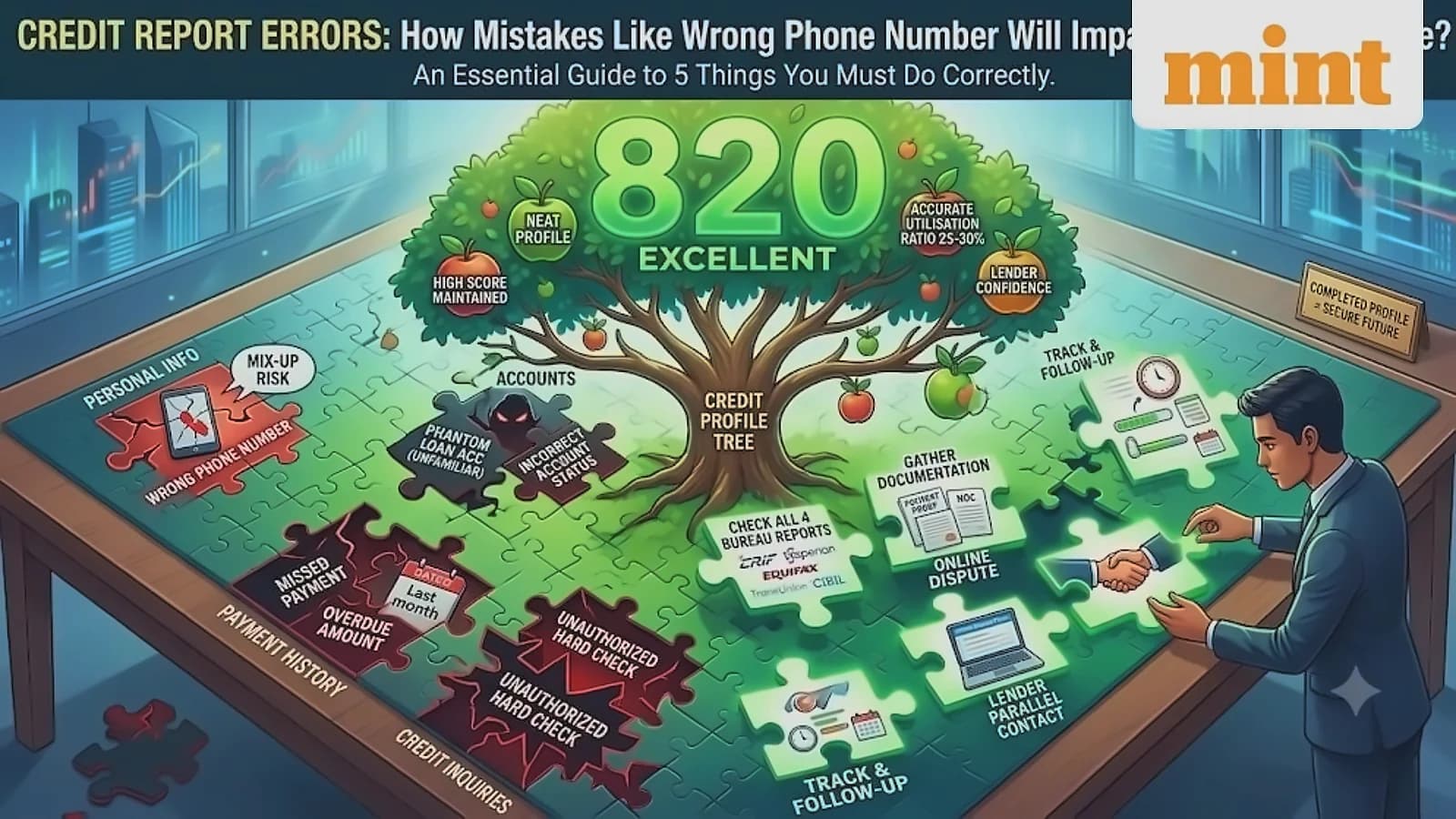
According to Mint, individuals can correct credit report errors through proper channels. Obtain credit reports from respective credit bureaus and raise disputes through legitimate channels with the bureau and concerned lending institutions when errors are identified. Retain complaint reference numbers and supporting documentation and follow up diligently until discrepancies are resolved. The report emphasizes that while a wrong phone number alone may not lower an individual's credit score, errors affecting accounts, repayments, or balance reporting can eventually adversely impact borrowing profiles.