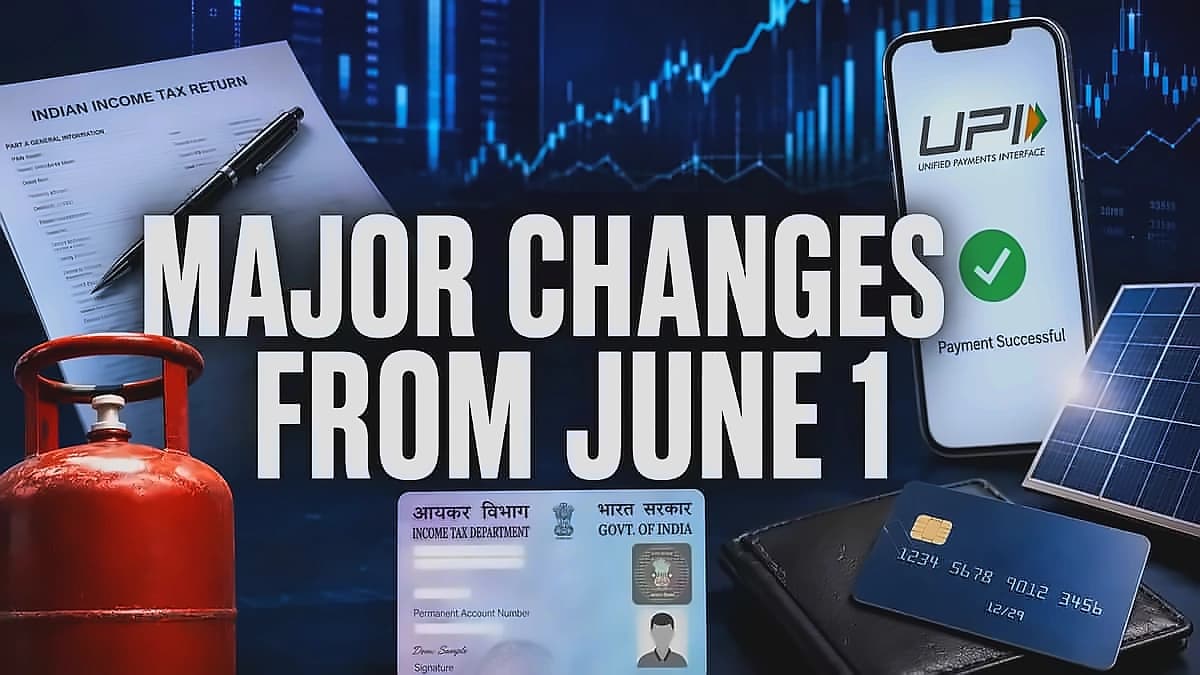
The RBI's Authentication Mechanisms for Digital Payment Transactions Directions, 2025, came into force on April 1, 2026, introducing mandatory two-factor authentication for all credit card transactions. According to reports from Outlook Money and 1 Finance, all credit card transactions, whether online or at point of sale, must now be verified using at least two independent factors: something you know (a PIN or password), something you have (your device or card), or something you are (a biometric). Crucially, at least one of these factors must be dynamic, meaning it changes with every transaction. OTPs continue to qualify as a valid dynamic factor, with the RBI building in flexibility for low-risk, small-value transactions. For high-value or unfamiliar transactions, expect an extra layer of verification.

Under the Income Tax Act, 2025, which took effect from April 1, credit card spending is now more tightly linked to tax identity. As reported by Outlook Money and 1 Finance, annual credit card spending of ₹10 lakh or more through digital modes may be reported to the Income Tax Department under the Statement of Financial Transactions (SFT) framework. Additionally, cash payments of ₹1 lakh or above through credit cards are now under monitoring. These reporting norms existed in some form before, but enforcement under the new framework is expected to be far more consistent, with significant divergence between declared income and credit card spending potentially attracting scrutiny.
From April 1, banks will not process any new credit card application without a valid PAN, with updated application forms now requiring date-of-birth verification in addition to Aadhaar. According to Outlook Money and 1 Finance, this measure ties credit card issuance directly to a verified financial identity, reducing the possibility of fake accounts and identity mismatches. Additionally, a credit card statement issued within the last three months is now accepted as valid proof of address when applying for a PAN card, simplifying documentation for applicants who may not have traditional address proof readily available. This change was also reported by 1 Finance as part of the comprehensive regulatory updates.
If you use a company-issued credit card for personal expenses, those amounts are now classified as a taxable perquisite in your hands from this financial year. As reported by Outlook Money and 1 Finance, work-related spending — travel, client meetings, official events — remains tax-exempt, but only if backed by proper documentation. Employers will need to maintain clear records of business versus personal usage, with the change taking effect from the current financial year. The tax implications of corporate card usage have become more stringent under the new framework, requiring careful documentation and clear separation of business and personal expenses.
From April 1, banks and NBFCs are required to report borrower data to credit information companies every seven days, meaning your credit score will now reflect repayment behaviour far faster than before. According to Outlook Money and 1 Finance, a missed payment can show up in your credit profile within a week rather than a month. Additionally, SBI Card has discontinued reward points on rent payments across several cards from April 1, with the cashback cap on the SBI Cashback Card revised from ₹5,000 to ₹4,000 per statement cycle. ICICI Bank has moved complimentary domestic airport lounge access to a spend-linked model, requiring cardholders to have spent a minimum of ₹35,000 in the preceding calendar quarter to unlock lounge access for the following quarter. Axis Bank has capped reward points on insurance premium and utility bill payments, while Yes Bank has introduced a transaction fee of 1% plus GST on rent payments made via third-party platforms.