The Reserve Bank of India has established a comprehensive framework for customer compensation when banks fail to meet prescribed service deadlines. According to reports from Livemint, these compensation provisions cover a range of services including credit card closure, failed digital transactions, return of property documents after loan repayment and correction of credit reports. The compensation structure varies significantly by case, ranging from ₹100 per day to ₹5,000 per day depending on the specific service and applicable RBI rules. As per ET Wealth Online, RBI's approach to customer compensation is essentially deadline-driven, fixing turnaround times for services and applying per-day compensation when banks overshoot these timelines, usually without requiring customers to separately claim it.
Customers may be eligible for compensation when digital transactions or ATM transactions fail but their account is debited. As reported by Livemint, for certain failed transactions including some UPI, ATM, and card transactions, banks are required to resolve the issue within the applicable RBI-prescribed turnaround time. According to ET Wealth Online, for failed ATM, card-to-card, and PoS transactions, banks must credit customers ₹100 per day beyond the prescribed turnaround time (T+5 days) without requiring separate claims. For UPI transactions where money is debited but not reversed within T+1 day, banks must provide ₹100 per day compensation automatically. The applicable timeline and compensation depend on the type of transaction and the RBI framework governing it.
Credit card holders are protected by specific RBI turnaround time requirements for account closure. According to Livemint, banks and card issuers are required to close a credit card account within seven working days of receiving a closure request, subject to applicable conditions. If the issuer fails to close the account within the prescribed period, it is liable to pay ₹500 per calendar day of delay to the cardholder until the account is closed. As reported by ET Wealth Online, this provision can become significant, with a user winning ₹3.21 lakh compensation from his credit card issuing bank over delay in processing his closure request. The compensation structure ensures banks are held accountable for delays in processing closure requests, providing meaningful financial relief to customers.
Home loan borrowers have protection when it comes to returning original property documents after loan repayment. As reported by Livemint, once a borrower has fully repaid or settled a loan, the bank or lender is required to return the original property documents within 30 days. Under RBI guidelines issued on September 13, 2023, if the delay is attributable to the lender, the borrower is entitled to compensation of ₹5,000 for every day of delay. According to ET Wealth Online, the bank must hand back the originals and remove any registered charge within 30 days of full repayment, failing which they owe the borrower ₹5,000 per day compensation. The rules also address situations where original property documents are lost or damaged while in the lender's custody, with the lender required to help the borrower obtain duplicate or certified copies and bear associated costs.
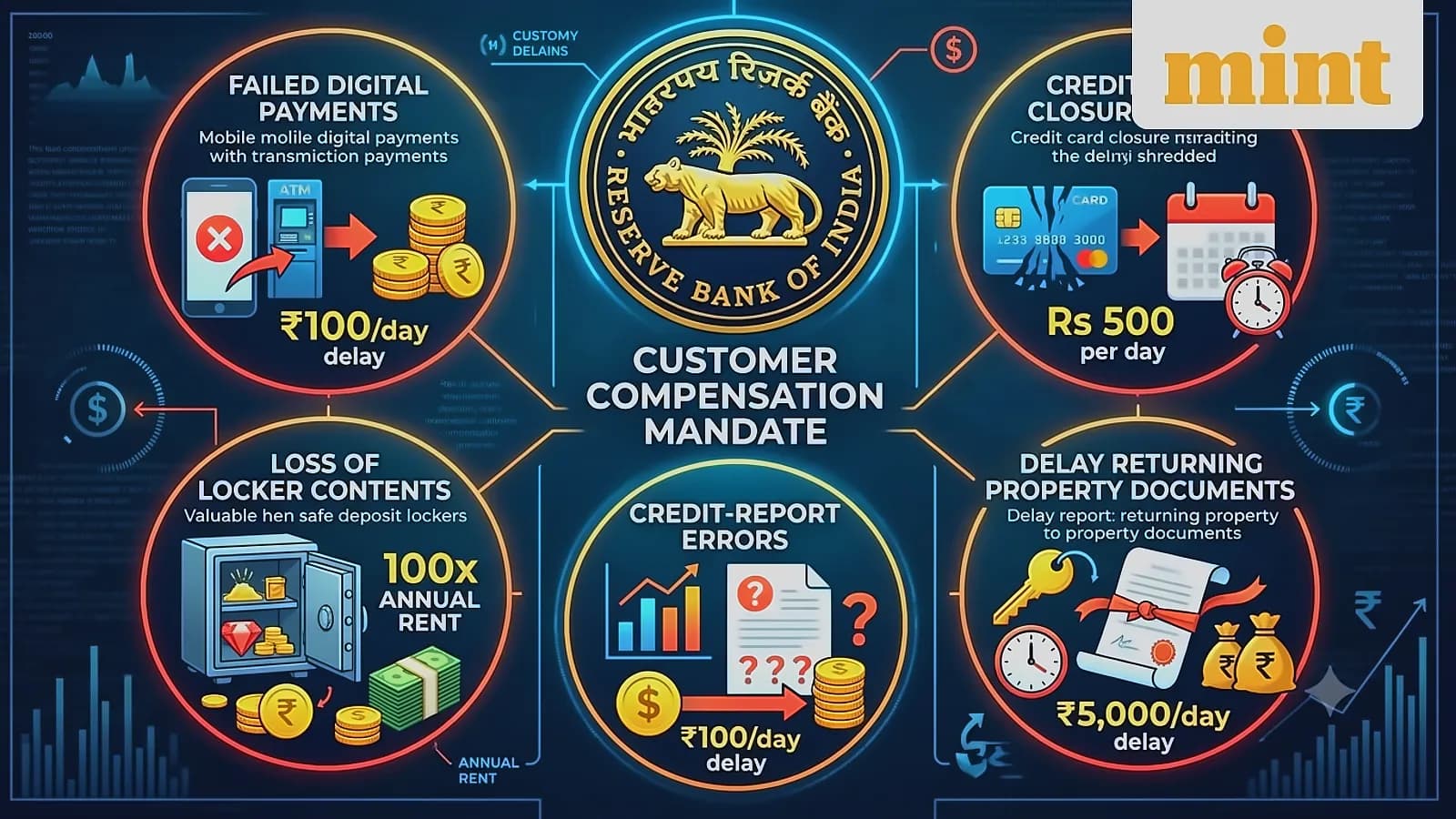
Errors in credit reports can significantly affect a consumer's ability to obtain loans or credit cards, with RBI rules providing compensation when complaints relating to credit-information correction are not resolved within prescribed timelines. According to Livemint, where the applicable 30-day period is exceeded, the customer can be entitled to compensation of ₹100 per calendar day of delay until the complaint is resolved, subject to applicable RBI framework. As reported by ET Wealth Online, any disputes about credit reports need to be resolved within a 30-day period, and if the bank fails to resolve the complaint within this timeframe, the consumer is entitled to ₹100 per calendar day compensation. Consumers should retain records of their complaint, including the date on which they raised the dispute and any communication received from the bank or credit institution.