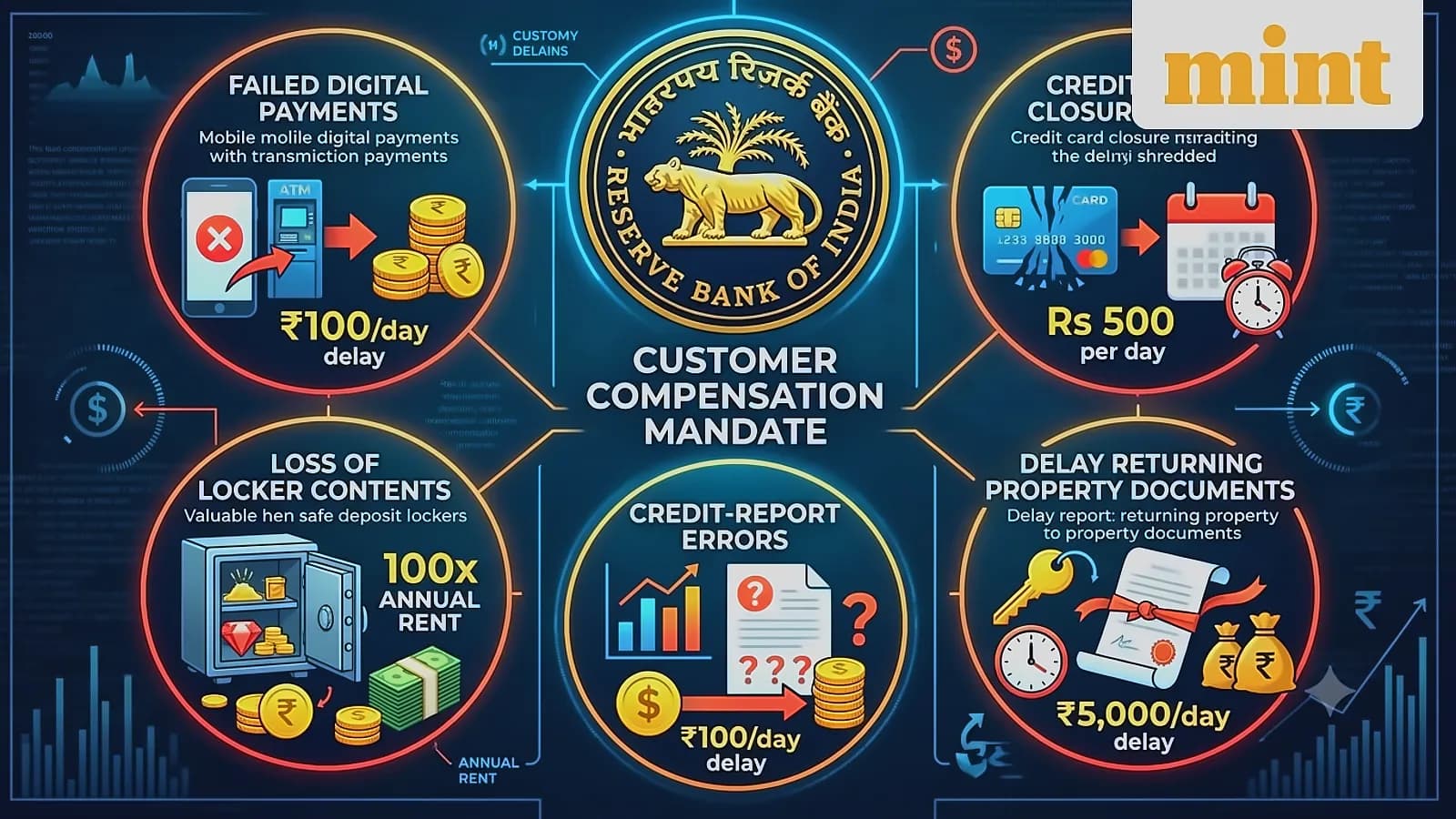
According to RBI's circular dated September 20, 2019, customers are entitled to ₹100 per day compensation for delayed refunds of failed transactions. The framework covers domestic transactions where both sender and beneficiary are in India, with the rules effective from October 15, 2019. A failed transaction is defined as one that is not completed for reasons not attributable to the customer, including communication failures, ATM cash shortages, or debits without corresponding credits. The compensation must be credited automatically without customer claims, with the prescribed turnaround time serving as the outer limit for resolving failed transactions.
The compensation varies by payment method and deadline requirements. UPI P2P transfers require reversal within T+1 day with ₹100 per day compensation beyond this deadline, while ATM/micro-ATM withdrawals have a T+5 day deadline. Card-to-card transfers and card payments at PoS also follow the T+5 day rule. IMPS transfers and NACH payments require reversal within T+1 day, with NACH debit reversals after mandate cancellation falling under the same timeline. Online card payments and prepaid wallet transactions follow the relevant payment system's TAT rules, while prepaid cards and wallets on-us transactions require T+1 day reversal.
Under the RBI framework, T refers to the calendar date of the transaction, T+1 means the following day, and T+5 means five days after the transaction date. For example, if a UPI transfer fails on October 18 and the sender's account is debited but beneficiary's account is not credited, the applicable deadline is October 19. If the reversal is delayed beyond this prescribed deadline, compensation of ₹100 per day becomes payable for the delay. The framework currently uses calendar days rather than excluding weekends and bank holidays for calculating prescribed TAT, as the temporary COVID-19 relaxation expired in December 2021.
Beyond failed payment compensation, RBI rules provide additional protection for various banking services. Credit report errors can result in ₹100 per calendar day compensation if unresolved within 30 days, while credit card closure delays may entitle customers to ₹500 per calendar day beyond 7 working days. Loan property document delays or loss qualify for ₹5,000 per day compensation beyond the 30-day deadline, and bank locker loss compensation can reach up to 100 times the annual locker rent. These enhanced categories demonstrate RBI's comprehensive approach to customer protection across different banking services.
When refunds are delayed, customers should first check their transaction status and contact their bank or payment service provider. Under RBI's framework, eligible compensation must be credited automatically. If customers do not receive the required resolution, they can lodge a complaint under the RBI Integrated Ombudsman Scheme. The rules cover all authorized payment systems, including banks and authorized non-bank payment service providers, ensuring comprehensive customer protection across digital and traditional payment methods. For unresolved complaints, customers can escalate matters through the RBI Complaint Management System after maintaining proper documentation and following the prescribed 30-day waiting period. Multiple resolution channels are available including platform help channels, UPI app disputes, bank complaints, NPCI dispute redressal, and consumer forums for serious unresolved cases.