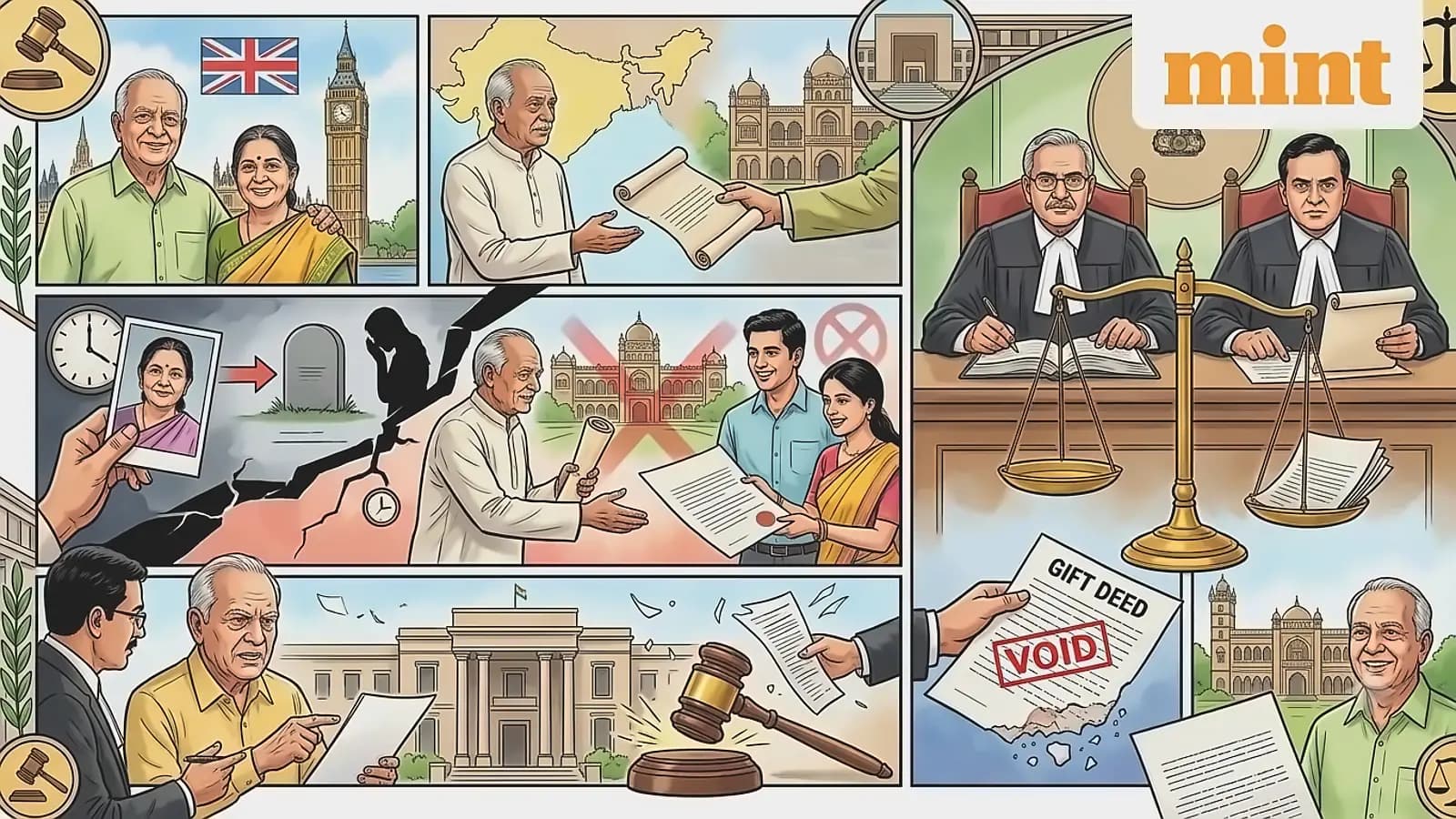
According to legal experts from Cyril Amarchand Mangaldas, not every property inherited from a father qualifies as ancestral or joint family property. The determination depends on the original mode and source of acquisition, and how it has been transmitted across generations. Relevant factors include whether the property has devolved through intestate succession, will, gift, or partition. Given the factual nature and complexity of this analysis, legal advice specific to individual circumstances is advisable. As explained in recent legal analysis, not everything owned by a family counts as ancestral wealth. Self-acquired assets built through personal income or savings remain outside this classification, along with any gift property received individually rather than through the maternal line inheritance or paternal side.
Assuming the property qualifies as joint family property, you and your siblings would have acquired an undivided interest by birth as coparceners in the Hindu Undivided Family (HUF). Your sister will also have an undivided equal share in the ancestral property as a coparcener. Following the implementation of the Hindu Succession (Amendment) Act, 2005, daughters have been granted equal coparcenary rights. As clarified by the Supreme Court in Vineeta Sharma v. Rakesh Sharma (2020), daughters are treated as coparceners by birth in the same manner as sons, regardless of whether their father was alive on the amendment date. The ownership right in ancestral property begins at birth, not after anyone passes away. Every male kid born into the family automatically gains this automatic ownership, extending across the entire four-generation lineage without requiring formal paperwork. The law does not impose any time limit on when a male descendant must formally accept his ancestral property share.
Your father, in his capacity as the Karta of the HUF, cannot transfer ancestral property without the consent of other coparceners, except in limited circumstances. According to legal experts, transfers must be warranted by legal necessity or for the benefit of the estate. Any unilateral transfer by the Karta that does not satisfy these criteria can be challenged in court. This restriction applies to the entire ancestral property, not just the father's individual share. As detailed in recent legal analysis, selling ancestral property requires far more than one person's signature. Every coparcener must give consent of legal heirs, and when minors hold a share, a guardian must act on their behalf and secure court approval before anyone can sign documents or complete registration. A unilateral sale by a single stakeholder counts as an invalid sale under the ancestral property division law.
Despite transfer restrictions on the entire ancestral property, your father can bequeath his own undivided coparcenary interest in the HUF by his will to any person of his choosing. This is permitted under the Hindu Succession Act, 2005. However, this provision applies only to his individual share, not to the entire ancestral property, which remains subject to the restrictions on unilateral transfers. Grandparents, including the grandmother, may leave behind will property that stays completely separate from the four-generation lineage, since a will overrides the usual individual property rules. Only under specific circumstances, such as a person's own share after formal partition, can ancestral property be included in a Will.
Courts apply a time limit of around 12 years from the date of claim, within which someone can file a civil suit to challenge sale of family land. Missing this window under family law can permanently block a claim. Partition deeds must be registered through the sub-registrar's office to ensure legal validity and transparency among heirs. Different states apply varying stamp duty rates, and some offer lower stamp duty specifically for transfer of inherited property or family settlements involving wills. Formal partition through registered deeds remains the cleanest way to avoid future disputes among siblings and cousins. The Hindu Succession Act protects children of daughters as well, ensuring inheritance rights flow forward without gender bias, though daughters should assert their rights promptly rather than waiting.