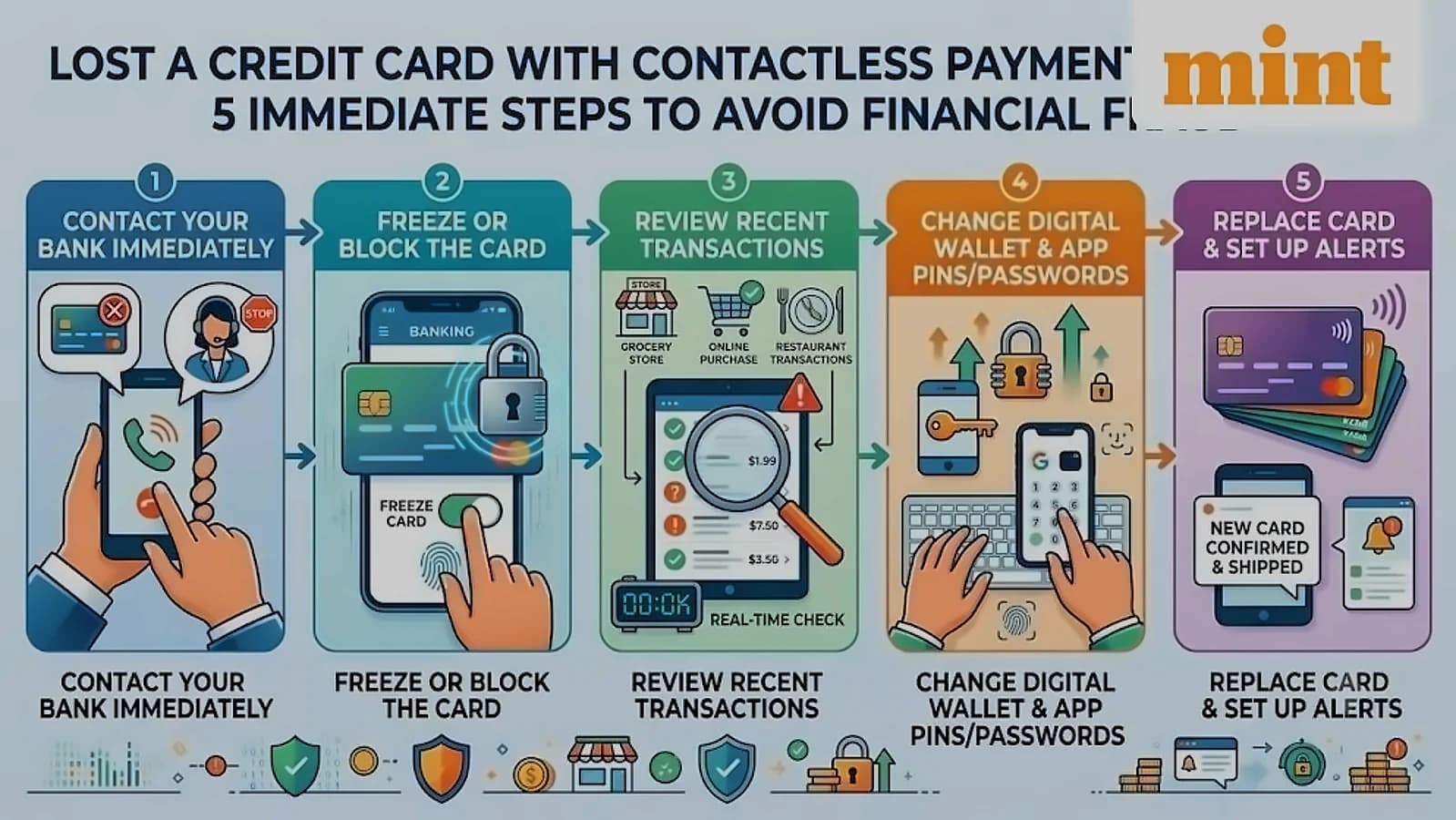
Losing a credit card can be stressful, especially when contactless payments are enabled. According to reports from Mint, eligible low-value contactless transactions may not require a PIN, potentially allowing misuse before the card is noticed missing. The key to protecting yourself is acting quickly and following specific steps to limit unauthorized transactions and fraud. If you notice suspicious activity, contact your bank immediately and review your transactions through online or mobile banking to identify questionable or suspicious charges.
The first critical step is to contact your bank or credit card issuer immediately and promptly block the lost card. As reported by Mint, if your banking app offers a temporary freeze option, use it immediately while contacting the issuing bank. Do not wait to see if you find the card before reporting it, and inform your card issuer about the loss even if you have already blocked the card through the app. If you notice suspicious activity, contact the bank immediately to prevent further unauthorized transactions.
Carefully review your recent credit card transactions and account alerts for any unauthorized activity, particularly focusing on transactions made after the card was noticed missing. According to Mint, if you spot any discrepancies, report them immediately to your credit card issuer through customer service channels and send an email to the bank's official email address to create a written record. Maintaining a record of the loss, card-blocking request, and any disputed transactions can be crucial for challenging unauthorized transactions later. If you notice suspicious activity, visit the bank's Fraud & Scam Resource Center for additional tips and guidance.
Once the card is blocked, ask your bank to permanently cancel it and issue a replacement with a new card number. As reported by Mint, you should also check digital wallets and online accounts where the old card may have been saved and update card details for recurring payments and online purchases. This can help prevent failed recurring payments and missed due dates. If you notice suspicious activity, review your digital wallets and online accounts to ensure the old card details have been properly removed.
Keep the bank's confirmation of the card block for your records, preferably in digital form, including the complaint or reference number and information about any disputed transactions. According to Mint, once the replacement card is issued, set up real-time transaction alerts to help quickly identify suspicious activity. Never share confidential credit card details such as OTPs, CVVs, card images, or banking credentials with anyone claiming to help block the card or replace it entirely, as legitimate bank officials will never ask for such details. If you notice suspicious activity, maintain strict security protocols and contact the bank immediately for assistance.