Building an ₹1.5 lakh emergency fund requires careful planning using the 3-6-9 rule that applies to both salaried individuals and those with irregular income streams. According to Clear Tax, those with regular income should aim to save three to six months' worth of monthly expenses, while those with unstable jobs or irregular income should increase their buffer to cover 9-12 months of expenses. The rule prescribes saving three months of expenses if you are single and earn a steady income, six months if you have dependents and earn a steady income, nine months if you are single and your income is irregular, and 12 months if you have dependents and your income is irregular. For example, someone with monthly expenses of ₹25,000 would need ₹75,000 for three months, ₹1.5 lakh for six months, ₹2.25 lakh for nine months, and ₹3 lakh for 12 months respectively.
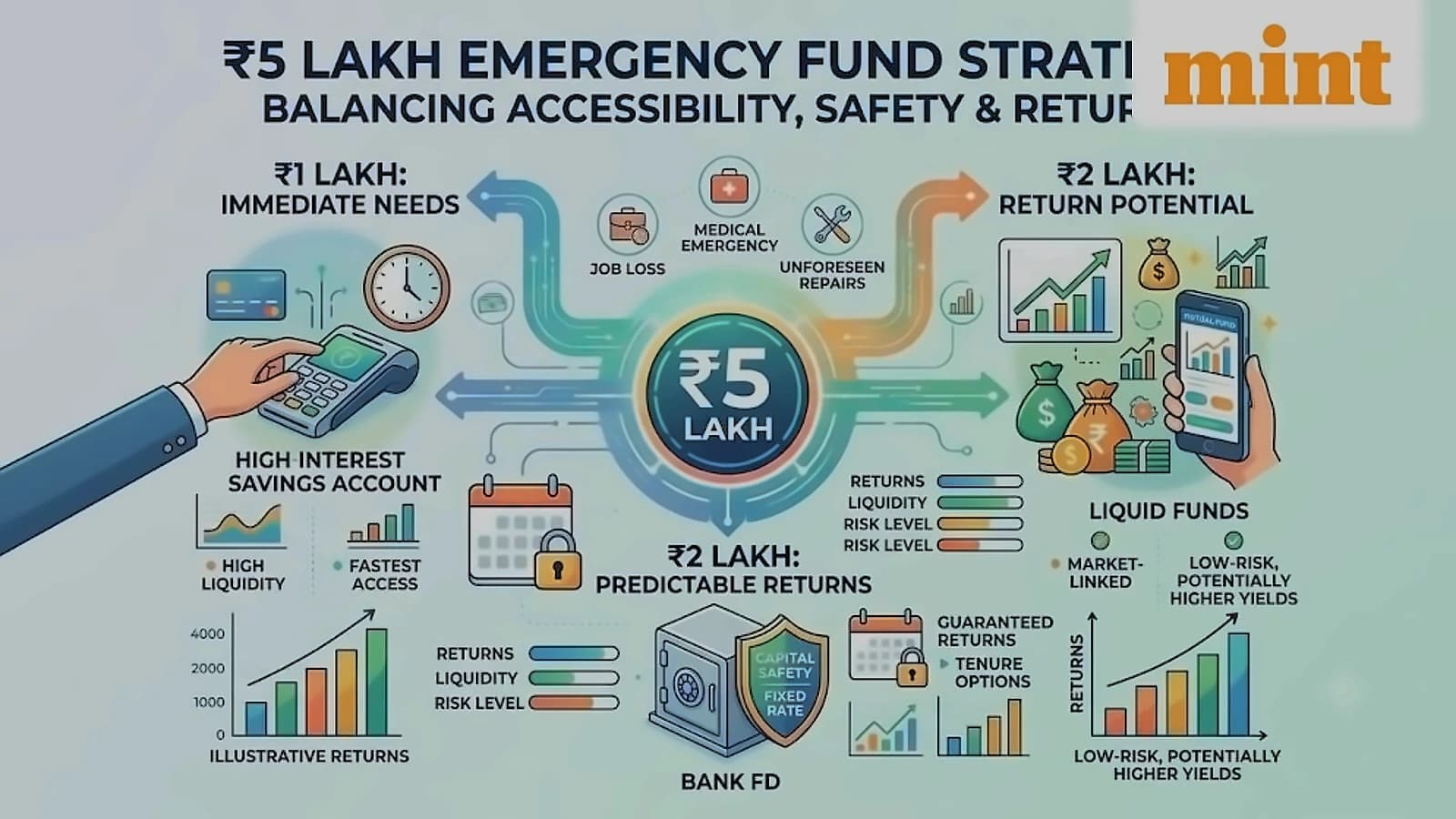
The ₹1.5 lakh emergency fund can be built through systematic monthly investments, with experts recommending ₹5,000 per month in a simple savings account to achieve the target in 2.5 years. According to Clear Tax, a monthly SIP approach investing 12% of the total emergency fund can accelerate the process significantly. This works out to ₹900/month for three months, ₹1,400/month for six months, ₹2,300/month for nine months, and ₹3,000/month for 12 months at a 6% rate of interest for one year. The investment strategy should prioritize 30-40% in immediately accessible instruments like savings accounts or bank FDs, while 60-70% should be invested in low-risk debt options such as liquid or overnight mutual funds for better returns without sacrificing safety.
The three primary options for emergency funds each offer distinct advantages and limitations. Savings accounts provide immediate access with returns of 2.5%–4%, making them best suited for urgent expenses. Bank FDs offer higher returns of 5.5%–8.5% with premature withdrawal possibilities, though penalties and terms can reduce returns. Liquid mutual funds provide 4%-7% returns with redemption typically within one working day, but market-linked returns are not guaranteed and capital is not entirely risk-free. Recent analysis shows that keeping ₹5 lakh in a savings account earning 2.5% annually generates approximately ₹12,500 annually before taxes, while the same amount earning around 6.5% could potentially generate ₹32,500. Experts emphasize staying away from volatile assets such as penny stocks or risky equities when building emergency funds.
According to Clear Tax reports, bank FDs can offer higher returns than savings accounts, with several small finance banks providing senior citizens interest rates over 8% on select FD tenures. Liquid mutual funds invest primarily in short-term debt and money market instruments, making them relatively low-risk options. However, these funds are not entirely risk-free as returns can fluctuate, and redemption proceeds may take time to reach investors' bank accounts. The actual rates vary significantly by bank, tenure, and customer category. Recent analysis demonstrates that inflation can gradually reduce the purchasing power of money, making alternative investments more attractive for surplus funds. Experts note that sound financial planning includes provision for an emergency fund that can help future-proof finances and build financial flexibility without relying on loans or borrowings.