A recent case study from Reddit highlights the stark reality of high-income financial management, where a ₹2.5 lakh monthly salary can disappear before the month begins. Despite earning this substantial income after tax, a 29-year-old Bengaluru professional found himself under financial pressure due to ₹15,000 monthly SIPs, ₹15,000 personal loan EMIs, and basic household expenses. His monthly outgoings reached approximately ₹2.09 lakh, representing 84% of his total take-home income, leaving only about ₹41,000 for other expenses and emergencies. This case demonstrates how even high-income earners can face financial stress when debt obligations and family commitments collide.

The case study reinforces the critical importance of debt repayment for high-income earners, particularly those carrying expensive credit card dues or personal loans with hefty interest charges. Financial experts recommend establishing boundaries to manage finances more effectively, with the principle that borrowing money for large expenses should serve as a warning sign, even when spending is connected to family or important life events. The advisor suggested temporarily stopping ₹15,000 monthly SIPs and redirecting that money towards an emergency fund, noting that paying guaranteed interest on personal loans while investing for around 12% returns creates a relatively small expected spread, while loan costs remain certain.
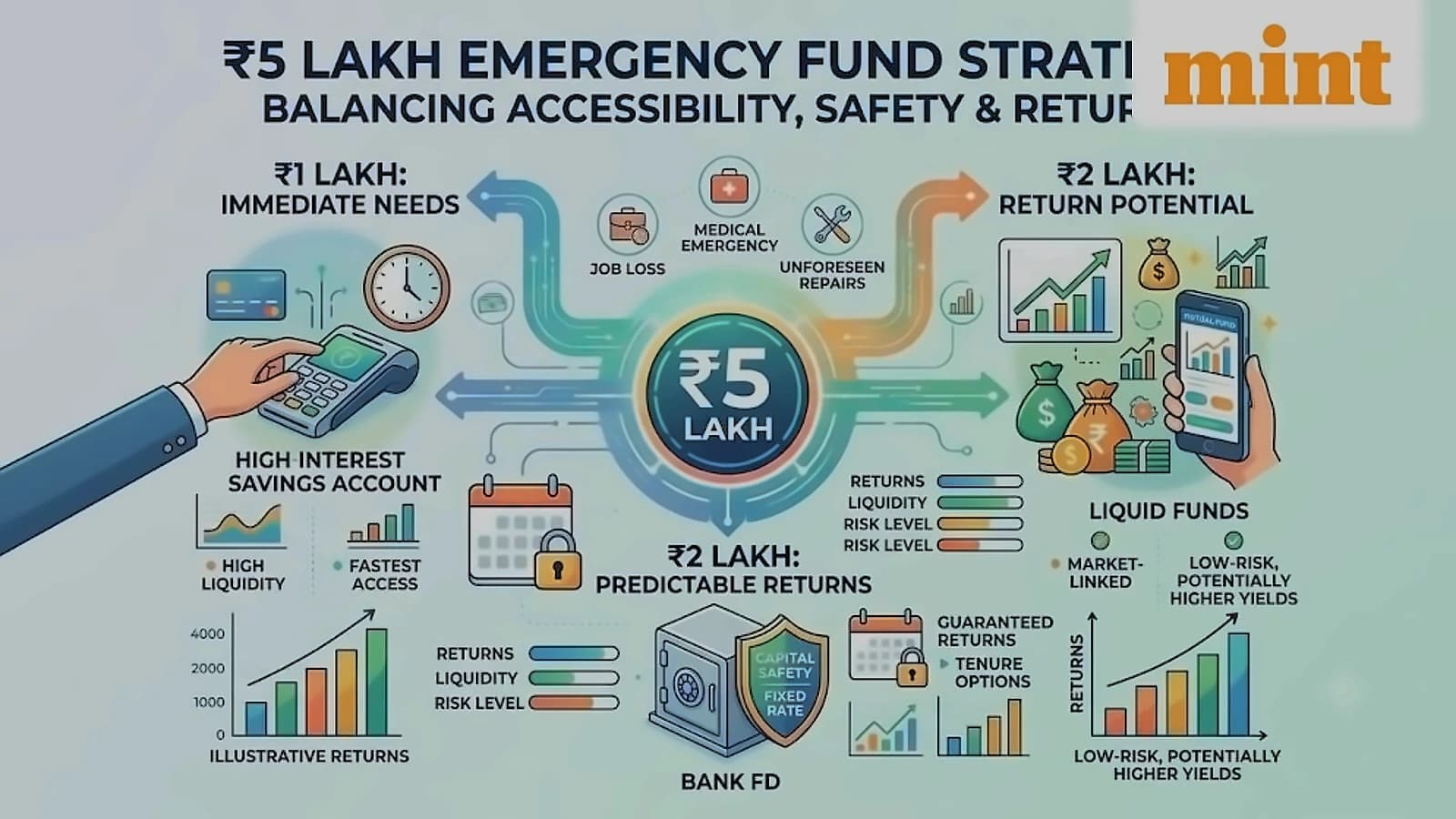
Building adequate emergency reserves should take priority over immediate investment decisions, as demonstrated by this case where the professional had ₹3 lakh in stocks, ₹1 lakh in fixed deposits, and 50 sovereigns of gold. Financial advisors recommend preserving the ₹1 lakh FD as an emergency buffer rather than immediately using it to repay debt, suggesting a more cautious approach of saying not this year, not ₹35 lakh, or only after sufficient savings are accumulated. The case illustrates how even high-income earners can face financial stress when they have expensive debt and almost no emergency cash, making the emergency fund a crucial buffer against unexpected expenses.
Investing additional income requires careful consideration of existing financial obligations and emergency reserves before making investment commitments. The case study shows how the professional's ₹15,000 monthly SIPs were temporarily suspended to focus on debt reduction and emergency fund building. Financial experts recommend establishing the amount that remains after tax and deductions as the starting point for investment decisions, then allocating based on clear financial goals rather than making fresh spending decisions monthly. The biggest payoff comes from maintaining discipline over time and allowing compounding to work on the growing corpus, but this must be balanced against immediate financial priorities.
The primary risk with additional income remains lifestyle inflation, where the extra money disappears into higher monthly expenses without a clear plan. Financial advisors recommend earmarking ₹10,000 to ₹15,000 monthly (10-15% of the additional income) for discretionary spending to balance financial goals with lifestyle improvements. The real value lies in having the freedom to choose where the extra money goes, rather than simply the ability to buy more. For this 29-year-old professional, the immediate goal may be less about finding another investment and more about creating breathing room by controlling credit-card spending, protecting emergency reserves, dealing with personal loans, and setting realistic limits on family expense commitments.