Buyers without an old vehicle can now access vehicle scrappage benefits through Certificate of Deposit (CoD) purchases from existing certificate holders. According to Business Standard, these certificates are being sold in the black market for up to ₹20,000, offering buyers 10-12% discounts on new car purchases. The formal trading platform DigiELV recorded 71,196 CoD trades as of September 1, 2025, with light motor vehicles/non-transport vehicles accounting for 69,390 trades at an average price of ₹10,814. The government has specifically recognized that CoDs can be traded, creating a small but growing secondary market for these certificates.
Mass-market cars typically depreciate at 15-20% in the first year and 28-38% cumulatively by the second or third year, as reported by Mint. However, the depreciation savings from buying a two-year-old car may not be as dramatic as in the luxury segment. Uttam Agarwal, CBO at Bajaj Capital, emphasizes that buyers should consider the car's age, condition, kilometres driven, service history, remaining warranty, insurance, financing cost, expected maintenance and resale value when comparing options.
Financing terms significantly influence the cost comparison between new and used vehicles. According to Mint reports, new-car loans range from 8.70% to 9.75% compared to used-car loans at 10.25% to 13.50%. Adhil Shetty, CEO of BankBazaar, illustrates that a ₹10 lakh loan at 9.2% for seven years has an EMI of approximately ₹16,190, while a loan at 11.75% for five years results in an EMI of around ₹22,100. Used-car loans may also have shorter tenures and lower loan-to-value ratios, requiring larger upfront down payments.
The scrappage certificate market offers significant potential savings, but requires careful calculation of benefits versus costs. As demonstrated by Business Standard, a ₹10,000 CoD investment could unlock ₹36,000 in benefits including ₹1,000 registration fee waiver, ₹20,000 motor vehicle tax concession, and ₹15,000 manufacturer discount. However, the actual savings depend on state-specific rules and vehicle categories. In 2024, participating manufacturers offered 1.5% discounts or ₹20,000 (whichever is lower), with Mercedes-Benz providing a flat ₹25,000 discount. The key consideration remains whether the certificate purchase price plus any additional costs exceed the total benefits available.
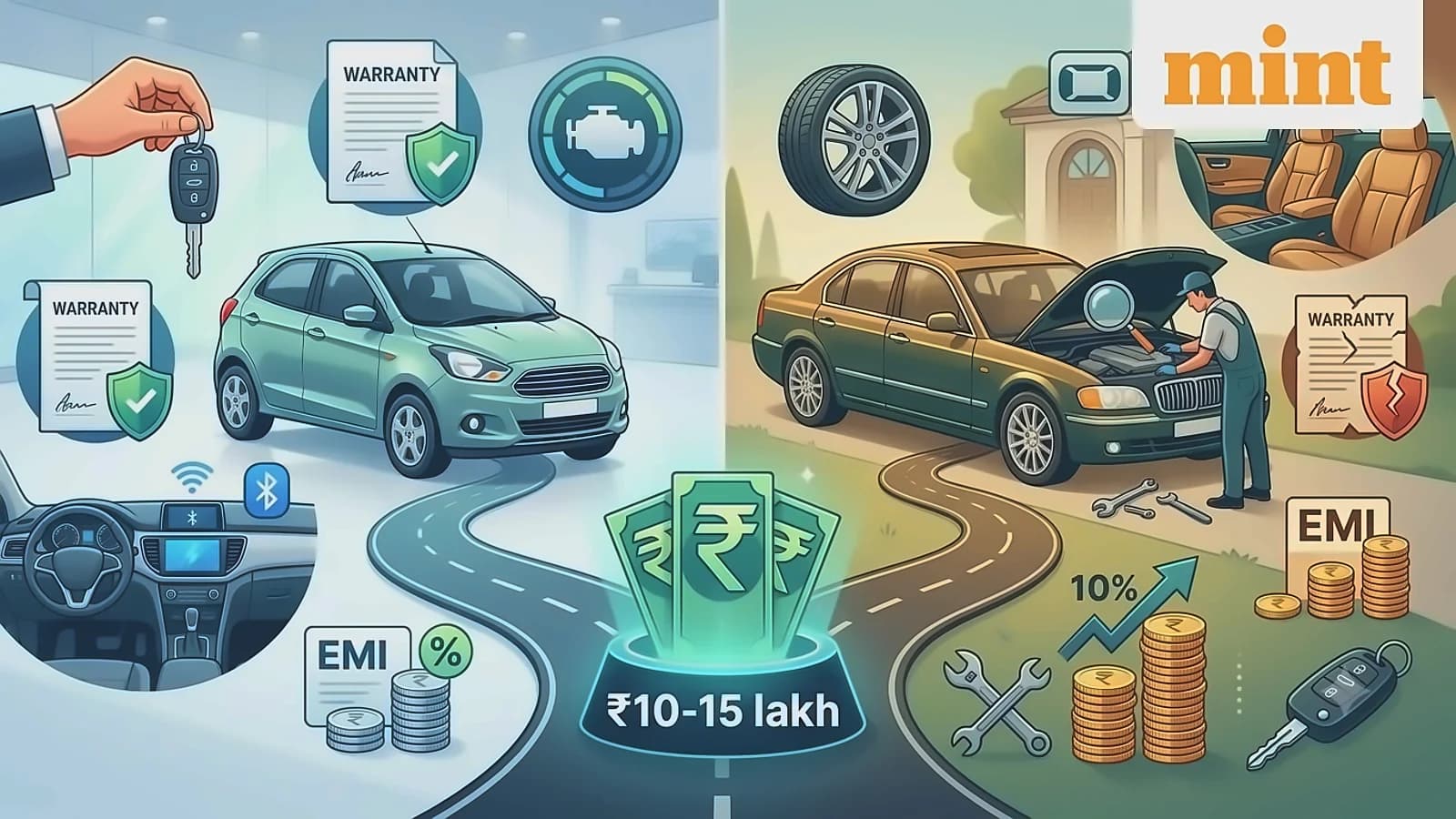
The optimal choice depends on individual priorities and risk tolerance rather than a single financial metric. According to Mint analysis, buyers prioritizing predictable ownership and minimizing uncertainty may favor new cars due to warranty coverage and lower early-year maintenance risk. Conversely, buyers willing to conduct thorough vehicle inspections and prioritize higher vehicle segments or better equipment may find well-maintained pre-owned cars offer better value. The key lies in comparing total costs over the intended ownership period, including purchase price, depreciation, EMI, total interest, insurance, maintenance, repairs, and resale value, as emphasized by industry experts. The scrappage certificate option provides an additional strategy for buyers without eligible old vehicles, though its value varies significantly by state and vehicle category.