Investors often face confusion when choosing between thematic and sectoral mutual funds, as both serve distinct investment purposes. According to recent market analysis, understanding the fundamental differences between these fund categories is crucial for making informed investment decisions. The choice between thematic and sectoral funds ultimately depends on individual investment goals, risk tolerance, and market outlook. As reported by market experts, investors navigating volatile markets in 2025 are increasingly turning to low-cost, diversified vehicles to capture broad upside while managing risk through exchange traded funds (ETFs).
Thematic funds are investment vehicles that focus on specific themes or trends across multiple sectors. As reported by market experts, these funds typically invest in companies that share common characteristics or operate within related industries. Thematic funds often target emerging trends, technological advancements, or macroeconomic themes that could impact multiple sectors simultaneously. Recent developments show growing interest in thematic investing, with iShares thematic ETF assets under management reaching approximately US$21.1 billion as of June 2026, representing Europe's largest thematic ETF platform. The clean energy transition represents another major structural theme, with governments and corporations committing to decarbonization over the coming decades. ETFs focused on renewable energy, electric vehicles, and related infrastructure can provide concentrated plays on this shift, though they often carry higher volatility than broad market funds.
Sectoral funds, on the other hand, concentrate investments within specific industry segments. According to investment professionals, these funds typically focus on traditional sectors such as banking, technology, healthcare, or consumer goods. Sectoral funds provide concentrated exposure to particular industries, allowing investors to gain exposure to specific market segments without broad diversification. Technology continues to underpin long-term economic growth, and investors seeking exposure to artificial intelligence, cloud infrastructure, and semiconductors often find the most efficient route through broad-based technology ETFs. These funds typically include established giants and high growth innovators, balancing cash flow stability with upside potential.
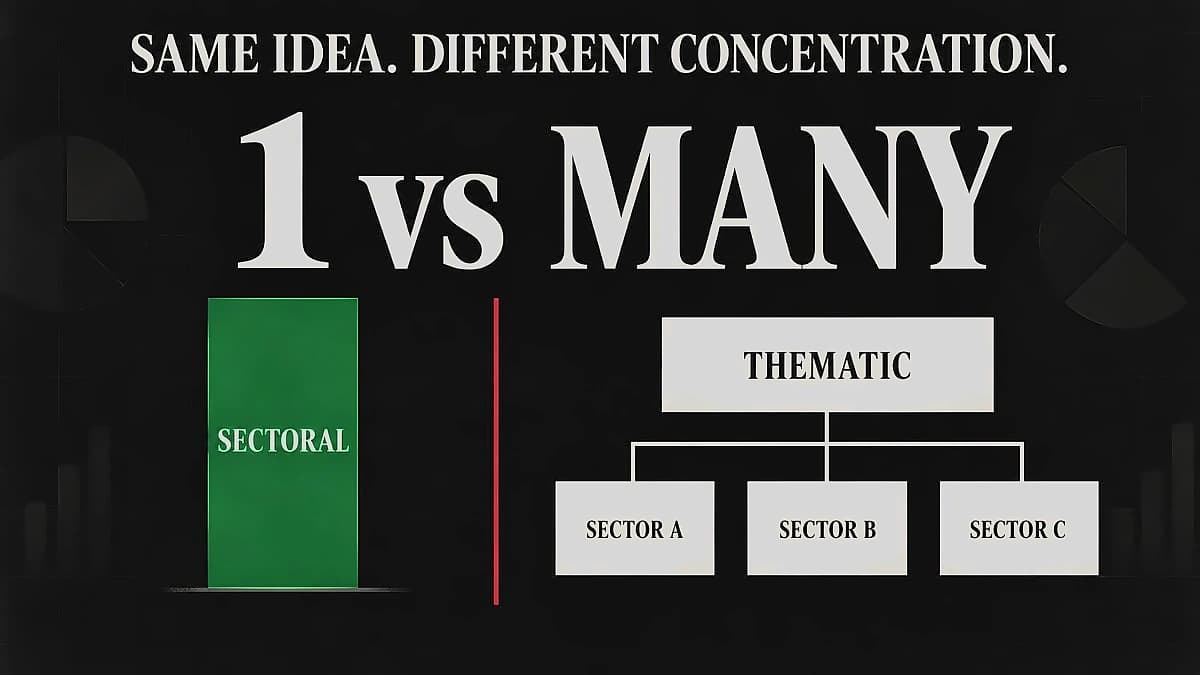
The choice between thematic and sectoral funds should be guided by investment objectives and risk tolerance. As reported by financial advisors, investors with higher risk appetite may benefit from thematic funds due to their diversified sector exposure and focus on long-term structural trends. Conversely, investors seeking concentrated exposure to specific sectors may find sectoral funds more suitable for their investment strategy, particularly those interested in traditional industry segments. ETFs focused on dividend growth and low volatility strategies appeal to investors prioritizing income and capital preservation, often combining steady cash flow with downside protection. These funds often have a history of consistent distributions, low turnover, and a disciplined approach to risk management rather than chasing the highest current yield.
When evaluating ETFs, cost efficiency is among the most powerful yet underappreciated factors in long-term investing. A higher expense ratio may erode hundreds of thousands of dollars in compounded returns over decades, particularly in funds that do not consistently outperform their benchmarks. Selecting low-cost ETFs that track well-established indices can often deliver superior risk-adjusted outcomes compared to higher fee alternatives. Liquidity is equally important, especially for larger positions or strategies involving less common sectors. Thinly traded ETFs can suffer from wide spreads, making entry and exit more expensive even if the underlying index is deep and robust. Investors should examine expense ratios, verify average daily trading volume to ensure tight bid-ask spreads, and review historical performance in various market conditions. The best ETFs to buy in 2025 combine rock-bottom expenses with transparent rules based on factors investors believe will drive returns over time, often including a core holding in a broad diversified ETF, satellite positions in sector-specific or thematic ETFs, and allocations to defensive assets such as short-term bonds or inflation-protected securities.