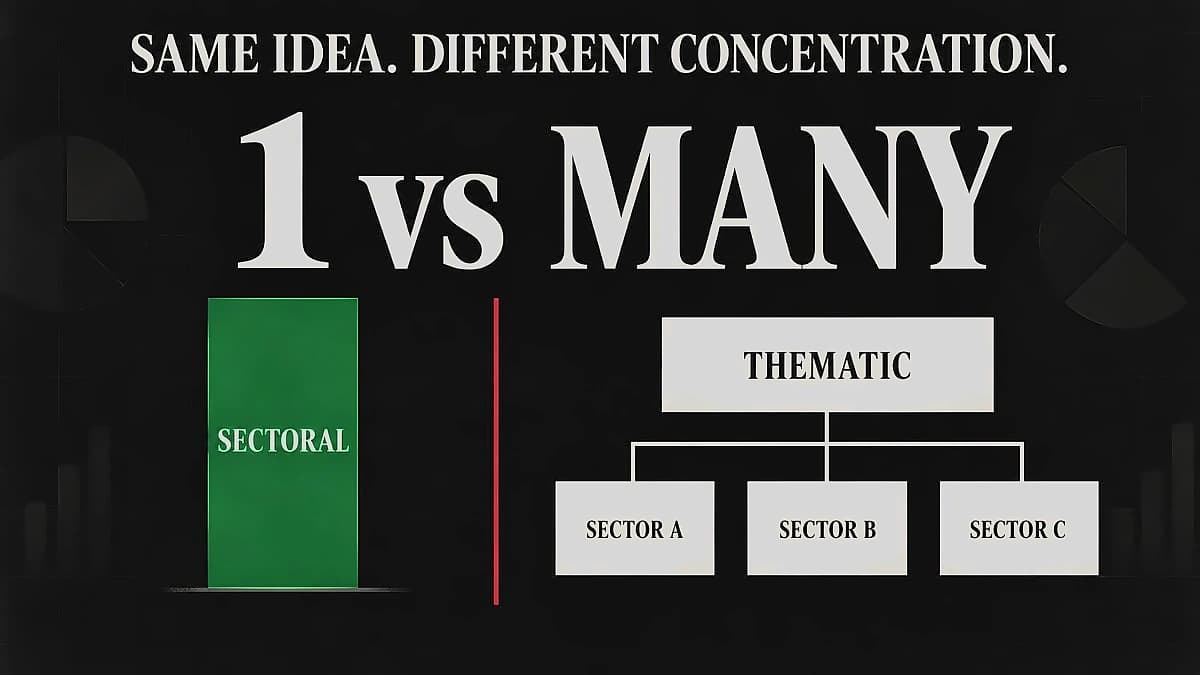
The thematic funds market has reached significant scale with 250 thematic schemes currently operating in the Indian market, according to recent reports. These funds collectively manage ₹4.77 lakh crore in assets, representing a substantial portion of the broader mutual fund industry. Despite this substantial market presence, most investors have struggled to determine appropriate allocation levels for thematic funds in their investment portfolios.
A significant challenge facing investors is determining the optimal allocation to thematic funds within their investment portfolios. As reported, most investors have got the allocation wrong when it comes to thematic fund exposure, indicating widespread confusion about appropriate position sizing. This misallocation has created concerns among financial advisors and industry experts about the sustainability of current thematic fund investment patterns.
Financial experts recommend implementing a core-satellite approach for thematic fund allocation, similar to ETF portfolio construction strategies. The core portion should contain broad-market thematic ETFs that spread investments across multiple companies or sectors, while the satellite portion focuses on specialized thematic funds in specific areas such as sectors, themes, factors, or geographic regions. This structure allows investors to maintain 70:30 or 80:20 allocation splits between core and satellite holdings, with the core providing broad diversified exposure and the satellite adding focused thematic exposure.

Financial experts have developed a 4-step guide to help investors determine appropriate thematic fund allocation levels. According to the framework, investors should first assess their risk tolerance and investment goals before considering thematic fund exposure. The second step involves evaluating current portfolio diversification and identifying gaps that thematic funds could potentially fill. The third step focuses on understanding the specific themes offered by thematic funds and their long-term investment potential. The final step emphasizes regular portfolio rebalancing to maintain appropriate allocation levels over time.
The guidance comes as the thematic funds market continues to evolve, with new NFOs (New Fund Offerings) arriving regularly. As reported, this dynamic market environment requires investors to maintain disciplined allocation strategies to avoid overexposure to thematic themes. The framework provides a systematic approach for investors to navigate the growing thematic fund landscape while maintaining portfolio balance and risk management through strategic core-satellite positioning.