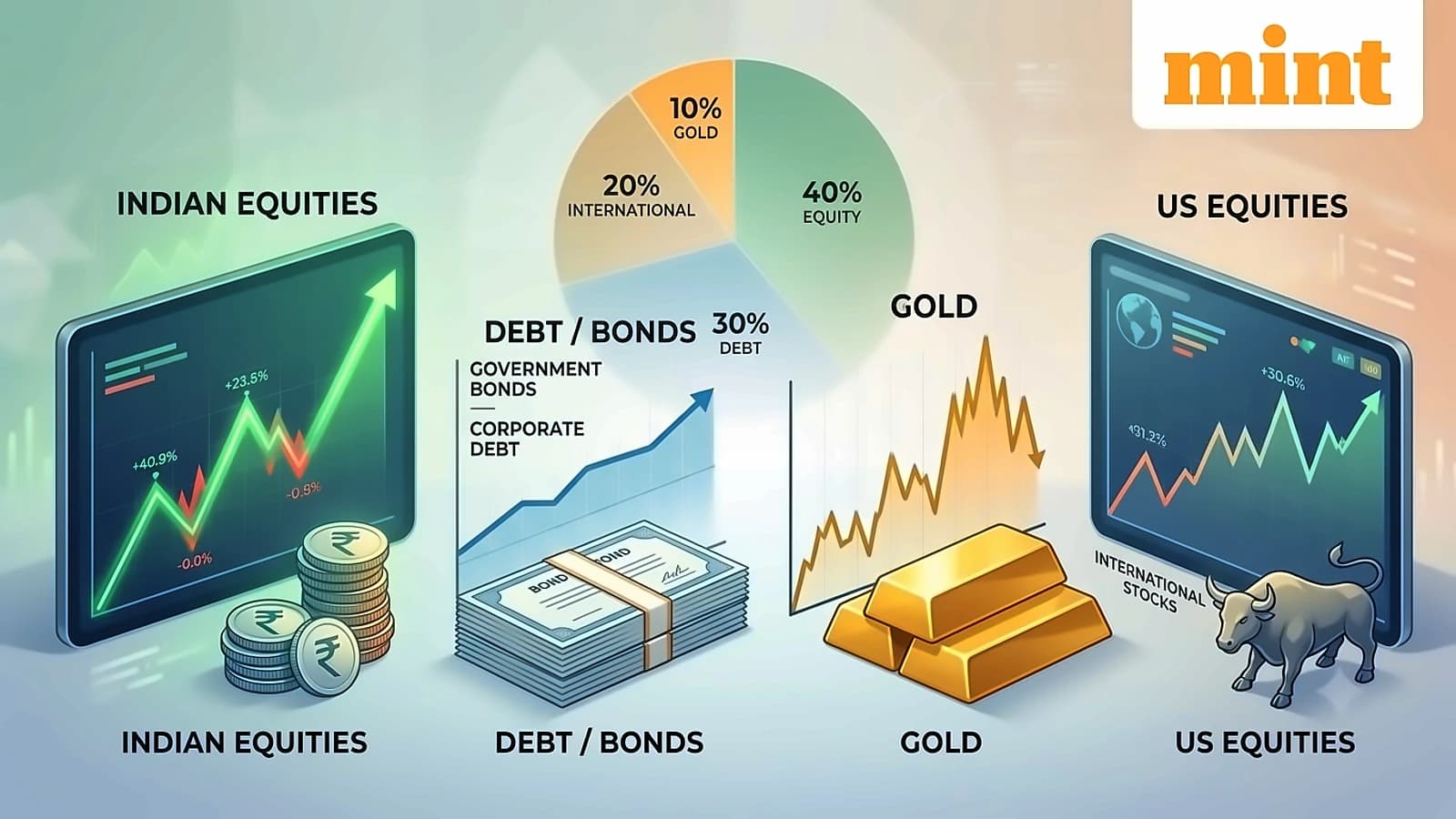
International investments should be approached as part of a strategic portfolio diversification strategy rather than speculative ventures. According to reports from Business Standard, investors should start with clear goals, time horizons, and risk management before selecting investment products. The strategy requires a minimum investment horizon of 5-7 years to navigate currency fluctuations and market cycles in the United States or Europe, where short-term volatility can be particularly brutal. Asset allocation, one of today's most common investment portfolio management strategies, helps create a portfolio of investments using different asset classes to maximize growth potential while limiting market risks. Building a diversified portfolio is more accessible than ever before, with modern financial infrastructure making it possible for investors to access global markets through a much simpler experience.
Indian investors face dual risk management challenges when investing internationally - market risk from declining stock prices and currency risk from rupee appreciation. As reported by Business Standard, the rupee has historically depreciated by 3-5% annually, providing a hidden return advantage for most Indian retail investors. This currency benefit should be factored into overall risk assessment when planning international investment strategies. However, global diversification cannot prevent losses or remove currency risk entirely, as different markets can fall together during periods of economic stress. The concept of risk tolerance includes both financial and emotional capacity to handle market swings, with higher risk tolerance allowing for more stocks in the portfolio. While diversification cannot eliminate investment risk, it has historically helped reduce concentration risk and create more resilient long-term portfolios.
International mutual funds (feeder funds) offer high convenience without requiring specialized broking accounts, though they are subject to Securities and Exchange Board of India's industry-wide investment limits. Direct equity investments via LRS provide fractional share purchasing capabilities, but impose high tax collected at source (TCS) of 20% for remittances above ₹7 lakh as of 2026. Exchange Traded Funds (ETFs) provide instant liquidity during market hours, though they may experience tracking errors and price-to-NAV gaps. Currency hedged ETFs aim to reduce exchange rate movements between investor home currency and underlying investments, though hedging cannot remove all currency risk and may involve additional costs. U.S. equity investments provide exposure to many of the world's largest publicly traded companies across technology, financial services, healthcare, industrials, and consumer products, with some investors focusing on individual companies while others prefer broader ETFs.
Investors should avoid common decision errors including chasing hot countries and over-diversifying beyond necessary levels. As reported by Business Standard, one good S&P 500 fund is usually sufficient for most investors, while focusing on broad-based indices like the S&P 500 or MSCI World Index rather than thematic funds. Global diversification spreads exposure across companies, sectors and countries but doesn't guarantee complete coverage - different global ETFs may hold similar companies or be heavily weighted toward specific markets. International funds are taxed as non-equity assets with gains taxed at 12.5% if held for more than 24 months. Many long-term investors focus on building portfolios designed to grow over decades while reducing dependence on any one company, market, or country, rather than trying to predict the single best-performing investment.
The action checklist includes checking LRS limits for direct investments, automating investments through SIP using Indian feeder funds, and reviewing TCS implications for large remittances. According to Business Standard, investors should start with low-cost US index funds before exploring thematic global funds and use consolidated portfolio trackers to monitor total equity across India and abroad in a single view. The strategy emphasizes simplification and automation over complex diversification strategies, with a broad global ETF providing substantial diversification across companies, countries and sectors in a single investment for starting investors. Asset allocation rebalancing is crucial as portfolios drift from ideal allocations over time, requiring periodic adjustments to maintain optimal risk-return balance. Modern platforms are reducing traditional barriers by simplifying funding, reducing unnecessary currency conversions, lowering minimum investment amounts, and bringing multiple investing services into a single account.