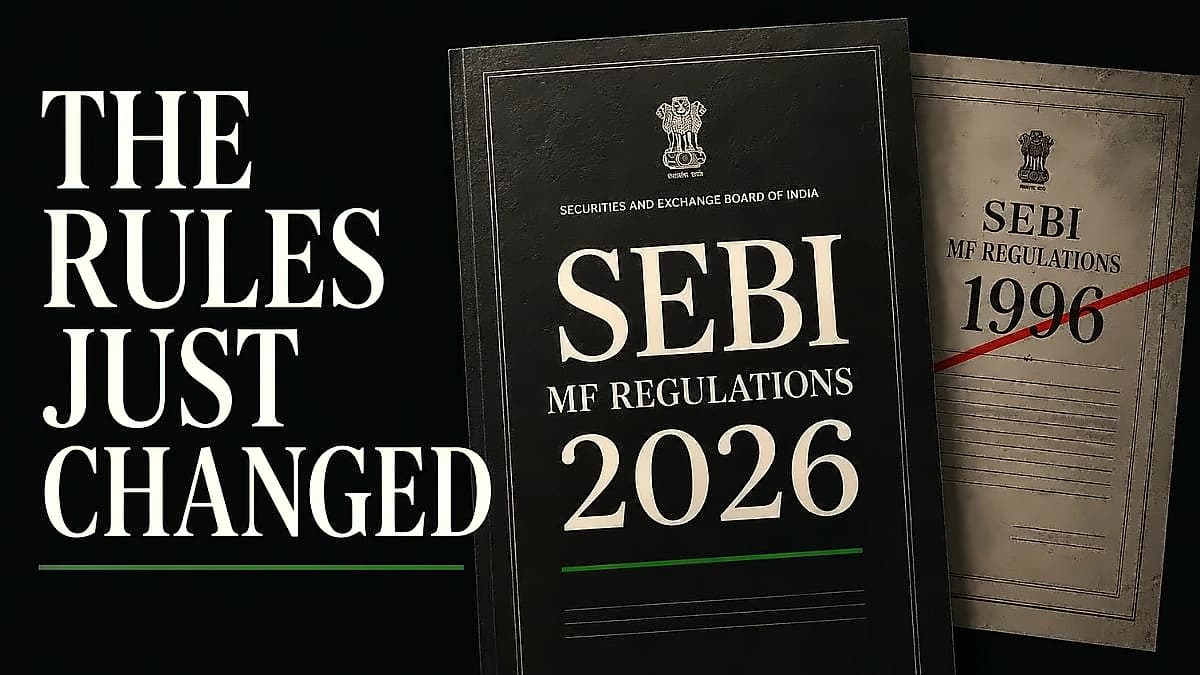
The Securities and Exchange Board of India (SEBI) has significantly expanded the scope of intraday borrowing for mutual funds, allowing asset management companies (AMCs) to use such borrowings for a broader range of liquidity management purposes. According to reports from CNBC TV18, under a circular issued on Friday, mutual funds will now be permitted to use intraday borrowing not only for meeting investor redemption payouts but also for trade settlement, cash flow management, foreign exchange settlements and derivative margin payments. The revised framework will come into effect from September 1, 2026, providing fund houses with greater operational flexibility in managing temporary liquidity mismatches during the trading day.
The updated framework significantly broadens the sources of intraday borrowings available to mutual funds. As reported by CNBC TV18, mutual funds may now borrow against guaranteed receivables such as subscription inflows, payments from the Reserve Bank of India and clearing corporations. Additionally, they can avail borrowings against non-guaranteed receivables expected to be realised by the end of the trading day, including maturity proceeds and secondary market settlements involving instruments such as non-convertible debentures, commercial papers, certificates of deposit and over-the-counter swaps. The facility can be used to meet pay-in obligations for investments made by schemes, mark-to-market obligations, and the repayment of existing borrowings, addressing liquidity mismatches arising from differences in market settlement timings.
The revised framework removes the earlier restriction that linked intraday borrowings to guaranteed same-day receivables, providing fund houses with greater operational flexibility. According to CNBC TV18, SEBI has retained the requirement that all intraday borrowings must be repaid before the close of the trading day. Any borrowing that extends overnight must remain within the prescribed regulatory borrowing limits and comply with the purposes permitted under the regulations. The regulator has directed the boards of AMCs and trustees of mutual funds to approve a policy governing the use of the intraday borrowing facility and publish it on the AMC's website, outlining approval processes and monitoring mechanisms.
The regulator has clarified that the cost of such borrowings will be borne by the asset management company and not by the mutual fund scheme or its investors. As reported by CNBC TV18, SEBI has further clarified that the cost of intraday borrowings, along with any losses arising from delays in receiving expected funds, will continue to be borne by the AMC. Such costs must not be passed on to mutual fund investors, ensuring that investor interests remain protected while providing operational flexibility to fund houses. AMCs will also be required to maintain scheme-wise records detailing the underlying liquidity mismatch and the expected source of repayment.
The changes follow representations from the mutual fund industry, which had sought greater flexibility in the use of intraday borrowing to address operational constraints and improve liquidity management. The revised framework comes after SEBI's board approved the proposal and will come into effect from September 1, 2026. The broader borrowing framework is expected to help fund houses manage settlement obligations and short-term liquidity requirements more efficiently without affecting investor interests, while the mandatory policy disclosure requirements will ensure transparency and proper governance of intraday borrowing practices.