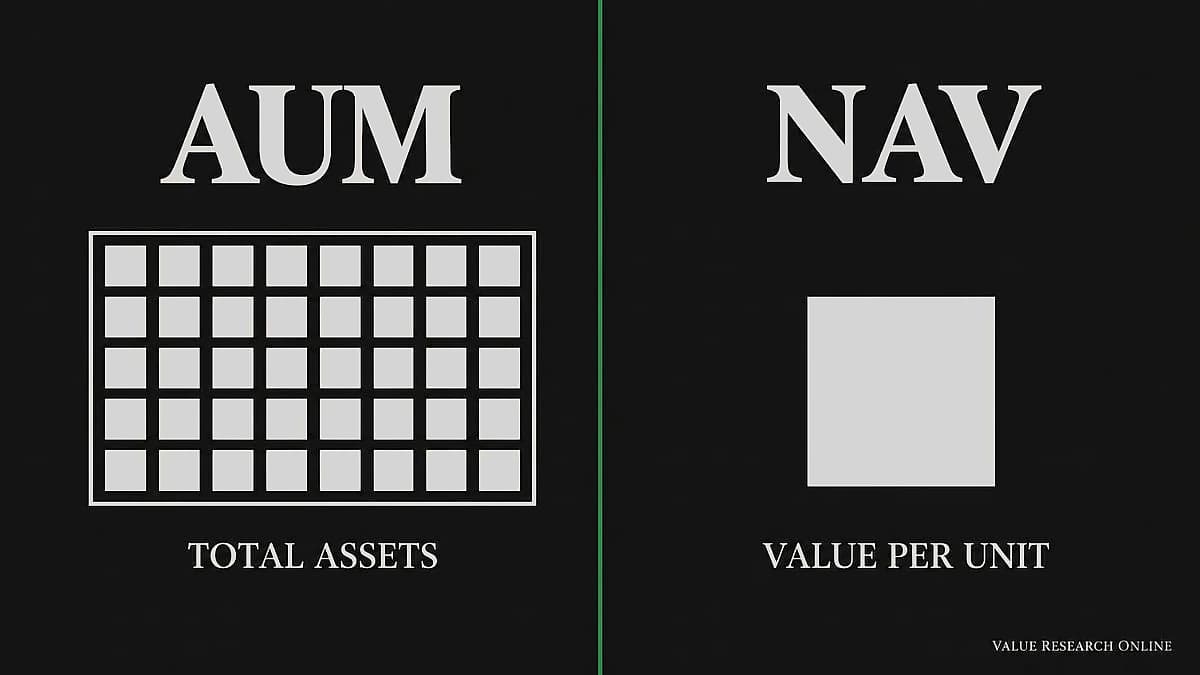



According to recent reports, NAV (Net Asset Value) and AUM (Assets Under Management) are two distinct metrics that serve different purposes in mutual fund analysis. NAV functions as a measuring tape, providing a precise valuation of each unit's worth, while AUM serves as a scorecard, reflecting the total value of all units combined. These metrics serve different investment needs and should be evaluated in specific contexts rather than as universal indicators.
As reported, AUM only matters for small-cap and debt funds due to their structure and market dynamics. Small-cap funds require AUM monitoring to ensure adequate liquidity for trading, while debt funds need AUM tracking to maintain proper asset allocation and risk management. However, AUM is not a universal metric that should be evaluated across all fund categories, as it serves specific operational needs rather than broad investment assessment.
According to the analysis, NAV provides the most accurate valuation of individual fund units, making it essential for investment decisions. NAV shows the actual worth of each unit in the fund, allowing investors to understand the true value of their investment. NAV is particularly important for equity funds where unit pricing and valuation are critical for investment planning and portfolio management.
As reported, the correct order to check numbers before investing is NAV first, then AUM. NAV should be evaluated first to understand the actual worth of each unit, followed by AUM evaluation for small-cap and debt funds. This sequential approach ensures proper fund analysis by prioritizing unit valuation over total fund size, particularly important for equity fund selection where NAV provides the most relevant investment information.